
Every player has quit a game at some point — not because it was bad, but because one specific level made them feel stupid, bored, or both. That moment is rarely an accident of taste. It’s almost always a difficulty design failure, and it’s one of the most expensive mistakes a studio can ship.
Level design in video games is often discussed as a spatial discipline: layouts, sightlines, environmental storytelling. But underneath the geometry sits a quieter system that decides whether players keep playing at all — difficulty. Get it wrong, and even the most beautiful level becomes the last one a player ever sees.
In this article, we’ll unpack level difficulty design as a craft: what it is, what it’s made of, how to build a difficulty curve that keeps players in the zone, and why it directly shows up in your retention dashboards.
What Is Level Difficulty Design?
Level difficulty design is the deliberate structuring of challenge within a game’s levels — deciding how demanding each moment is, how challenge escalates over time, and how the game responds to player skill. It sits at the intersection of video game level design, systems design, and player psychology.
It’s worth separating two things that often get lumped together:
- Level design shapes the space and the sequence: where enemies stand, where cover is, what the player sees first, which path looks tempting.
- Difficulty design shapes the pressure inside that space: enemy count and behavior, resource scarcity, timing windows, failure penalties.
In practice, the two are inseparable. A corridor with three enemies is a different level than the same corridor with seven — same geometry, completely different experience. That’s why difficulty design in video games is never a “tuning pass at the end.” It’s a design layer that has to be planned from the first graybox and revisited until ship.
There’s also a distinction between static difficulty (fixed, hand-authored challenge — think Dark Souls, where the level doesn’t care how you’re doing) and adaptive difficulty (systems that quietly adjust to performance — Resident Evil 4’s hidden difficulty scaling or Left 4 Dead’s AI Director are classic examples). Neither approach is universally better; the right choice depends on genre, audience, and the emotional promise your game makes. A third dimension — whether players get to pick their difficulty at all — deserves its own discussion, and we’ll get to it below.
Core Elements of Difficulty Design
Difficulty isn’t a single slider. It’s the sum of several systems, and game difficulty balancing means tuning all of them together — because players don’t experience “enemy HP” and “ammo drop rate” separately. They experience one feeling: this is fair or this is nonsense.
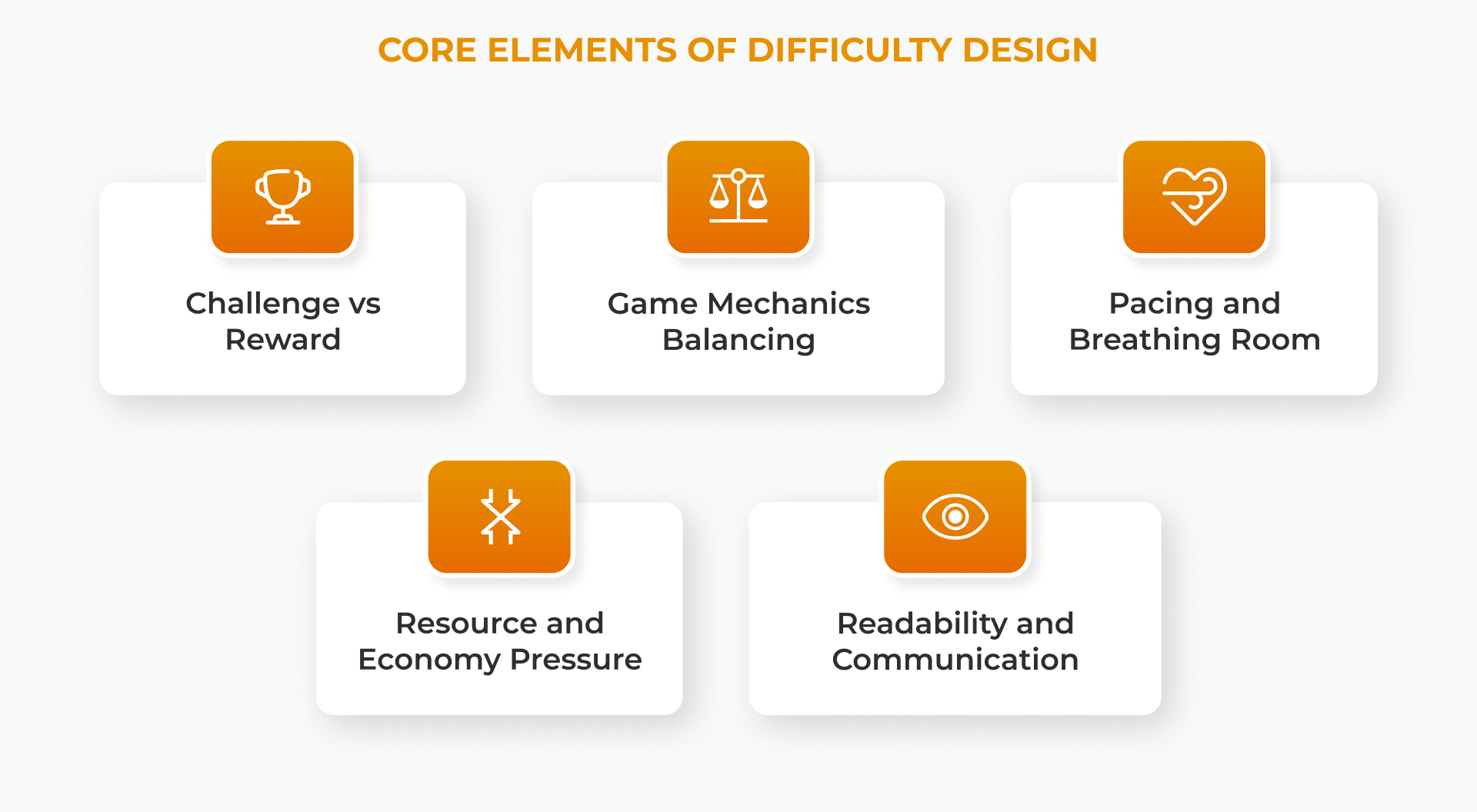
Challenge vs Reward
The oldest equation in the craft. Every spike in challenge needs a proportional payoff — loot, story, a new ability, or simply the satisfaction of visible mastery. When the challenge vs reward balance breaks, players don’t articulate it as a math problem; they just say the game “feels grindy” or “isn’t worth it.” Hades handles this masterfully: even a failed run pays out currency, dialogue, and permanent progression, so difficulty never reads as wasted time.
Game Mechanics Balancing
Individual systems — damage numbers, cooldowns, movement speed, hitboxes — need internal consistency before level balancing even makes sense. If one weapon trivializes every encounter, no amount of clever level layout will save the pacing. Game mechanics balancing is the foundation; level balancing is the architecture built on top of it.
Pacing and Breathing Room
Pacing in game design is the rhythm between tension and rest. Great levels alternate combat peaks with quiet valleys: exploration, dialogue, a safe room, a pretty vista. Half-Life 2 is still the textbook here — nearly every intense sequence is followed by a slower stretch that lets players decompress and absorb what they’ve learned. Constant maximum pressure doesn’t feel hard; it feels exhausting, and exhausted players close the game.
Resource and Economy Pressure
Difficulty often lives in the inventory, not the enemy. Ammo scarcity, healing item costs, and upgrade prices are all levers of game economy balancing. Survival horror is essentially difficulty design expressed through economics — Resident Evil doesn’t need faster zombies when it can give you six bullets and eight problems.
Readability and Communication
A challenge is only fair if the player can understand it. Telegraphed attacks, clear enemy silhouettes, and environmental cues that signal danger are all part of player experience design. This is also where art direction stops being decoration and starts being function: lighting, composition, and environmental detail guide player expectations before a single tutorial prompt appears. We’ve written about how much this layer matters commercially in our breakdown of 3D environment design for games and how visual worlds drive revenue — readable, intentional environments aren’t just prettier, they measurably perform better.
Designing an Effective Difficulty Curve
The difficulty curve in games is the shape challenge takes over the full playtime — and “curve” is a generous word, because a good one is never a straight line.
The theoretical backbone here is game flow theory, borrowed from psychologist Mihaly Csikszentmihalyi: players stay engaged when challenge and skill grow together. Too much challenge relative to skill produces anxiety and rage-quits; too little produces boredom and quiet churn. The designer’s job is to keep players inside that flow channel for hours — which is harder than it sounds, because every player climbs the skill axis at a different speed.
A few practical principles for game progression design:
Onboarding is the curve’s foundation. Onboarding in games should teach through play, not text walls. Super Mario Bros. World 1-1 remains the canonical example: the level layout itself teaches movement, jumping, and danger recognition without a single instruction. The first thirty minutes of your game set the player’s expectations for how learning will feel — botch that, and the rest of the curve never gets a chance.
Saw-tooth beats staircase. Instead of ratcheting difficulty up in a straight line, strong games introduce a new mechanic in a low-stakes context, escalate it, test it in a peak challenge, then drop back down as the next mechanic enters. Celeste structures nearly every chapter this way — and pairs it with instant respawns, so a brutal challenge costs seconds, not minutes. That’s a crucial insight: failure cost is part of difficulty. You can make challenges harder if you make failure cheaper.
Support skill-based progression alongside stat progression. Player progression systems typically grow two things: the character (stats, gear, unlocks) and the player (actual skill). The best curves account for both. If your difficulty scaling only tracks character power, skilled players get bored; if it only tracks expected skill, players who invested in upgrades feel cheated. Roguelikes like Hades and Dead Cells interleave the two deliberately, so every run improves either your build or your hands.
Playtest the curve, don’t guess it. Designers are the worst judges of their own difficulty — they’ve played the level five hundred times. Watching fresh players fail (and logging where they fail) is the only reliable way to find spikes. In live products, funnel analytics do this at scale: if 40% of players churn on level 23, level 23 has a problem, whatever the design doc says.
Should Players Choose Their Own Difficulty?
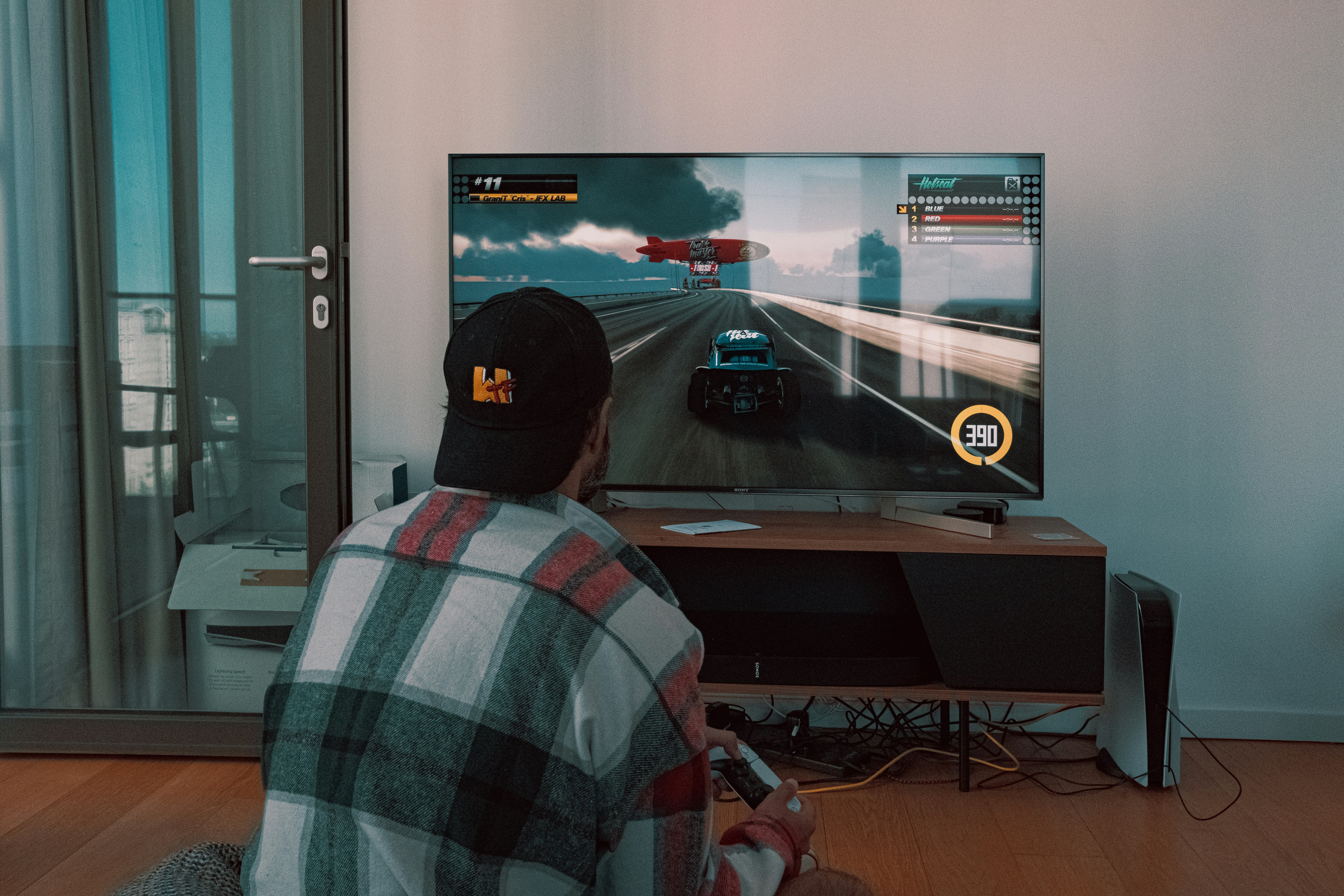
Before any curve does its work, many games ask the player a strange question: how hard do you want this to be? — usually before they’ve held the controller for ten seconds. Whether to offer that choice at all is a real design decision, and both answers have solid logic behind them.
The case for a difficulty select. Presets like Easy / Normal / Hard let one game serve wildly different audiences — the story-focused player, the veteran, the completionist — without forcing a single curve to fit them all. It’s the default in premium narrative and action games (DOOM, God of War, Wolfenstein) because audience breadth directly matters for a $60 purchase. It’s also an accessibility issue: The Last of Us Part II pushed the idea furthest by replacing a single slider with granular per-system settings — separate tuning for enemy aggression, resources, stealth — acknowledging that “hard” means different things to different players.
The case against. FromSoftware ships Dark Souls and Elden Ring with one difficulty on purpose: the challenge is the identity, and a single fixed curve means every player shares the same experience and the same war stories. There’s also a practical argument — players are terrible at predicting their own skill before playing, so an upfront menu asks for a decision with zero information. That’s why letting players change difficulty mid-game is now standard good practice, and why the menu itself needs design: clear descriptions (“the intended experience,” “for players here for the story”) beat bare labels that turn the choice into an ego test.
The middle paths. Celeste keeps one canonical difficulty but adds Assist Mode — opt-in modifiers framed respectfully rather than as “easy mode.” Hades’ God Mode grants a little more damage resistance after each death, converting difficulty selection into gentle, automatic scaling. And adaptive systems like Resident Evil 4’s hidden tuning make the choice for the player invisibly. Mobile and F2P titles, meanwhile, almost never offer a select at all — when each level’s difficulty is tuned individually and wired into the economy, a global slider would break both.
The honest answer: difficulty selection isn’t a feature checkbox, it’s a statement about who your game is for. Decide that first, and the menu (or its absence) designs itself.
How Difficulty Design Impacts Player Retention
Here’s where craft meets revenue. Difficulty spikes and difficulty valleys are two of the most common churn drivers in games — and unlike bugs, they rarely show up in reviews explicitly. Players don’t write “the difficulty curve was miscalibrated.” They just stop playing.
The mechanics of it are straightforward:
- Spikes kill sessions. A wall the player can’t pass after several attempts creates frustration, and frustration ends sessions early. In free-to-play, players who end a session angry are dramatically less likely to start the next one.
- Valleys kill interest. Stretches with no meaningful challenge deflate engagement more quietly — the player doesn’t rage-quit, they just drift away. Boredom churn is slower and harder to diagnose than frustration churn, which makes it more dangerous.
- The early curve decides everything. In mobile especially, day-1 and day-7 retention correlate heavily with how the first sessions feel. Onboarding difficulty is arguably the single highest-leverage tuning surface in the entire product.
This is why serious studios treat game balancing techniques as an ongoing, data-driven discipline rather than a pre-launch checkbox. Effective player retention strategies pair design intuition with telemetry: completion rates per level, attempts before success, session length around known spikes, drop-off funnels. Match-3 giants like Candy Crush famously tune individual level difficulty continuously post-launch — a level’s pass rate is a live metric, not a fixed property.
There’s a monetization dimension too. In free-to-play, difficulty often doubles as an economic lever: a hard level makes a booster more attractive. Used carefully, that’s legitimate design. Pushed too far, it reads as pay-to-win and damages long-term user engagement in games far more than the short-term revenue is worth.
Level Design Literature
Difficulty design has a surprisingly rich bookshelf, and a few titles are worth a designer’s (or a producer’s) time.
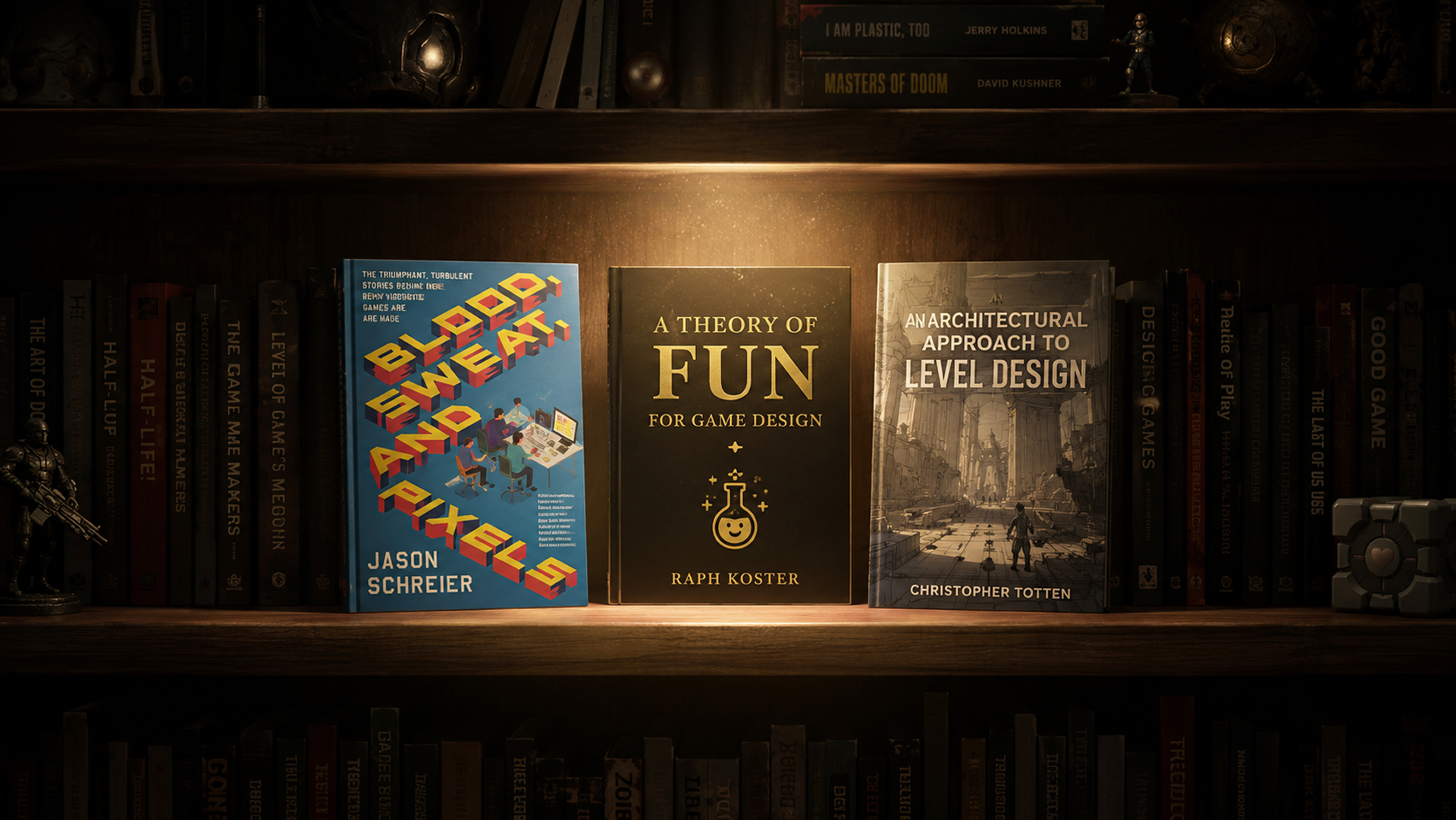
Blood, Sweat, and Pixels by Jason Schreier isn’t a design textbook — it’s a collection of production war stories behind games like The Witcher 3, Diablo III, and Stardew Valley — but it’s essential reading for anyone who wants to understand why balance work is so hard to protect on a real schedule. One developer’s line to Schreier became the book’s thesis: “It’s a miracle that any game is made.” The book is also full of small, telling level design moments — like the Witcher 3 team discovering that environment artists had stocked famine-ravaged Velen with cabinets full of food, forcing designers to sweep through every village removing sausages so the region’s misery would actually read. Difficulty and tone live in details exactly that small.
A Theory of Fun for Game Design by Raph Koster explains the psychology underneath every difficulty curve. Koster’s central claim — “Fun is just another word for learning” — is arguably the shortest possible summary of why flow-based difficulty works: players enjoy challenge precisely as long as it teaches them something.
An Architectural Approach to Level Design by Christopher Totten connects spatial design to player behavior and pacing, while Level Up! by Scott Rogers and The Art of Game Design by Jesse Schell cover balancing, rewards, and playtesting with shipped-a-game practicality.
And if you want the compressed, production-tested version of the fundamentals these books build on, our own top 8 game design principles, Stepico edition is a good place to start — difficulty design sits directly on top of those foundations.
Conclusion
Level difficulty design is where player psychology, level design in video games, and business outcomes converge. A well-shaped curve keeps players in flow; disciplined game difficulty balancing keeps challenge fair; and both show up, measurably, in retention and revenue. The craft isn’t about making games easy or hard — it’s about making effort feel worth it, level after level.
It’s also genuinely difficult to get right in production. Balancing needs graybox playtests, telemetry pipelines, tuning sprints after launch — the kind of sustained attention that’s hard to protect when a small team is also shipping features. That’s exactly the gap Stepico fills. As a full-cycle game development studio with 10+ years and 100+ shipped titles behind us, we handle difficulty and progression design as part of the whole picture: level design and balancing during production, analytics-driven tuning through live operations, and co-development support when your internal team needs experienced hands on the curve itself. If your game’s retention numbers suggest the difficulty is fighting your players instead of engaging them — talk to us. Diagnosing that is quite literally our day job.