
If game development were a Ukrainian cuisine, game design principles would be Borsht: an absolutely essential dish every single family cooks in their own way. Seemingly written-in-the-stone industry commandments, the basics of game design can read differently depending on the core game platform and especially times (since gamedev as we know it started back in the 80’s), but there’s a more or less versatile core that applies to absolutely every game, whether it’s a mobile casual or AAA project, marketing game, or a solo narrative-driven experience.
In this article, we are going to walk you through the top 8 essential principles of game design that we at Stepico gathered and reflected upon throughout years of production experience. These apply across different genres, scales, and production realities — from small experimental prototypes to large-scale live-service projects.
What are Game Design Principles
At their core, game design principles are the foundational ideas that shape how a game feels, plays, and communicates with the player. They influence everything from combat systems and progression to onboarding and emotional engagement.
While the specifics change from genre to genre, the basics of game design remain surprisingly universal. A mobile puzzle game, a multiplayer shooter, and a narrative RPG may look completely different on the surface, but all of them rely on the same underlying logic: clear goals, satisfying feedback, understandable systems, and meaningful interaction.
The reason experienced developers keep returning to these concepts is simple: good gameplay design is rarely accidental. Strong games are built around carefully considered player experience design, readable systems, and mechanics that consistently reinforce the core fantasy of the game.
Many beginner developers approach basic game design by immediately expanding scope, creating dozens of enemies, systems, weapons, or story branches before validating whether the core interaction is even enjoyable. In reality, most successful production pipelines start much smaller. They focus on the core loop, test emotional engagement early, and only then scale the experience outward.
These recurring ideas form the foundation of modern principles of game design, whether you are building a solo indie project or coordinating production across a large development team.
Core Game Design Principles
With that said, let’s jump to the game design fundamentals we think are most essential for any developer to know.
Core Loop First: Prototype Before You Scale
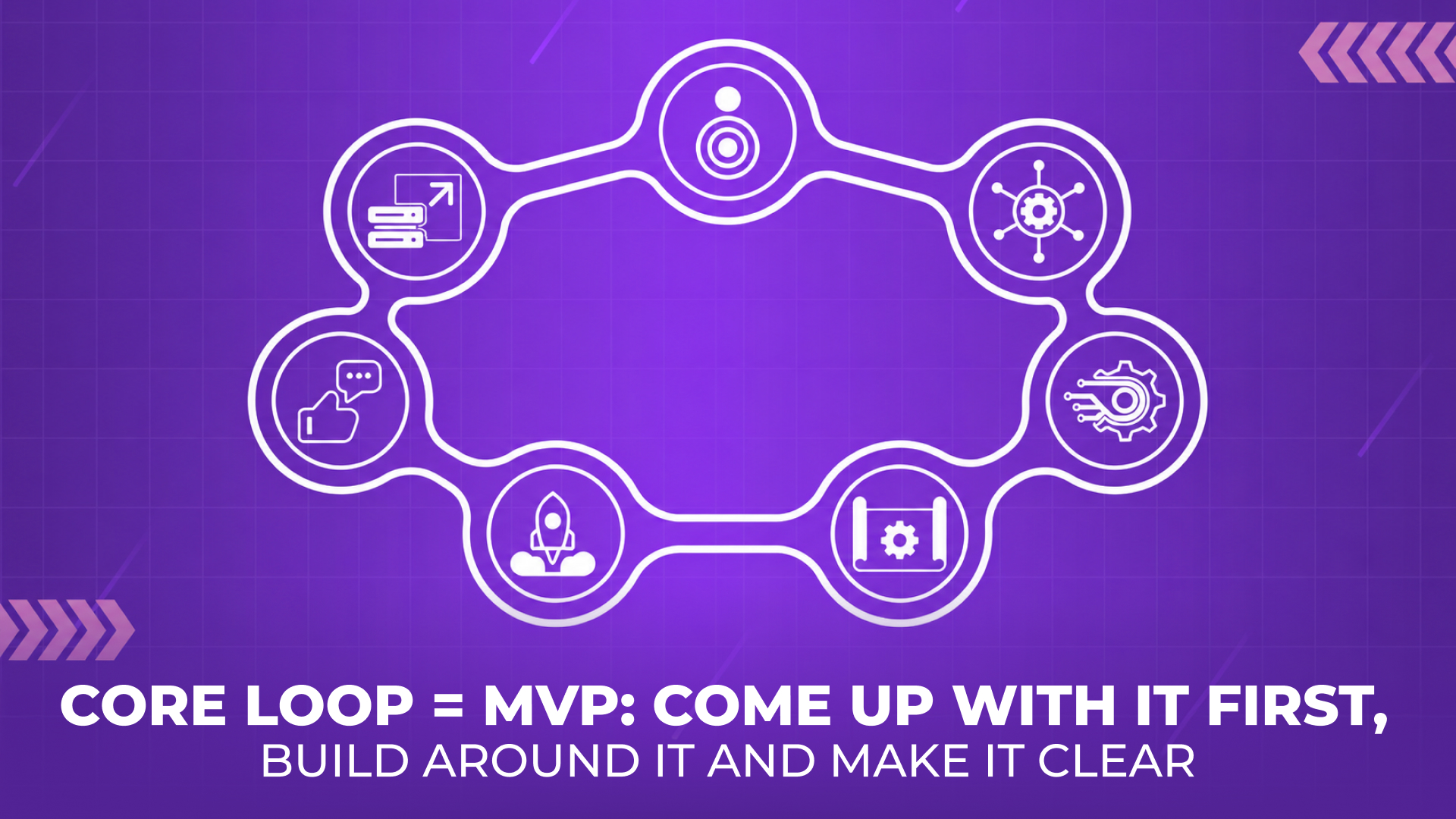
One of the most common mistakes in gameplay design principles is trying to design the entire game before proving the core experience works.
Many developers start by writing enormous design documents filled with lore, characters, weapons, enemy types, economy systems, and level concepts. The problem is that none of this matters if the central interaction simply is not fun. Experienced developers repeatedly rediscover the same lesson during production: prototype first, expand later.
A strong core loop acts as the foundation for the entire project. Whether your game revolves around combat, racing, stealth, farming, or card mechanics, the most important thing is identifying what players will repeatedly do — and what emotional reaction that interaction creates.
Think about the experience that feels genuinely entertaining to you and build the smallest possible playable version around it. Design only the most important mechanic first and test how it feels in motion before investing months into additional content.
Games like What the Car? perfectly demonstrate this approach. Underneath the absurd humor, the game is still fundamentally a racing game. The difference is its core twist: bizarre physics, cars with legs, unpredictable movement, and complete comedic chaos. The developers identified a single memorable idea and built the entire experience around amplifying it. Similarly, Untitled Goose Game transforms a very simple stealth sandbox into something memorable entirely through player interaction and absurdity-driven design.
This approach is also heavily connected to the broader principles of game mechanics and scalable production. Instead of building hundreds of systems upfront, focus on validating one mechanic players genuinely enjoy interacting with.
A prototype with one weapon, one enemy, and one environment that feels amazing is far more valuable than a massive unfinished design document.
Clear Player Goals: Always Know What to Do Next
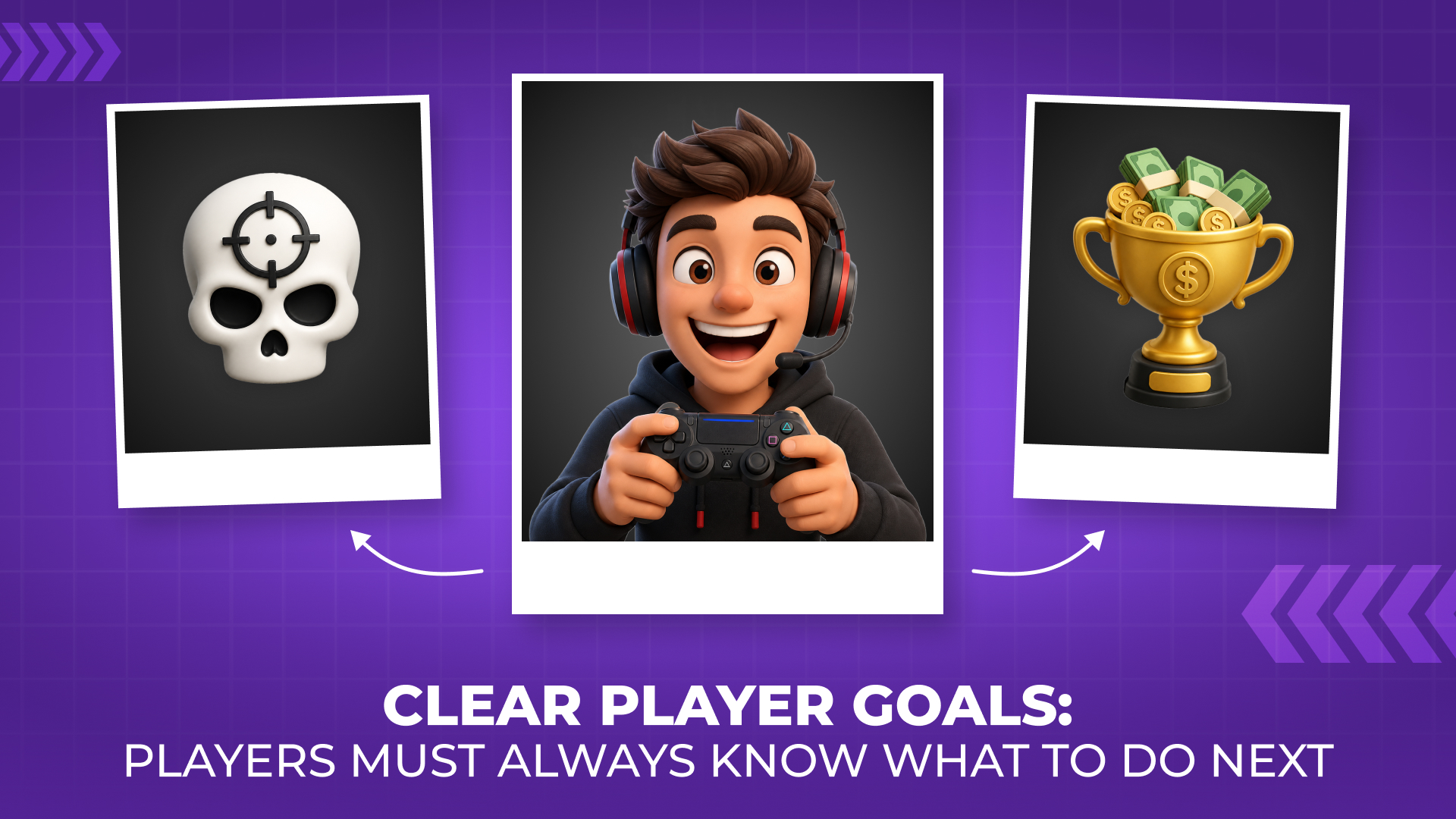
Players should never feel lost unless confusion itself is intentionally part of the experience.
One of the most important core game design concepts is clarity. The player’s attention should always be directed somewhere meaningful, whether through UI, 3D game art, level composition, dialogue, lighting, audio, or environmental cues.
Clear goals do not mean handholding. Players can still have freedom and exploration while understanding what their current objective is. Good games communicate direction naturally instead of overwhelming players with information.
The Legend of Zelda: Breath of the Wild is a strong example of this balance. The game gives players enormous freedom, but objectives remain understandable through environmental landmarks, quest structures, and visual guidance. Players rarely ask themselves “What am I supposed to do?” even while exploring a huge open world.
This principle also heavily influences user experience in games. Confusing navigation, unclear objectives, or poorly communicated mechanics often create frustration unrelated to actual challenge.
Readable environments, intuitive UI, and strong visual communication are also closely connected to good concept art for game design, since visual hierarchy often guides player behavior before a single tutorial message appears.
Meaningful Choices: Decisions Should Have Impact
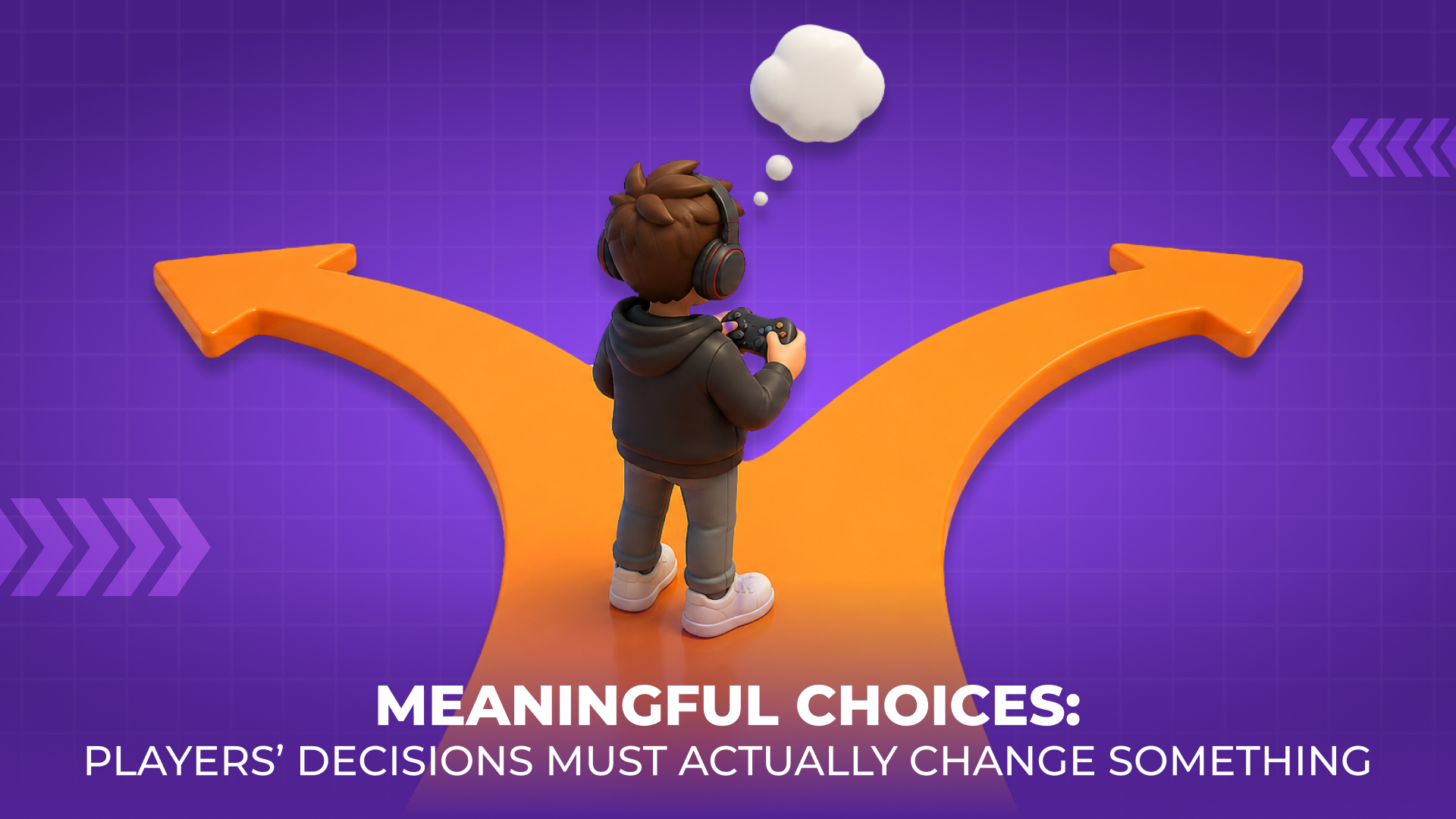
A choice only becomes meaningful when the player understands its consequences.
Players constantly make decisions: which weapon to use, which dialogue option to select, whether to attack or defend, what upgrade to prioritize, or even which path to explore first. Good interactive game design ensures those decisions produce noticeable results.
If a player reaches a chest and must choose between a bow and a crossbow, both options should feel mechanically distinct. Their stats, handling, advantages, and gameplay implications should be communicated clearly enough for the decision to matter.
This principle becomes even more important in RPGs and narrative-heavy games. The Witcher 3 remains one of the strongest examples because many of its dialogue choices affect later story developments, character relationships, or quest outcomes. Players feel responsible for their decisions because the game consistently acknowledges them.
Meaningful decisions also strengthen player engagement strategies because they increase emotional investment. When players believe their actions matter, they become far more attached to the experience itself.
Feedback & Responsiveness: Every Action Needs Reaction
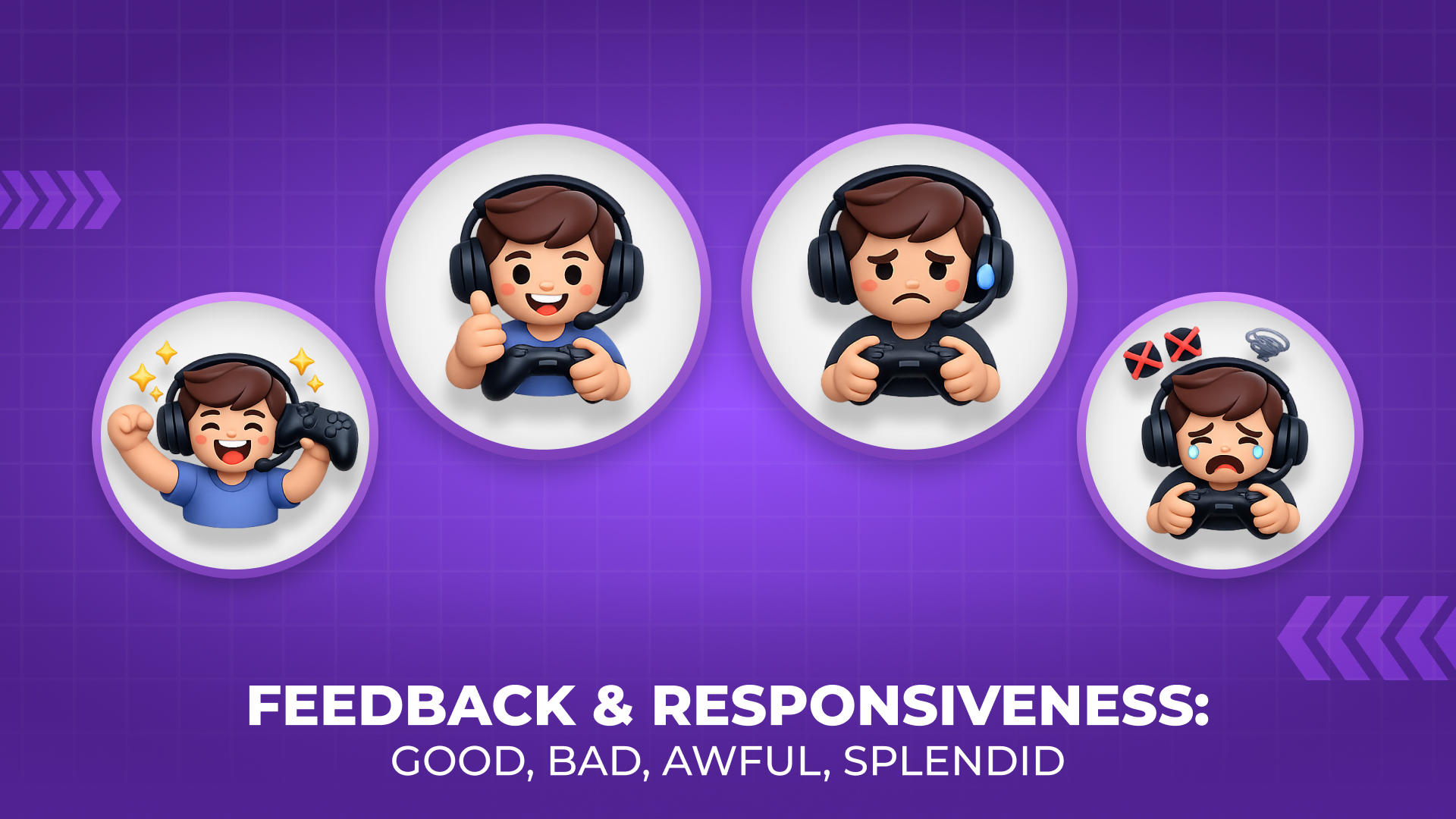
Good feedback is what transforms mechanics into satisfying interaction.
Every action in a game should create some kind of response:
- visual
- audio
- animation-based
- systemic
- emotional
This is one of the most overlooked aspects of game mechanics and systems, especially during early prototyping.
When players attack an enemy, open a menu, land a hit, fail a stealth section, or complete an objective, the game should clearly acknowledge what happened. Even small delays or unclear responses can make gameplay feel awkward or unresponsive.
Papers, Please is an excellent example of feedback-driven design. Every approval stamp, denial sound, document mismatch, or mistake immediately communicates success or failure. The game constantly reinforces player behavior through tiny interactions that feel impactful despite the simplicity of the mechanics.
This principle also strongly overlaps with visual readability and animation quality. Strong game art services and polished VFX are not only aesthetic additions — they are crucial communication tools within gameplay systems.
Progression & Reward: Effort Should Always Pay Off
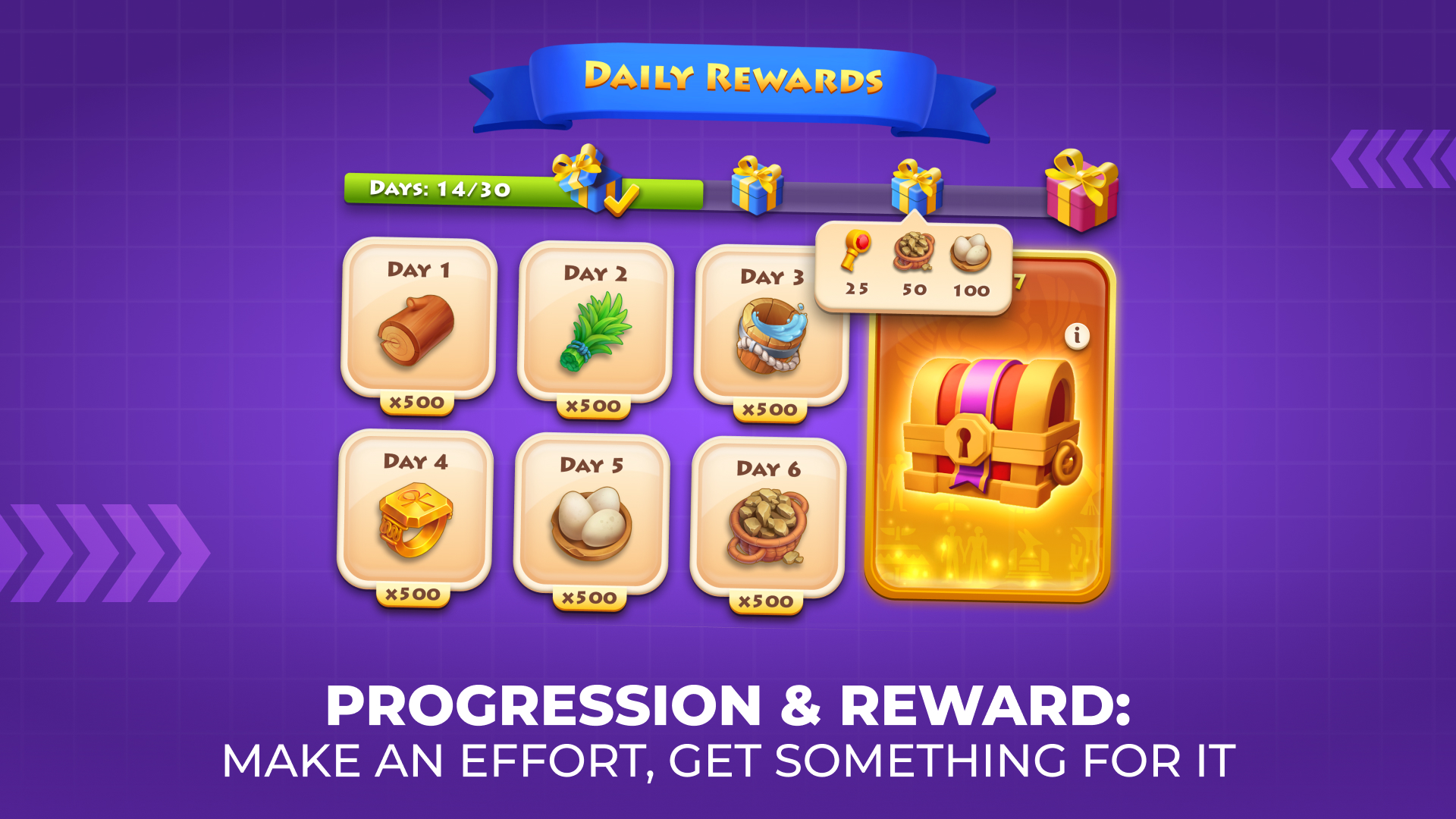
Players need to feel growth.
That growth can come in many forms:
- stronger abilities
- narrative progression
- new mechanics
- visual upgrades
- mastery improvement
- expanded strategic possibilities
One of the key game development basics is understanding that progression is fundamentally emotional. Players want to feel that their effort leads somewhere meaningful.
Good progression systems maintain motivation by continuously introducing new goals, rewards, or possibilities without overwhelming the player. This is especially important in long-term retention-focused games.
Hades is an outstanding example of progression done right. Even failed runs reward the player with story progression, permanent upgrades, character interactions, or new gameplay options. The player almost never feels like time was wasted.
This principle is also closely tied to game progression systems and long-term retention design. Progression should consistently reinforce the game’s central fantasy instead of existing purely for numerical inflation.
Consistency of Rules: Make Your Game Predictable
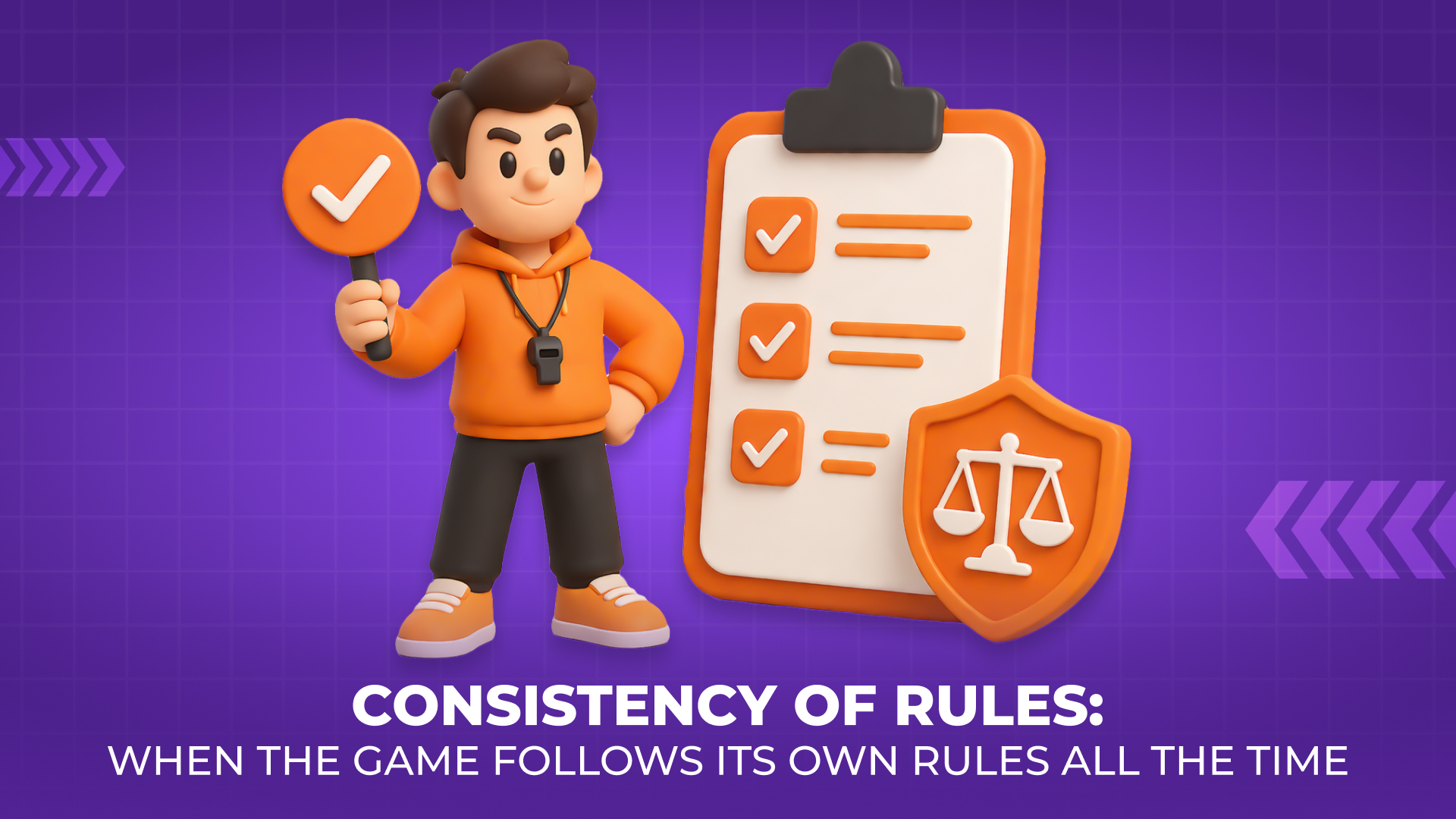
Players learn through repetition.
Once your game establishes a rule, players naturally begin trusting it. Breaking that trust accidentally creates frustration.
If a red barrel explodes when shot once, players will expect every similar barrel to behave the same way in the future. That consistency helps players understand the logic of the world and interact with it confidently.
This is one of the most essential principles of game design because it allows players to develop mastery over systems instead of constantly questioning them.
Portal is one of the clearest examples of consistent rule design. Every mechanic follows understandable physical logic. Once players learn how portals behave, the game builds increasingly complex challenges using the exact same ruleset.
Consistency is also deeply connected to game balance techniques because reliable systems make difficulty feel fair rather than random.
Visual consistency matters as well. Clear silhouettes, recognizable enemy readability, and strong animation language are heavily supported by high-quality 3D character modeling pipelines.
Onboarding & Learnability: Teach Through Gameplay
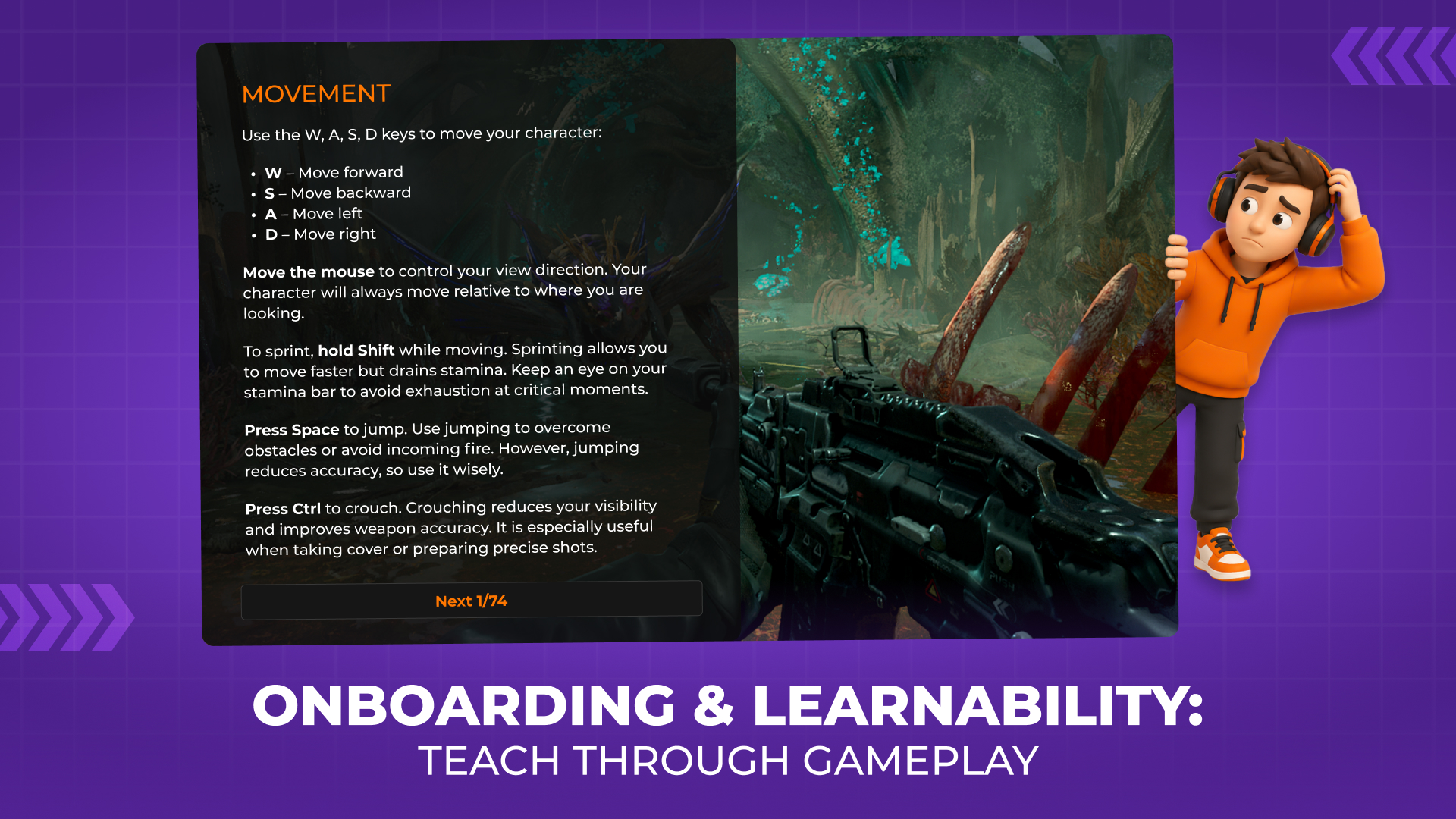
Let’s be honest: nobody likes tutorials.
Good onboarding is often invisible. The best games teach players naturally through interaction instead of overwhelming them with text boxes and instructions.
A strong onboarding process gradually introduces mechanics, allows experimentation, and rewards curiosity. Instead of interrupting gameplay, it becomes part of the experience itself.
Super Mario Bros. remains one of the classic examples of this philosophy. The first level quietly teaches movement, enemy interaction, jumping, danger recognition, and reward structures entirely through level layout.
Similarly, games like Half-Life 2 and Portal consistently introduce mechanics in controlled situations before expanding complexity. This gradual approach is one of the most effective level design fundamentals because it builds player confidence organically.
Good onboarding also depends heavily on environmental readability, intuitive controls, and strong visual communication supported by both UX and art direction.
Player Agency: Let Players Feel in Control
Players want to feel that their actions matter inside the game world.
Even in linear experiences, the illusion of control can dramatically improve immersion and emotional engagement. Strong gameplay design gives players room to express themselves through decisions, exploration, playstyles, or interaction with systems.
Interestingly, true freedom is not always required. Sometimes the feeling of agency is enough.
Cyberpunk 2077 frequently creates the illusion of choice through dialogue systems, quest presentation, and character interaction. While many story outcomes eventually converge, players still feel ownership over how they approach situations and roleplay their version of V.
Sandbox games like Minecraft take this even further by turning player agency into the central experience itself. The game provides tools and systems, but players define their own objectives, pacing, and creativity.
This principle is especially important in modern player experience design because agency directly influences immersion, replayability, and emotional investment.
Common Game Design Mistakes vs Breaking the Rules on Purpose
One of the most important distinctions in professional gameplay design is understanding the difference between accidental frustration and intentional design choices.
Breaking traditional rules is not automatically bad. In fact, many memorable games deliberately subvert expectations:
- Dark Souls embraces harsh punishment and uncertainty
- Getting Over It weaponizes frustration itself
- Papers, Please intentionally creates discomfort and moral pressure
The difference is intentionality.
Inexperienced developers often break design rules accidentally through unclear systems, inconsistent mechanics, poor balancing, or lack of player feedback. Experienced developers break them deliberately to create a specific emotional response.
This is why understanding the basics of game design matters so much. Before subverting expectations, developers first need to understand why those expectations exist in the first place.
The same applies to balancing scope. Many projects fail not because the original idea was bad, but because the team expanded too early without validating the central gameplay experience first.
Conclusion
At the end of the day, most game design principles are less about strict formulas and more about understanding player psychology.
Good games communicate clearly. They reward effort, respect player attention, reinforce their own rules, and create interactions that feel emotionally satisfying. The exact implementation changes from project to project, but the underlying logic remains surprisingly universal.
Perhaps the most important lesson experienced developers repeatedly rediscover during production is this: find the fun first. Before expanding scope, adding dozens of systems, or writing hundreds of pages of documentation, make sure the core interaction itself creates emotion. If players can already smile, laugh, feel tension, or become invested while interacting with a tiny prototype, the foundation is probably strong enough to grow further. That is where strong gameplay design truly begins.
Strong game design principles do not exist in isolation from production realities. Whether you are building an original IP, scaling a live-service title, or validating a new gameplay concept, the ability to identify and refine the core player experience early can significantly reduce development risks and improve long-term player engagement. At Stepico, we approach game development as a collaboration between design, engineering, art, and production teams — because great gameplay is rarely the result of a single discipline working alone.