
More than a decade after its launch, Candy Crush Saga remains one of the world’s highest-grossing mobile games. Its success isn’t built on upfront sales but on a carefully refined mobile game business model that combines free access, engaging progression, and well-timed monetization. For developers and publishers, understanding the Candy Crush business model offers valuable insights into building games that retain players for years while generating sustainable revenue.
In this article, we’ll explore how Candy Crush makes money, why its monetization strategy continues to work, and what game studios can learn from one of the most successful match-3 titles ever created.
Overview of Candy Crush Saga
King launched Candy Crush Saga on Facebook in April 2012, then brought it to iOS and Android later that year. The gameplay is a straightforward match-3 puzzle — swap candies, build matches of three or more, clear the level objective, move on. Anyone can pick it up in under a minute, but new mechanics, blockers, and objectives keep getting layered in, so the game never gets stale even for ten-year veterans.
That accessibility helped Candy Crush become a global phenomenon and turned it into more than just a hit — it became a genuine asset. Activision Blizzard paid $5.9 billion for King in 2016, largely on the strength of Candy Crush alone, which answers “how much is Candy Crush worth” better than any standalone valuation could. When Microsoft acquired Activision Blizzard in 2023, Candy Crush came along with it, landing inside one of the biggest gaming portfolios in the world.
How Candy Crush Makes Money
Many players spend years enjoying Candy Crush without paying anything. That naturally raises the question: how does Candy Crush make money?
The answer lies in a carefully balanced Candy Crush revenue model that monetizes convenience rather than access. Instead of selling the game itself, King generates revenue through optional purchases and complementary monetization channels.
In-app purchases
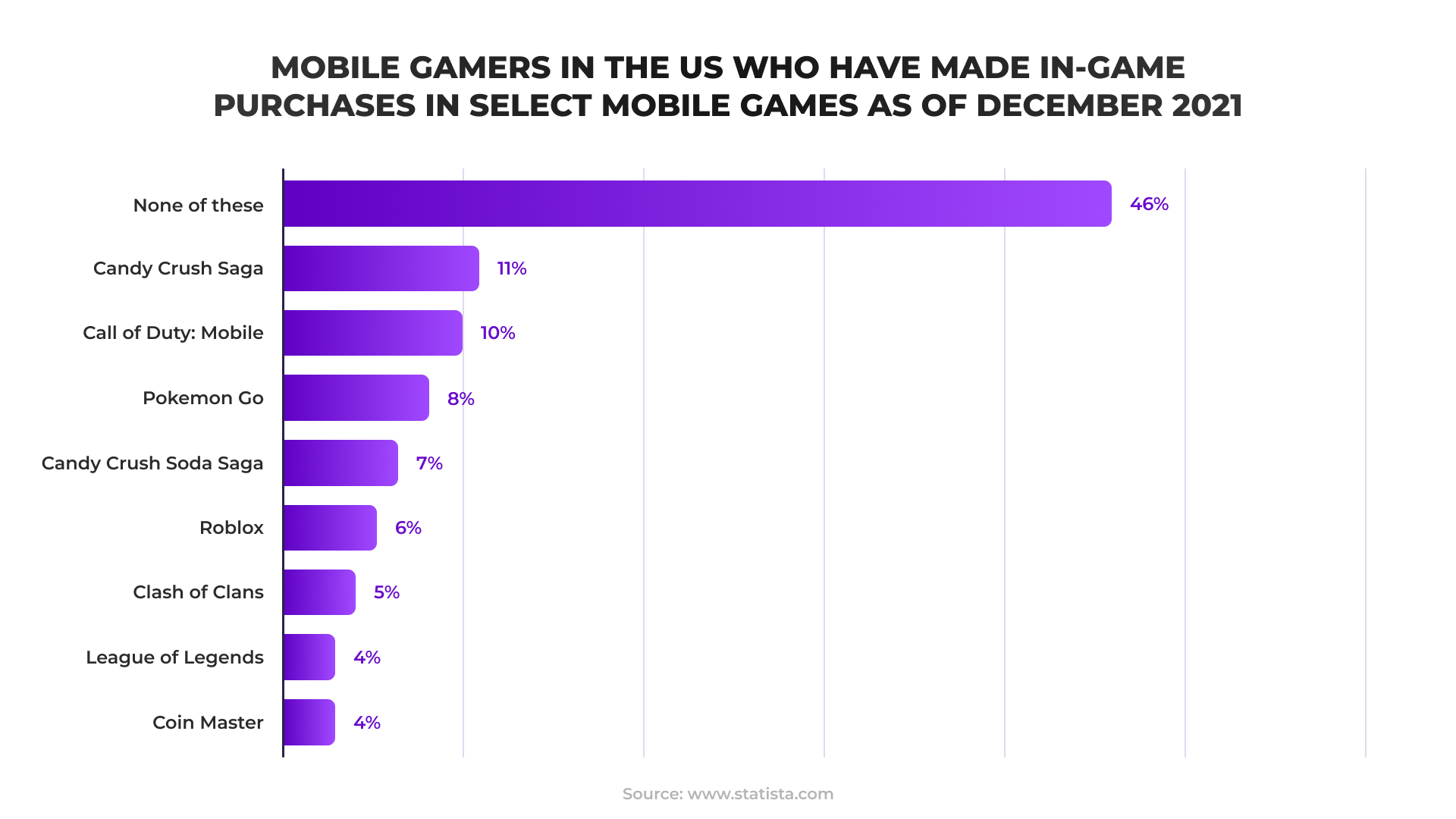
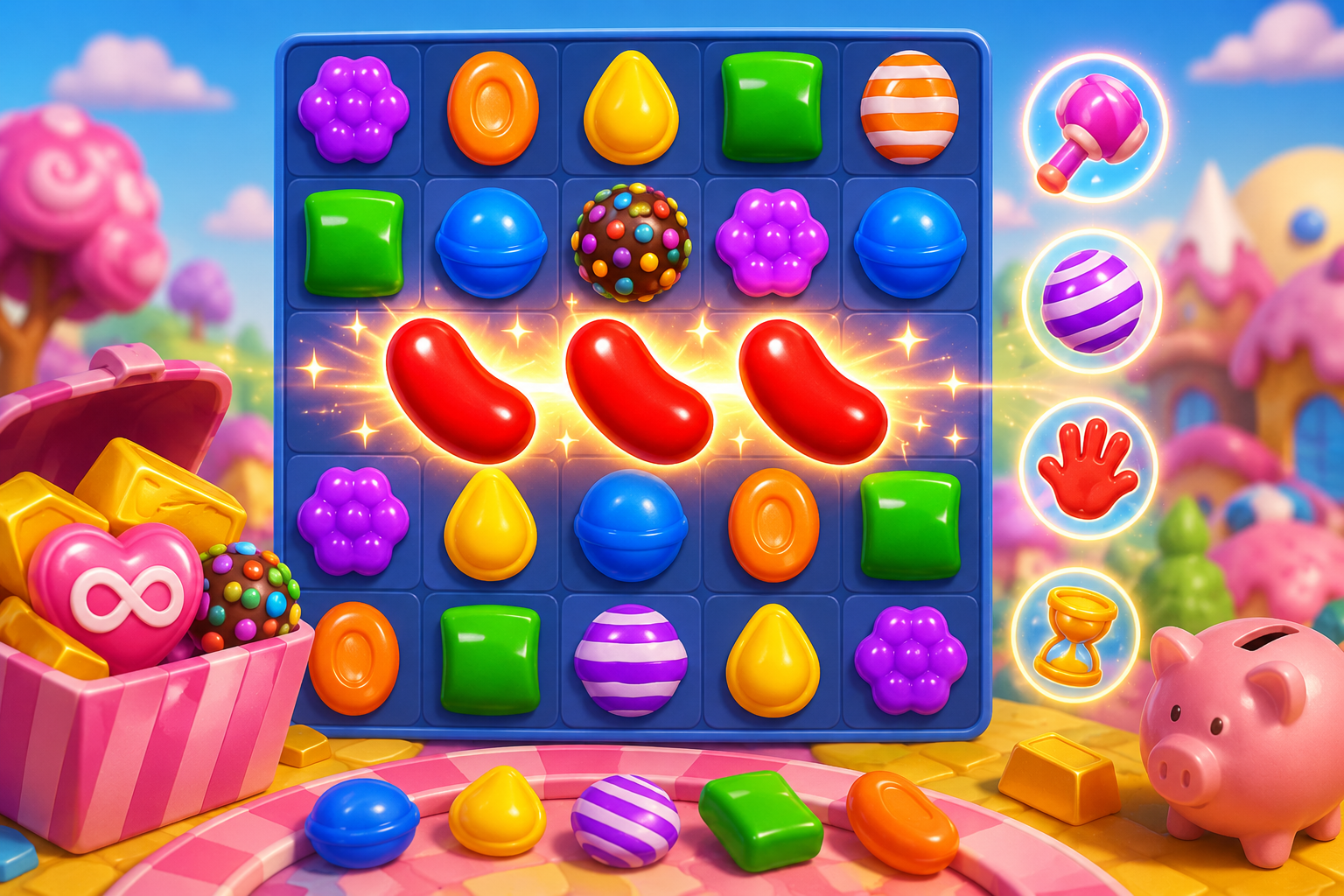
The largest share of Candy Crush monetization comes from in app purchase revenue. Players can buy extra lives, additional moves after a failed level, gold bars, boosters and power-ups, and bundles during limited-time events — virtual goods and boosters that help players push through a tough stage or move faster, but are never required to keep playing. That’s what makes these microtransactions in games work: they feel like optional shortcuts, not mandatory payments.
Limited-time offers and live events
King continuously introduces live events in mobile games to encourage repeat engagement.
These include:
- seasonal celebrations
- tournaments
- progression challenges
- collectible rewards
- competitive leaderboards
Because these rotate constantly, players always have a reason to come back, and event-exclusive bundles create natural purchase moments without feeling aggressive. Some events even involve real cash: the 2025 Candy Crush All Stars tournament drew over 15 million participants competing for a real prize pool, and helped push the game to its second-highest revenue month ever — close to $110 million in net in-app purchase revenue in a single month, a literal answer to “Candy Crush for money.”
Advertising revenue
Unlike most free-to-play games, Candy Crush leans lightly on ads. King pulled most mandatory advertising years ago; what’s left is mostly rewarded video, where players opt in for a clip in exchange for extra moves, lives, or boosters — a small, steady stream of advertising revenue that never interrupts the experience.
Constant content updates
An overlooked piece of the Candy Crush business strategy is sheer content output — new levels nearly every week, plus recurring events, mechanics, and seasonal content. That keeps experienced players from hitting a dead end and gives returning users something new to chase, which is why a game well over a decade old still doesn’t feel finished.
Why the Freemium Model Works
Candy Crush is one of the defining examples of a successful free to play game, and the logic is simple: anyone can download it for free, spending is entirely optional, and players who enjoy it may eventually pay to enhance the experience. Dropping the price tag dramatically widens the funnel — people who’d never buy a premium puzzle game will happily try a free one.
The real work starts after install. King’s user engagement mechanics — daily login rewards, a limited-lives system that naturally caps session length, gradually ramping difficulty, steady progression across thousands of levels, and social features and competitions — stack together into a habit loop that keeps players opening the app for years. Crucially, Candy Crush rarely pushes players to spend right away; it delivers hours of free entertainment first, which is a big reason the monetization doesn’t feel predatory.
Data drives almost every design decision
None of this runs on instinct. Every new level, event, offer, and gameplay tweak is tested before wide release against completion rates, session length, purchase behavior, retention metrics, progression bottlenecks, and event participation. That kind of data driven game development is what lets King optimize player experience and monetization at the same time — table stakes for any live-service studio now.
Retention comes before monetization
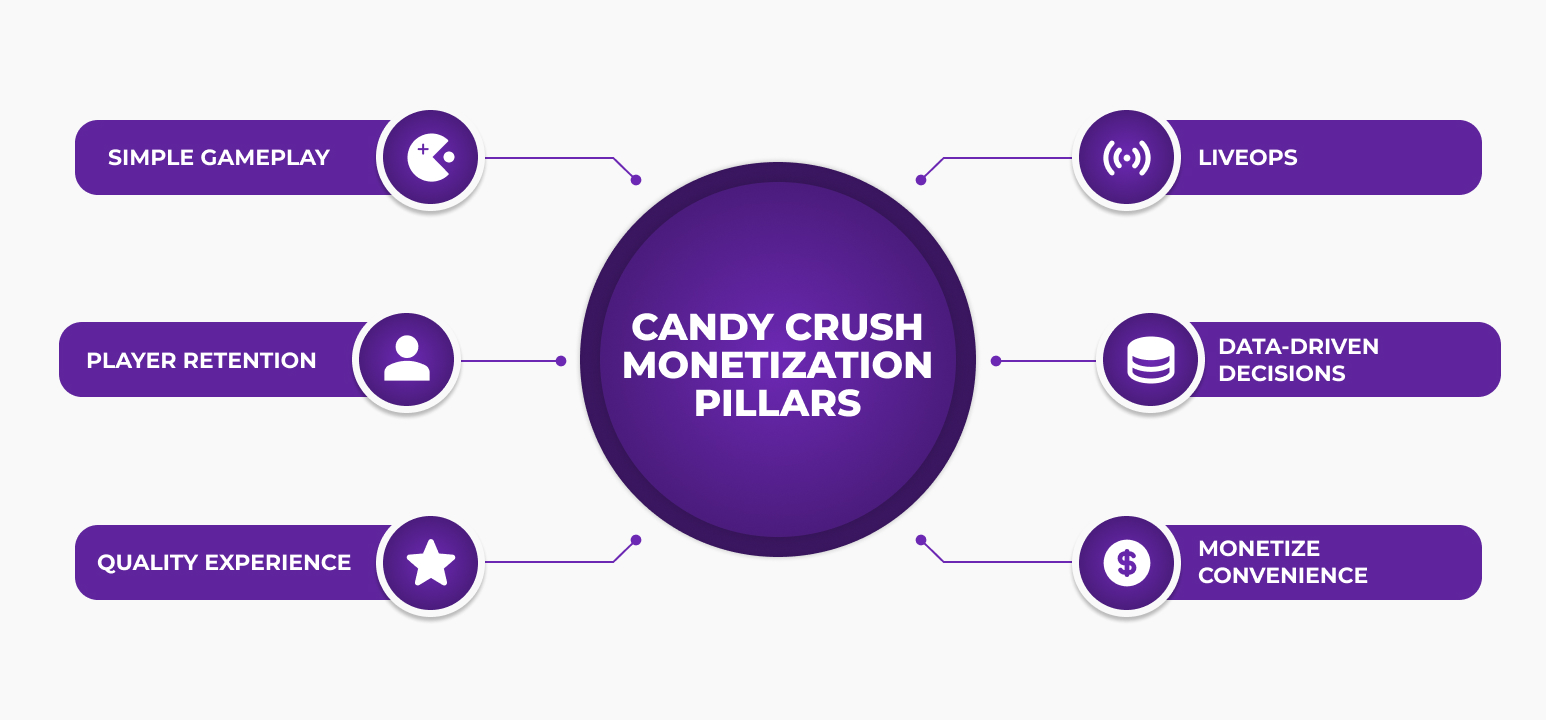
The biggest lesson here is that monetization follows engagement, not the other way around. If players stop coming back, there’s no revenue to capture. That’s why King keeps investing in new content, balanced progression, polished UX, and ongoing LiveOps rather than leaning on aggressive paywalls. For any team building its own player retention strategies, the same rule applies: retention comes first, because nobody spends in a game they’ve already abandoned.
Candy Crush Revenue Statistics
Looking purely at financial performance helps explain why the Candy Crush business model continues to attract attention across the industry.
Some of the most notable numbers, according to Business of Apps research, include:
- More than 3.6 billion downloads across all platforms;
- Approximately 180 million monthly active users in 2024;
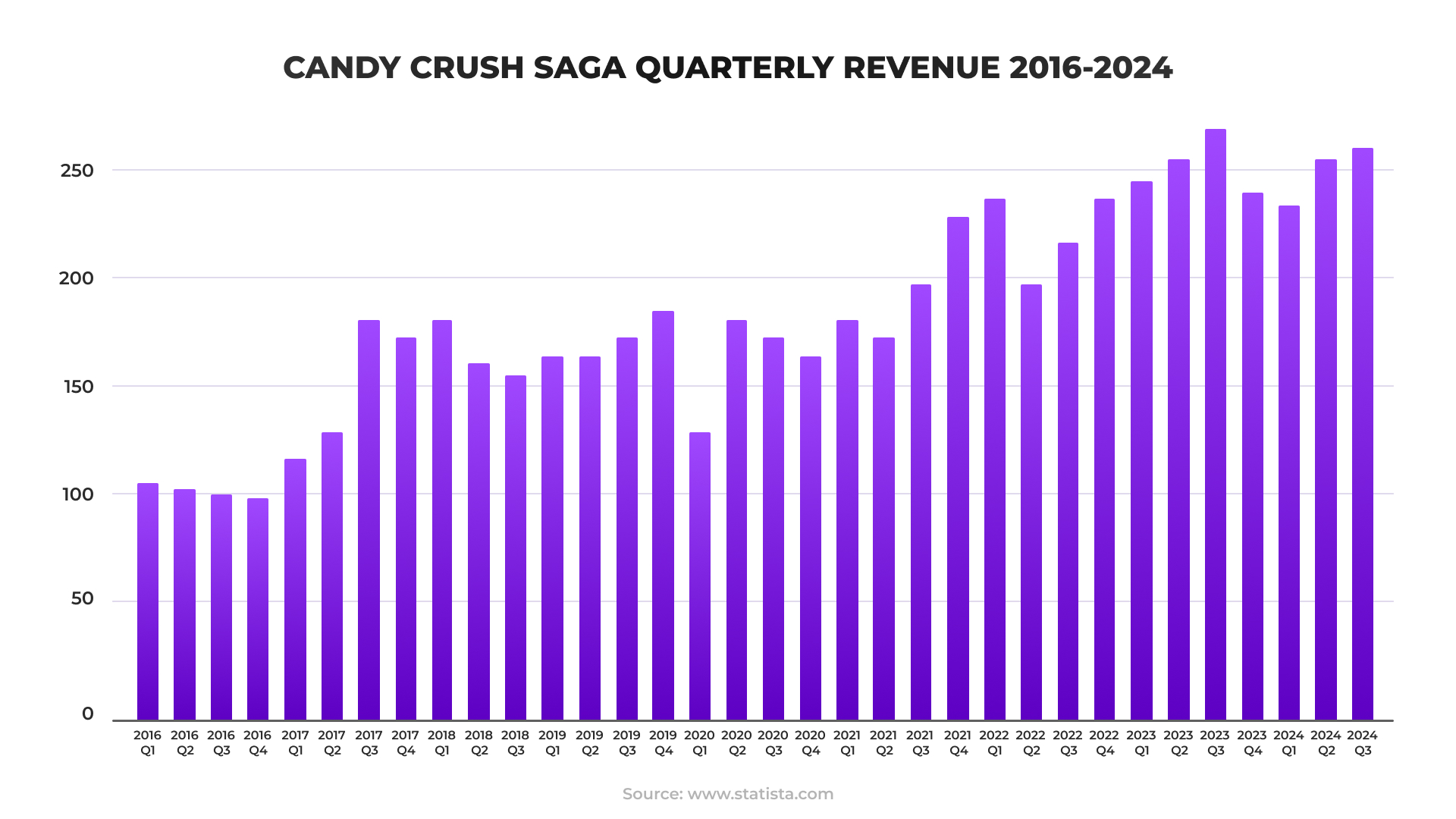
- Around $1.09 billion in annual revenue during 2024, continuing a three-year streak above the $1 billion mark;
- More than $10 billion in cumulative revenue since launch, with consumer spending milestones continuing to rise over time;
What’s more telling than any single figure is the consistency. Across the mobile gaming industry, most hits fall off a cliff within a couple of years; Candy Crush hasn’t. For studios analyzing Candy Crush profit, the real takeaway isn’t the size of the numbers — it’s the stability behind them. King built an ecosystem where LiveOps, content, retention, and monetization reinforce each other instead of relying on one viral spike — a durable example of a sustainable mobile game business model.
How to Build a Successful Match-3 Game
Candy Crush wasn’t the first match-3 game on the market, and it won’t be the last. What sets it apart is execution sustained over more than a decade, not the original idea. A few principles carry over to match 3 game monetization, mobile game monetization, and any mobile game business model built on long-term engagement.
Start with Gameplay That Anyone Can Learn
The strongest mobile games keep the barrier to entry low without sacrificing long-term depth. Candy Crush teaches its core mechanics in minutes, then gradually layers in new blockers, objectives, and level designs as players progress. The core loop has to hold up on its own — no monetization system makes up for a game that isn’t fun.
Design Progression Around Long-Term Engagement
Modern mobile games are services, not one-time products. A good progression system gives players clear goals while regularly introducing new level packs, seasonal events, collectible rewards, and leaderboards to prevent stagnation. These pull players back without relying solely on paid incentives, and stronger engagement creates more room for monetization later.
Monetize Convenience, Not Frustration
The Candy Crush revenue model never locks players behind paywalls — it sells convenience: boosters, extra moves, momentum. Players spend because they want to keep going, not because the game forces their hand, and that principle holds well beyond puzzle games: sustainable monetization improves the experience instead of restricting it.
Build LiveOps Into the Production Plan
Most successful mobile titles launch with only a fraction of their eventual content — the difference is a LiveOps strategy that’s already built in. Regular updates, new events, seasonal themes, and fresh mechanics keep interest alive long after release, and LiveOps doubles as an ongoing test bed for new features and monetization tweaks. Post-launch support needs to be part of the plan from day one, not bolted on after.
Let Analytics Guide Decisions
Successful mobile games rarely run on gut feel. Tracking player behavior shows teams where users stall, which features drive engagement, and how monetization affects the overall experience — through metrics like retention, session length, conversion rate, and completion rates. That data should directly shape what gets built next.
Invest in Quality Across the Entire Experience
Candy Crush works because every piece pulls in the same direction — responsive controls, polished visuals, satisfying animations, balanced difficulty, and clean UX. Studios building a competitive title today need that same end-to-end bar — solid mechanics, technical performance, scalable pipelines, LiveOps support, and monetization that feels fair rather than forced.
For teams building new mobile experiences, partnering with an experienced studio can cut a lot of that production risk. Stepico supports publishers and game companies end-to-end on Mobile game development, from concept validation and prototyping through LiveOps-ready production. For projects targeting Apple’s ecosystem, our iOS game development services help optimize performance, platform compliance, and player experience across iPhone and iPad.
Conclusion
Candy Crush didn’t get a decade of billion-dollar years from one clever monetization trick. It got there by stacking a simple, satisfying core loop with retention-first design, constant content, and a monetization model players don’t resent. That combination is replicable — it just takes the production discipline to pull off consistently, which is harder than it looks once you’re juggling content cadence, LiveOps, and a live monetization economy at the same time.
If you’re building a match-3, puzzle, or any free-to-play title and want a partner who’s shipped this kind of system before, Stepico’s team can help scope the production plan, the LiveOps pipeline, and the systems that turn a fun game into a sustainable one. Get in touch and let’s talk about what your title needs to get there.
FAQ
What is the Candy Crush business model?
The Candy Crush business model is based on the free-to-play model. Players can download and enjoy the game at no cost, while revenue is generated through optional in-app purchases, rewarded advertising, and ongoing LiveOps content that keeps players engaged.
How does Candy Crush make money?
If you’ve wondered how does Candy Crush make money, the answer is primarily through optional purchases. Players buy gold bars, boosters, extra moves, and lives, while rewarded ads provide an additional revenue stream. Frequent events and content updates also encourage long-term engagement and spending.
How much is Candy Crush worth?
It’s difficult to assign a standalone valuation to the franchise today because it is part of Microsoft’s gaming portfolio. However, King — the company behind Candy Crush — was acquired by Activision Blizzard for $5.9 billion in 2016, largely on the strength of Candy Crush’s success and earning potential.
How much revenue does Candy Crush generate?
Candy Crush revenue has remained remarkably consistent for more than a decade. According to industry estimates, the franchise generated over $1 billion in annual revenue during 2024 and has surpassed $10 billion in lifetime consumer spending, making it one of the highest-grossing mobile game franchises ever created.
Why is Candy Crush still so popular?
Candy Crush combines accessible gameplay with regular content updates, balanced progression, LiveOps events, and fair monetization. These factors encourage players to keep returning, helping the game maintain a large active audience years after its original release.
What can game studios learn from Candy Crush?
Perhaps the biggest lesson is that successful mobile game monetization starts with player engagement. Rather than focusing solely on revenue, studios should build compelling gameplay, invest in retention, support games with ongoing content, and use analytics to continuously improve the player experience.