
Weapons are among the most scrutinized assets in any RPG. Players spend hours in inventory screens, debating stat trade-offs and visual design with the same intensity they bring to boss fights. That scrutiny is a signal: weapon systems are a primary driver of perceived quality, and every decision — from move set architecture to asset fidelity — has downstream consequences for player retention and review scores.
This guide approaches RPG weapon categories not from a player’s perspective, but from a production and design standpoint. Whether you’re scoping an art pipeline, briefing an outsourcing partner, or evaluating the mechanical depth of your combat system, understanding how weapon types function — and why — helps you build them better.
What Makes RPG Weapon System Work?
In role-playing games, weapons are rarely just damage-dealers. They’re the primary interface between the player and the game’s mechanical identity. A weapon type that feels distinct must be distinct at every layer: stats, animation, sound, visual design, and tactical function.
Most weapon categories are defined by three interacting factors:
Range — close, mid, or long engagement distance, which determines encounter design and enemy AI behavior
Damage type — physical, elemental, or magical, which drives itemization and build diversity
Combat role — offensive, defensive, or crowd-control function, which shapes how encounters are authored
From a production standpoint, each of these factors generates requirements. Range affects hitbox geometry and camera behavior. Damage type affects VFX and shader work. Combat role affects animation states and ability integration. Getting clarity on weapon categories early in pre-production is what separates coherent pipelines from expensive revisions.
Main RPG Weapon Types
Melee Weapons

Melee weapons — swords, axes, hammers, daggers, spears, polearms — are the foundation of most RPG combat systems. They reward timing and positioning, and they define the risk/reward core of close-range engagement: you have to get in to deal damage, but proximity gives you control over the fight’s pace.
From a design perspective, the challenge with melee weapons is differentiation. A longsword and a greatsword can share a damage type and a damage tier while feeling completely different, but only if their move sets, weight, and reach are animated with precision. When two melee weapons feel identical despite different names, it’s almost always an animation and timing failure rather than a stat failure. The visual design has to do real mechanical communication — the player should be able to read range, speed, and impact from the asset itself.
Melee weapons typically scale with strength-based attributes and anchor warrior or tank archetypes. They’re the highest-volume weapon category in most RPGs, which means they’re also the category where production shortcuts are most visible.
Ranged Weapons
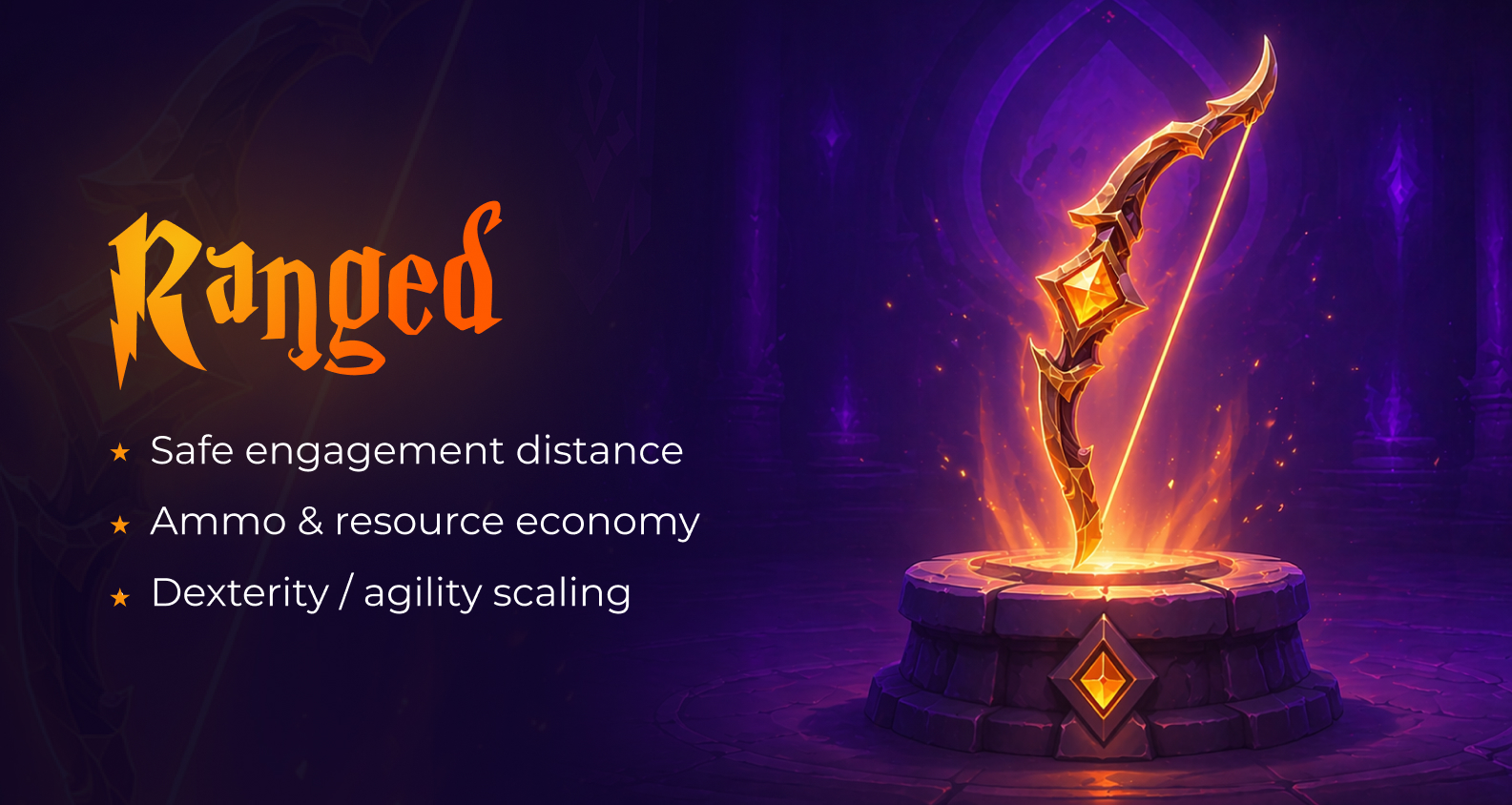
Bows, crossbows, slings, and thrown projectiles introduce a different design contract: safety in exchange for resource management. Ranged gameplay revolves around positioning, ammunition economy, and attack spacing — which means the tactical depth lives in systems design, while the production challenge lives in animation.
Ranged weapon animation is technically demanding because the full attack cycle — draw, aim, release, follow-through, and projectile — must read cleanly at distance while staying responsive to player input. Bows in particular require careful rigging and IK work to maintain believability across a wide range of character builds and equipment combinations.
The glass cannon trade-off (lower defense, limited range at close quarters, ammunition dependency) is a design convention that most players accept — but it only works if the fantasy of the archetype is delivered visually. A bow that looks like a placeholder kills the ranger fantasy before stats enter the conversation.
Firearms
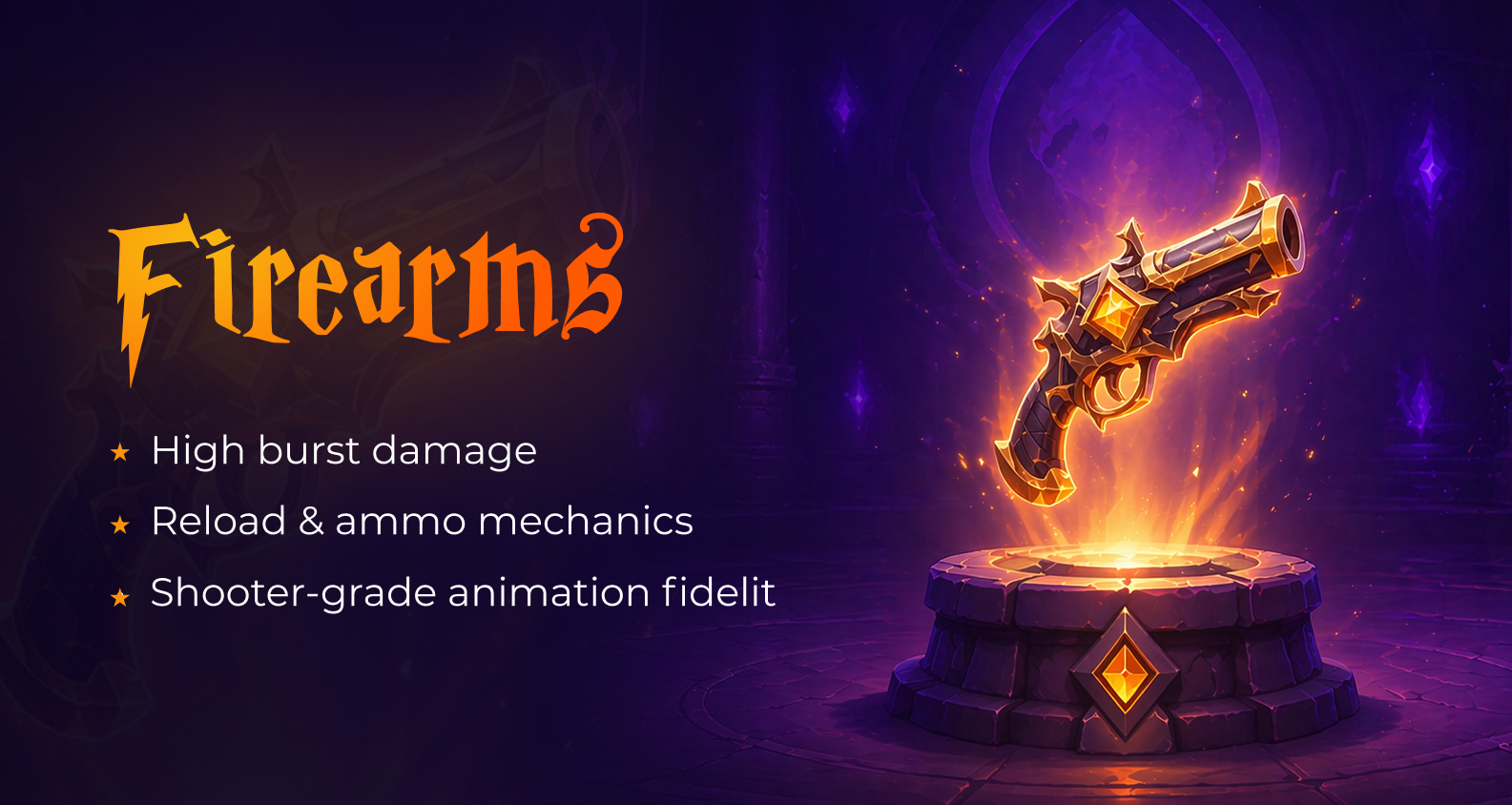
In modern, post-apocalyptic, and sci-fi RPG settings, firearms — pistols, rifles, shotguns, energy weapons — introduce mechanical expectations borrowed from action and shooter genres. Players bring prior experience to these weapons, which raises the baseline for feel and responsiveness.
Balancing firearms in RPG systems originally designed around melee and magic is one of the trickier design problems in the genre. Ammo economy, reload timing, damage-per-second versus burst windows, and accuracy mechanics must fit within progression systems designed around character attributes rather than player skill. Games like Fallout and Cyberpunk 2077 handle this differently — Fallout leans on VATS to mediate the tension between RPG and shooter systems, while Cyberpunk leans into the shooter side more aggressively.
From an asset production perspective, firearms require animation work that is both high-frequency (every shot fires the same cycle) and high-scrutiny (players notice weapon jank immediately). Reload animations, in particular, are among the most replayed animations in any game that features them.
Magic Weapons
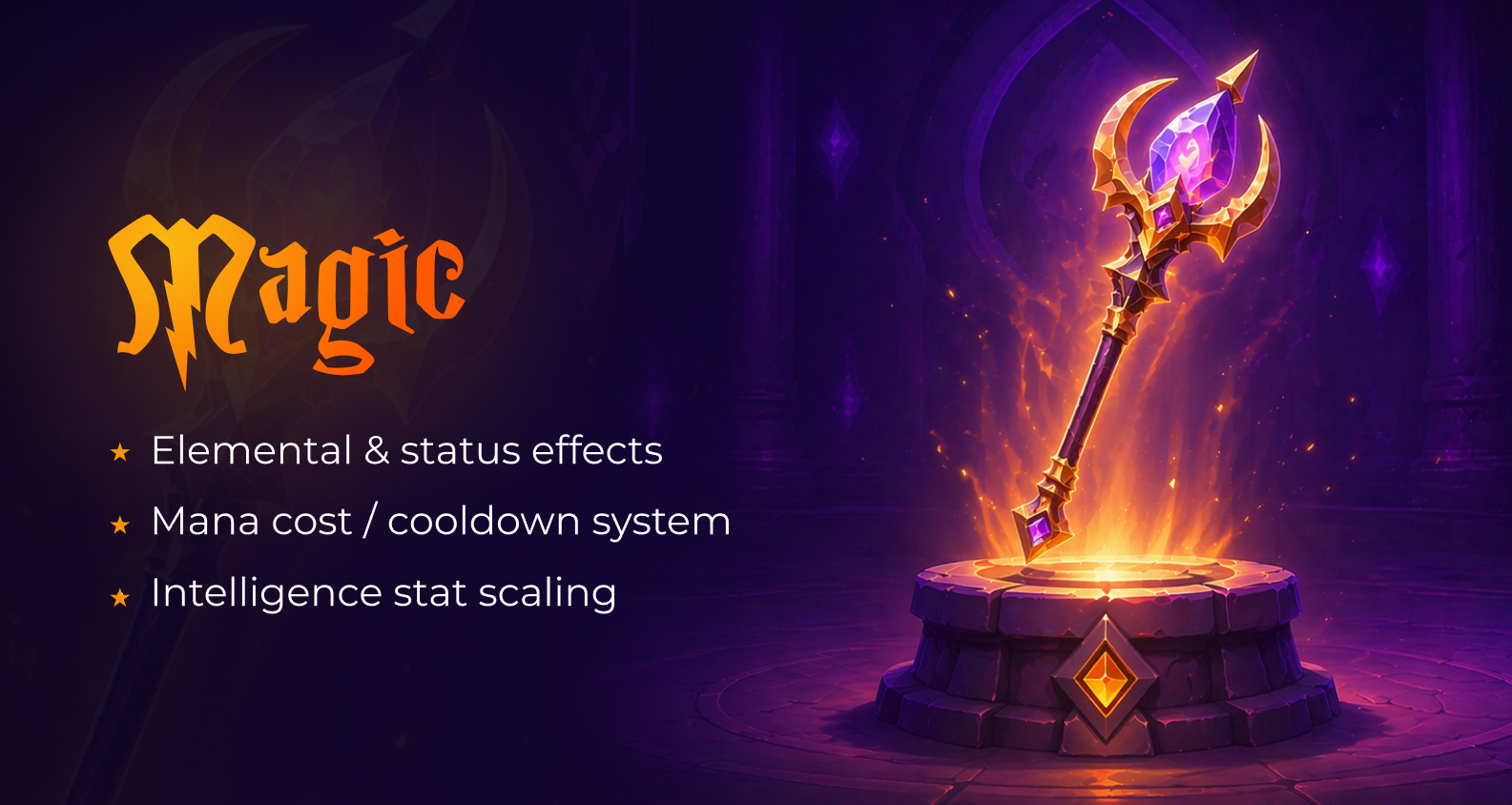
Staves, wands, spell catalysts, enchanted melee weapons, and tomes occupy a unique space in RPG weapon design. They’re defined less by physical form than by the systems they enable — elemental damage types, status effects, cooldown management, mana economy, and ability combinations.
Magic weapons are design-expensive in the best way: they expand combat depth substantially, support a wider range of character archetypes, and give players expressive tools beyond attack patterns. They are also production-expensive, because every distinct spell or effect requires VFX work, and the interaction between a staff’s animation and its cast effect must feel cohesive rather than composited.
The most memorable magic weapon designs — Gandalf’s staff, DS3’s moonlight greatsword, Baldur’s Gate 3’s illithid-infused spellcasting items — succeed because the visual design and the mechanical function reinforce each other. The weapon looks like it does what it does.
Thrown and Hybrid Weapons
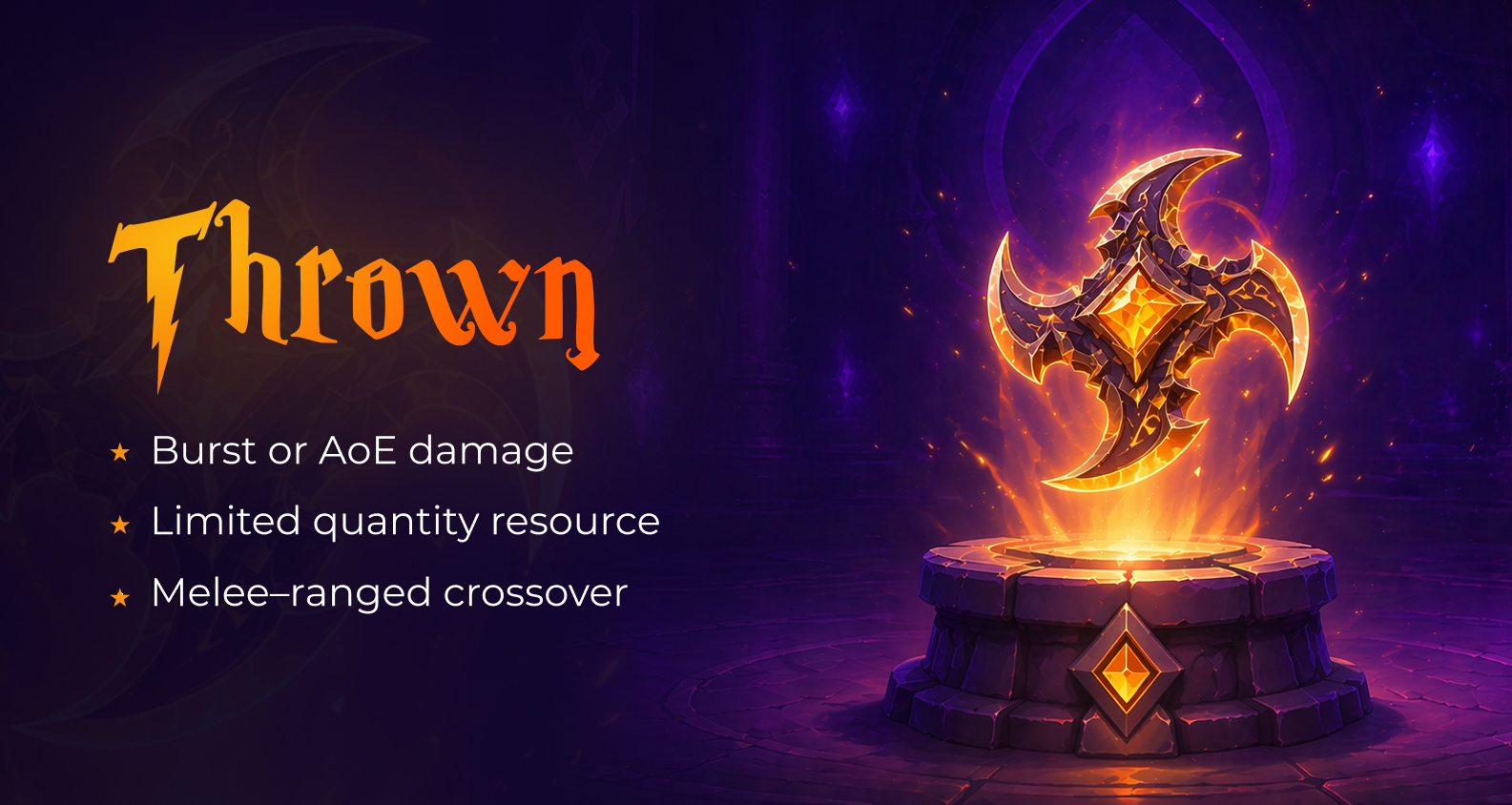
Throwing axes, bomb-type items, and projectile spears occupy a hybrid space that gives designers a useful tool: burst damage or area-of-effect output that doesn’t belong to either the melee or ranged archetype cleanly. These weapons are rarely a player’s primary option, but they serve important tactical functions — finishing enemies, breaking shields, applying crowd control, or enabling environmental interactions.
Production-wise, thrown weapons are often underinvested. When they work well (Monster Hunter’s clutch claw mechanics, Dark Souls’ throwing knives as resource-management tools), it’s because they received real design and animation attention. When they feel like an afterthought, players skip them.
Unconventional Weapons
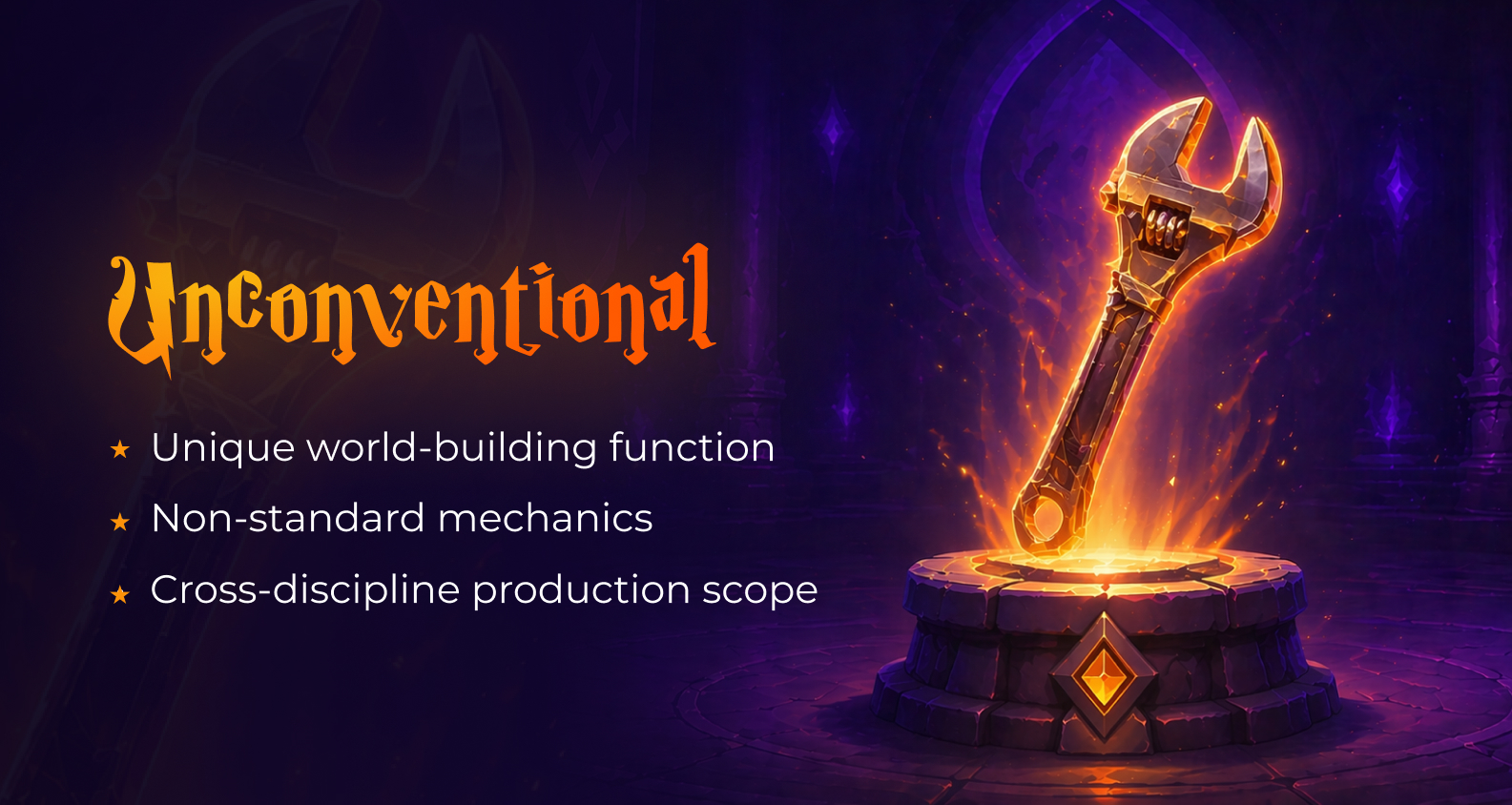
Some of the most memorable weapon designs fall outside the standard taxonomy: musical instruments that function as buff/debuff systems, modular or transforming weapons (Bloodborne’s trick weapons are the definitive example), improvised environmental objects, and weapons that blur the line between item and ability.
Unconventional weapons serve a purpose beyond mechanical variety — they communicate world-building. A game that lets you play a bard whose instrument is a weapon tells you something about its setting before a single line of lore is delivered. This makes unconventional weapons a high-value investment for studios trying to establish strong identity, but they require cross-discipline coordination (design, animation, sound, narrative) that generic weapon types don’t.
How Weapon Categories Shape Production Decisions
Combat Architecture
Weapon types don’t exist in isolation — they define encounter design. A game built around melee weapons creates enemies that punish distance and reward aggression. A game with robust ranged systems needs arenas designed around cover, elevation, and line-of-sight. Getting this relationship right requires weapon categories to be locked before level design begins, not retrofitted afterward.
Build Diversity and Progression
Weapons anchor character builds. A heavy weapon user invests in strength; a mage invests in intelligence; a rogue invests in dexterity. This creates the branching skill trees, equipment synergies, and long-term progression systems that define replayability in the RPG genre. When weapon categories are designed with genuine mechanical differentiation, build diversity follows naturally. When they’re differentiated only by stats, players converge on a single optimal path quickly.
Balancing Across the Weapon Roster
Weapon balance is one of the most persistent live-service challenges in RPG development. Each type must feel viable without being dominant. Key variables include damage scaling, attack speed, stamina or mana costs, and the practical risk/reward of each engagement range.
The games that get this right — the Dark Souls series, with its 50+ weapons each carrying distinct move sets and stat scaling; Monster Hunter, where the weapon you choose restructures your entire playstyle — do so because balance was embedded in the design of each weapon type from the beginning, not patched in after launch.
Weapons as a Production Asset Category
This is where taxonomy meets pipeline.
Each weapon type generates a distinct set of production requirements. Melee weapons are high-volume and high-scrutiny — they’re seen in every combat encounter and every inventory screenshot. Magic weapons are VFX-heavy and require tight coordination between animation and technical art. Firearms demand animation precision that approaches the standards of the shooter genre. Unconventional weapons require creative direction that goes beyond standard asset briefs.
For studios building RPGs, this means weapon production is rarely uniform. A single weapon type can contain dozens of unique assets — each requiring modeling, texturing, rigging, animation, VFX integration, and sound pass — and the complexity scales with mechanical ambition.
High-quality 3D Game Modeling is foundational to making weapon types feel distinct and believable at the asset level. Players read mechanical information from visual form — weight, sharpness, magical charge, fragility — before a single stat is displayed. And 3D Animation is what converts a weapon model into a combat tool: the draw speed, attack arc, impact frame, and recovery all communicate how a weapon behaves before the player processes the numbers.
Conclusion
Weapon systems are not a feature of RPG development — they are a structural commitment. The categories you ship define your combat identity, your art pipeline scope, and your post-launch balance roadmap. Underinvesting in weapon design early means overinvesting in fixes later.
Studios that ship RPGs with distinctive, well-animated weapon rosters share a common pattern: they treat weapon production as a discipline that spans design, art, animation, and technical implementation — not a task that falls to whoever has capacity. When that cross-discipline investment isn’t available internally, the decision becomes whether to delay or to bring in a specialized partner.
If your team is building out a weapon system and needs production capacity on the art and animation side — whether that’s full asset creation, style-matched augmentation of an existing roster, or a co-development engagement — Stepico works with RPG studios on exactly this kind of scope. Reach out to discuss your project, and we’ll tell you quickly whether we’re a fit.
FAQ
What are RPG weapons?
RPG weapons are combat tools used by characters in role-playing games, typically tied to stats, progression systems, and character builds.
What are the main RPG weapon types?
The main rpg weapon types include melee, ranged, firearms, magic, thrown, and unconventional weapons.
What is the difference between melee and ranged weapons?
Melee weapons require close-range combat, while ranged weapons allow attacking from a distance. This distinction defines melee vs ranged weapons gameplay dynamics.
Are magic weapons better than physical weapons?
Not necessarily. Magic weapons offer flexibility and elemental effects, while physical weapons often provide consistent damage and durability. The choice depends on build and playstyle.
Why are weapon systems important in RPGs?
Weapon systems shape combat mechanics, player choices, and progression. They are central to both gameplay experience and game design.