
The tools didn’t arrive with fanfare. They showed up unannounced in Slack threads and GitHub commits — a script drafted faster than expected, a concept batch generated before lunch, a bug tracked down in minutes instead of hours. By 2026, the question for most development teams is no longer whether AI belongs in a game production pipeline, but where it actually earns its place.
Early “AI game generators” mostly delivered disconnected mechanics and barely-playable demos. What’s here now is different — not a magic button, but a genuine workflow accelerator that changes the economics of early-stage development in ways that matter. For indie developers and small studios especially, that shift is worth understanding clearly, because the hype still outpaces the honest picture by a wide margin.
What Making a Game With AI Actually Means
The biggest misconception in AI game development is that AI replaces the development process itself. It doesn’t — and in 2026, the most productive teams aren’t trying to make it. They’re using it as a production assistant wired into workflows they already trust.
In practice, that means gameplay prototyping, scripting support, debugging, placeholder asset generation, documentation, dialogue ideation, and workflow automation. Traditional engines — Unreal Engine, Unity or Godot — remain the foundation. AI accelerates the work happening inside them.
| Development Area | AI Assistance | Human Responsibility |
| Gameplay Systems | Boilerplate scripting, rapid prototyping, gameplay logic scaffolding | System architecture, balancing, long-term maintainability |
| Art Production | Concepts, placeholder visuals, refining sketches into more finalized concepts, quick visualization of multiple scenarios or styles for faster decision-making | Final art direction, polish, visual cohesion, production-ready assets |
| QA & Testing | Automated testing support, telemetry analysis, repetitive scenario validation | Player experience evaluation, accessibility, emotional pacing |
| Narrative | Dialogue drafts, quest ideas, branching scenario variations | Emotional pacing, narrative consistency, writing quality |
| Production | Documentation assistance, workflow automation, meeting summaries | Scope management, leadership, production planning |
Understanding where those boundaries sit isn’t pessimism — it’s what separates teams that get real mileage from AI tools from teams that generate a lot of broken code very quickly.
How AI Changes Prototyping and Iteration
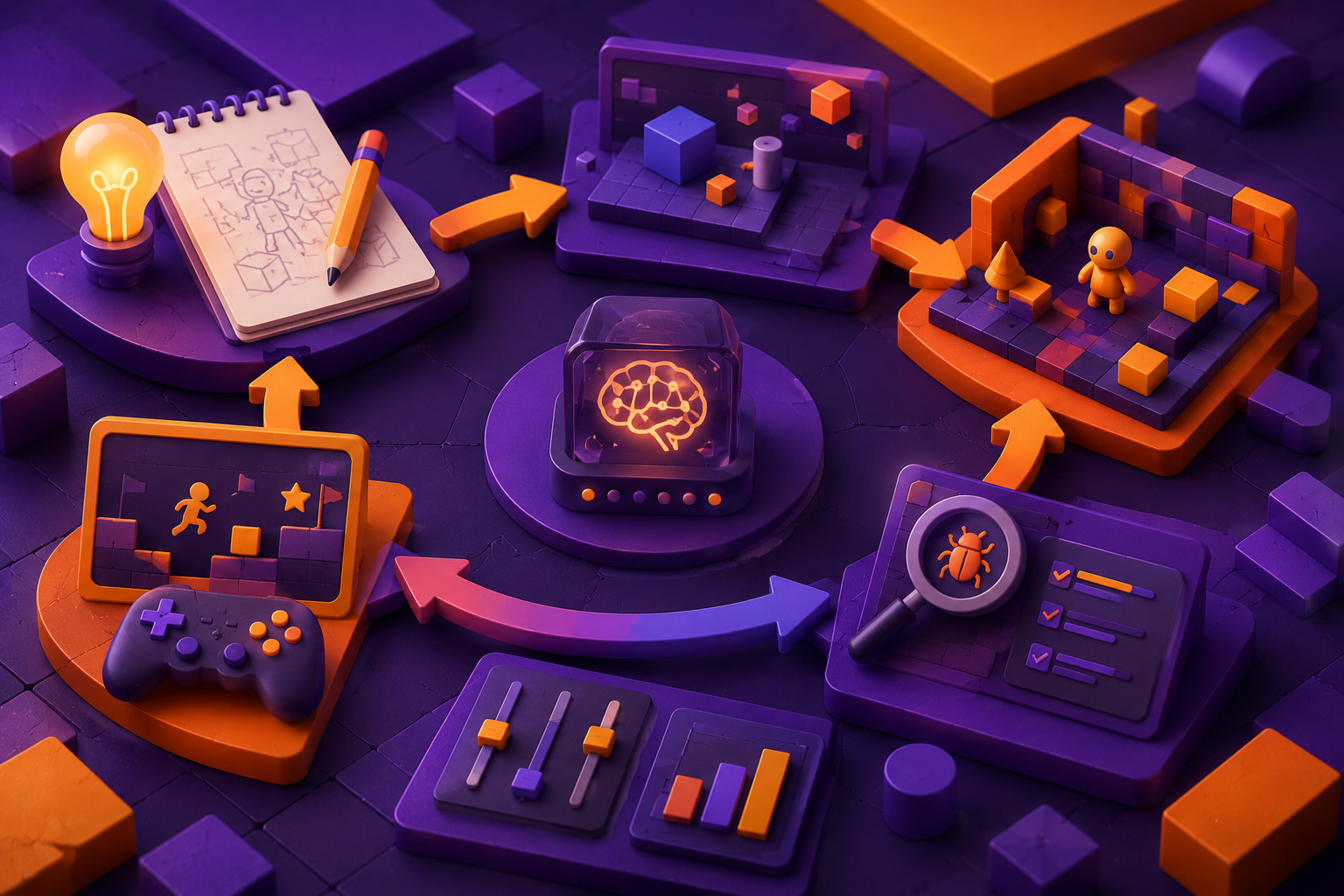
If there’s one place where AI tools for game development have already proven their value unambiguously, it’s rapid prototyping. Modern language models can generate surprisingly functional scaffolding for inventory systems, dialogue trees, quest logic, enemy behavior, save systems, and UI interactions — the kind of boilerplate that used to eat junior developer hours before the interesting design work could even begin.
Tools like Claude, ChatGPT, and GitHub Copilot — which GitHub itself describes as an “AI pair programmer” integrated directly into development environments — are now standard in many studios’ toolkits. But the real advantage isn’t raw automation. It’s what faster iteration does to the shape of a project.
Game development has always been constrained by the cost of experimentation, and AI compresses that process. Testing a single mechanic traditionally meant programming time, temporary art, UI implementation, debugging cycles, and QA review — before you even knew if the idea was worth keeping. Now, a small team — or even one experienced game designer — can explore several gameplay directions in roughly the same time it once took to build one, which means weak core loops and unclear progression systems get identified — and killed — much earlier.
That’s the most honest answer to how to make a game with AI in 2026: it doesn’t build the game for you, but it dramatically lowers the cost of finding out what the game should be.
AI-Assisted Coding Still Requires Engineering Oversight
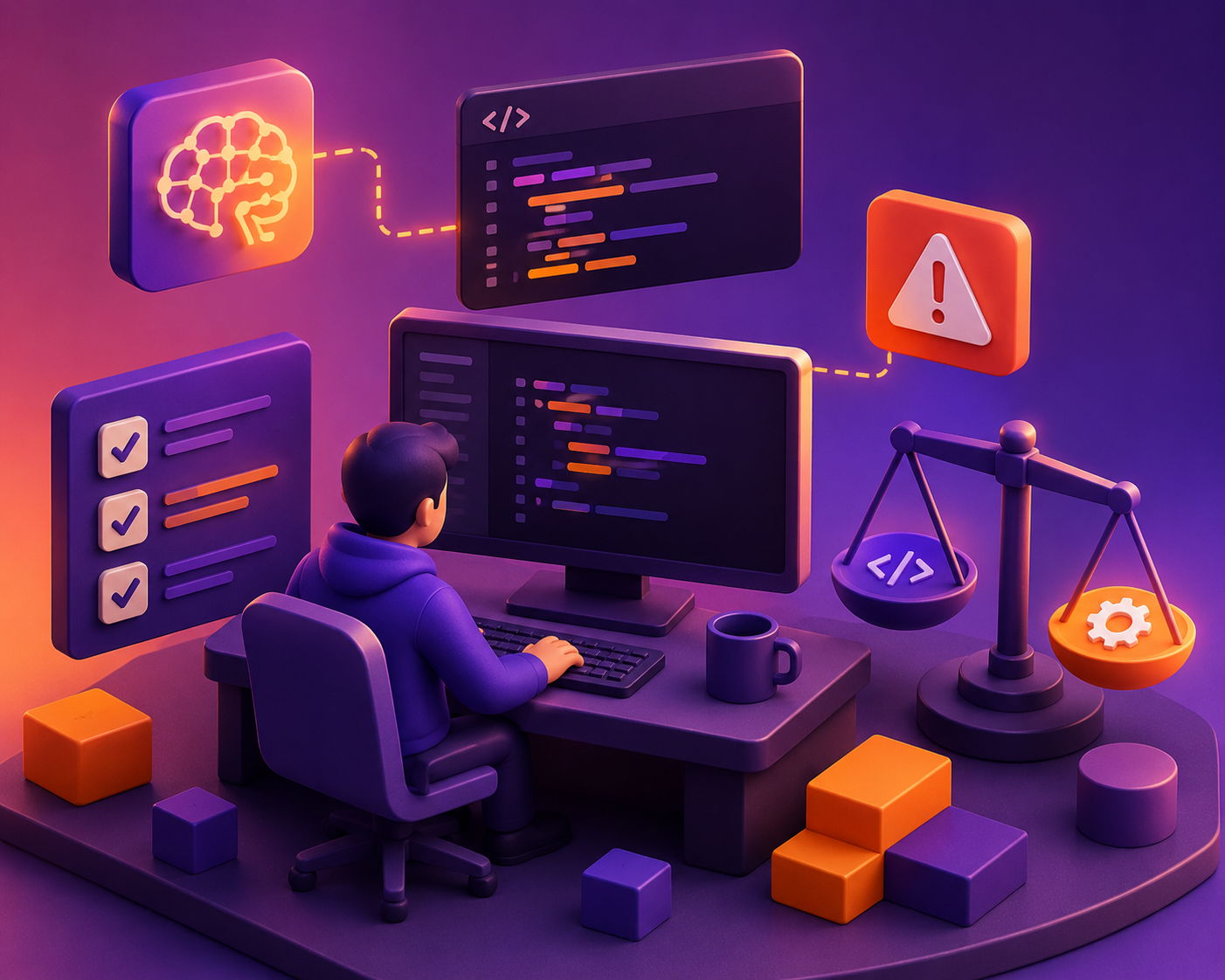
AI-generated code is useful, sometimes impressively so — and it still requires a real engineer watching it. The current generation of game development AI tools performs best on predictable, repetitive programming tasks: editor scripting, utility systems, state machines, boilerplate generation, debugging suggestions. Hand it a well-scoped problem and it will usually produce something functional faster than typing from scratch.
The challenge shows up at scale. AI can generate locally coherent solutions that introduce inconsistent architecture, optimization problems, or maintainability issues when those solutions are stitched together across a larger project. Research evaluating Copilot and similar assistants consistently identifies this tradeoff — developer productivity increases, but so does the risk of accumulating technical debt if generated code goes unreviewed.
Faster output can create technical debt faster. That’s not an argument against using AI coding assistance — it’s an argument for treating it as an acceleration layer with a human review gate, not an autonomous engineering solution.
AI Asset Generation Works Best During Prototyping
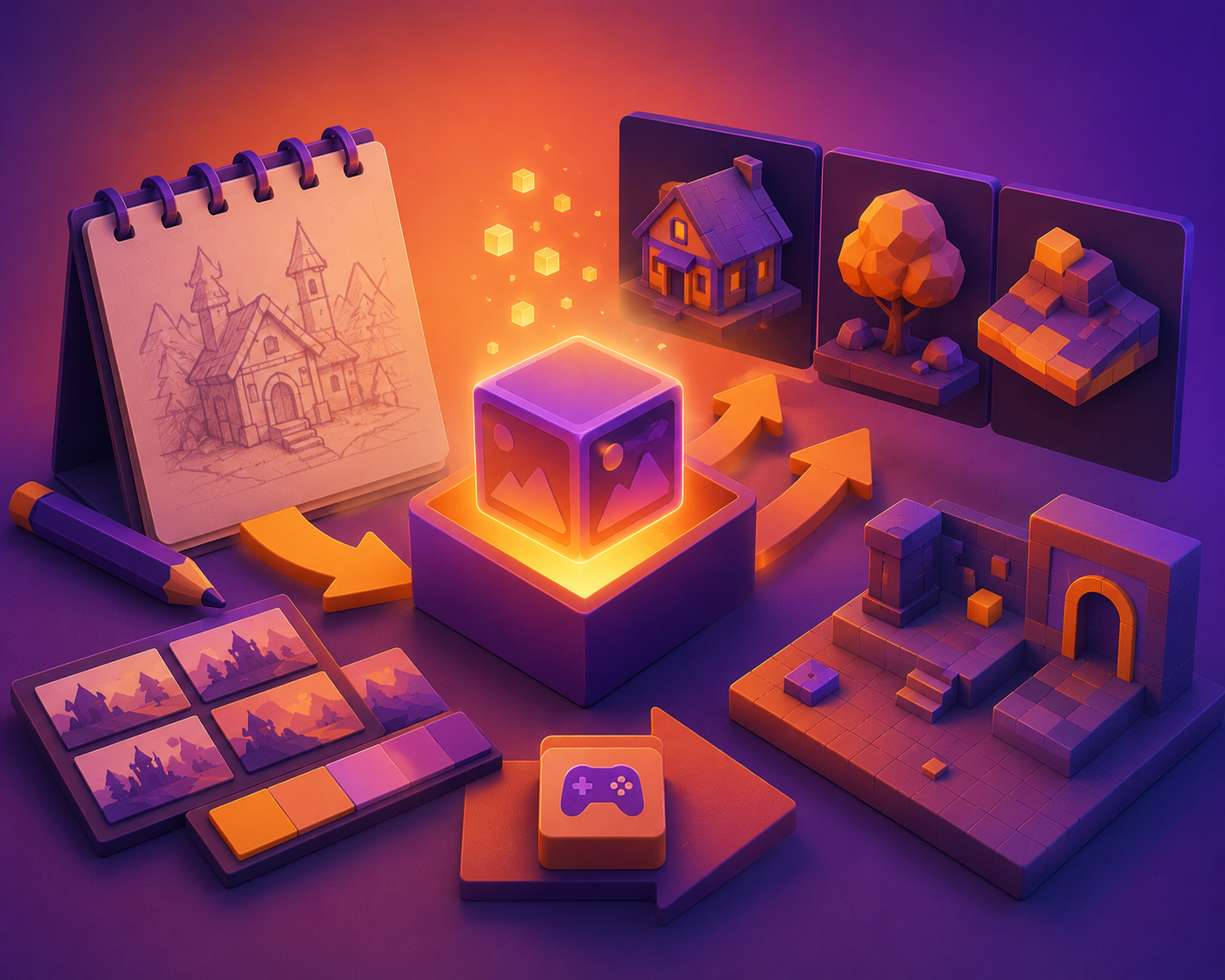
Asset generation is the most debated corner of AI game design, and a lot of that debate collapses because people aren’t talking about the same thing. There’s a meaningful difference between a placeholder environment mockup generated to validate a gameplay direction and a production-ready asset destined for a shipped title. AI is genuinely useful for the first. It’s not a reliable substitute for the second.
During prototyping, speed matters more than polish. Teams need rough character variations, temporary UI concepts, stylized references, and environment sketches to communicate a vision internally or validate a direction before committing resources. AI tools can generate that material fast enough to change how concept exploration actually works — what used to be a week of back-and-forth can happen in an afternoon.
But cohesive commercial visuals are a different problem entirely. Art direction, animation polish, lighting consistency, UI cohesion, and visual storytelling require sustained creative judgment that current generative tools don’t have. Sony, Ubisoft, and other large publishers that have discussed AI adoption publicly have generally framed it as a workflow enhancement — something that helps creative teams move faster, not something that removes the need for them.
That framing is probably the most grounded way to think about making games with AI when it comes to art: it expands what’s possible in early production without changing what’s required in final production.
AI in Playtesting, QA, and Workflow Automation
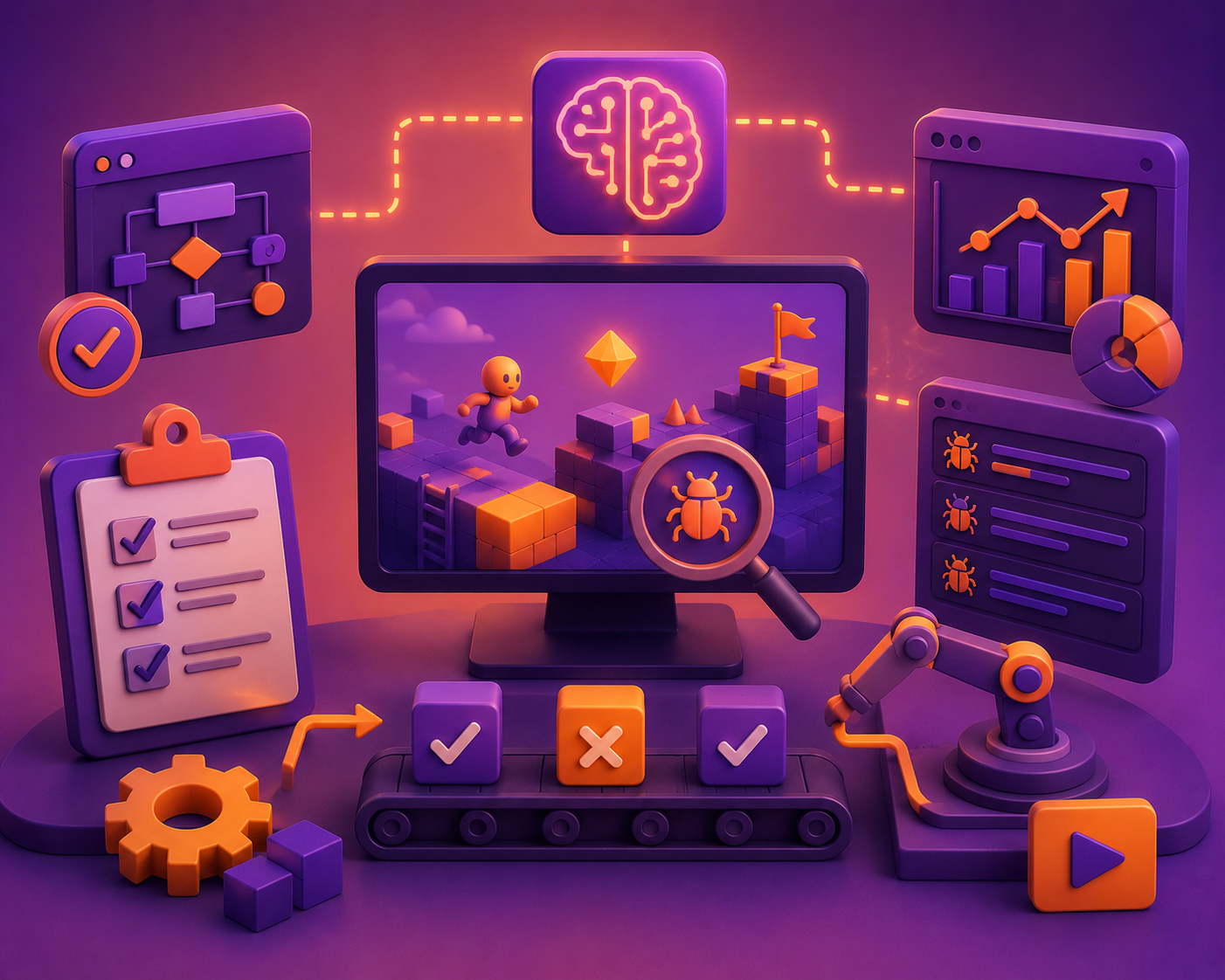
QA is where AI earns respect in the most routine way. Modern testing pipelines already rely heavily on automation for repetitive validation, and AI-assisted systems are expanding those capabilities through automated test generation, telemetry analysis, gameplay pattern detection, bug reproduction, and edge-case identification. In large or systemic games — the kind where manually testing every permutation is genuinely impractical — that’s not a minor efficiency gain, it’s a structural improvement to how quality gets maintained.
AI handles repetitive test environments well. It can evaluate states, simulate conditions, and surface anomalies at a pace and consistency that manual processes can’t match.
What it can’t do is tell you how the game feels. Emotional pacing, frustration curves, readability, accessibility comfort, the intangible quality that separates a technically functional experience from a good one — those still depend entirely on human testers. In a medium where player experience is the product, that limitation matters as much as any capability.
Why AI Matters for Indie Studios and Small Teams
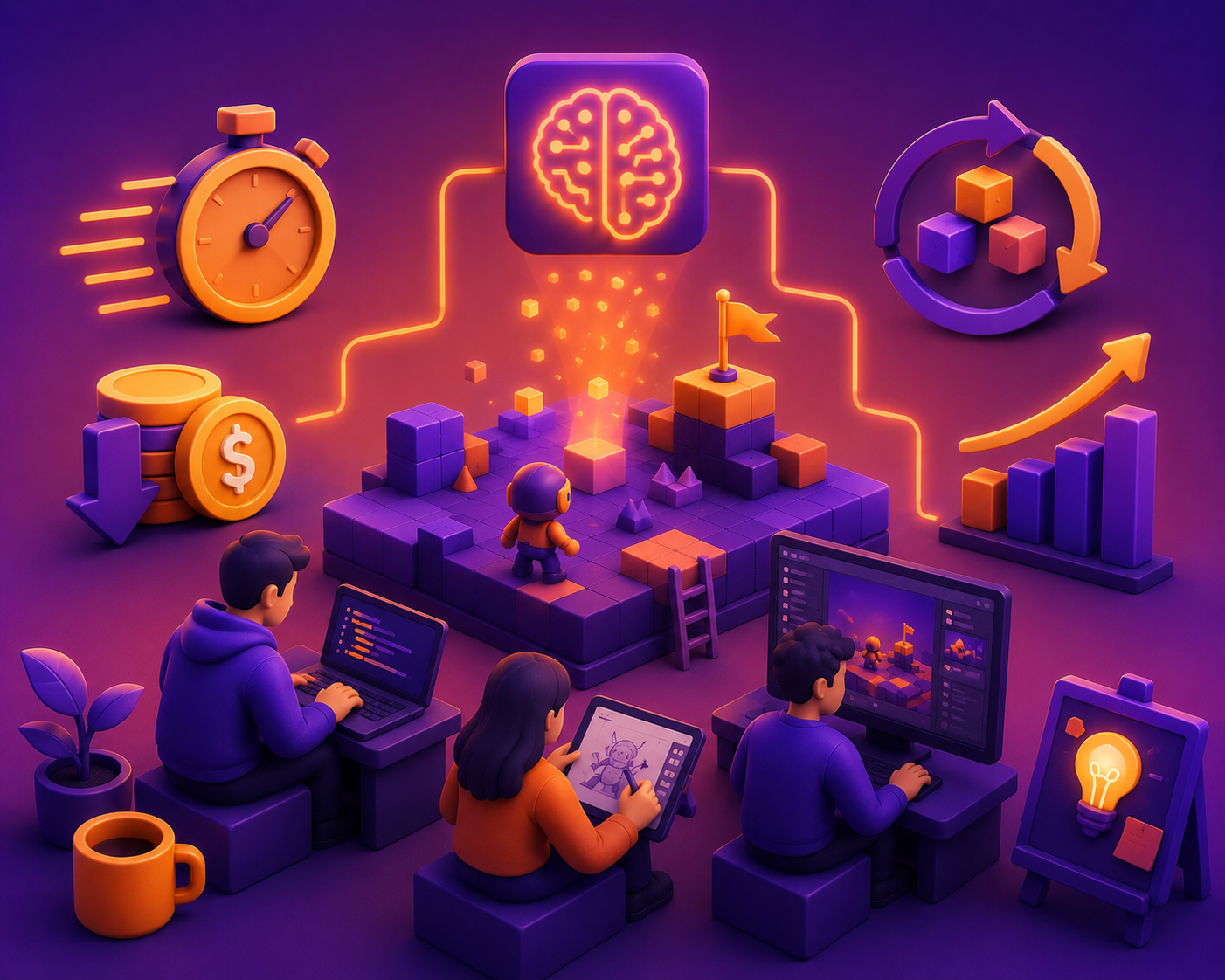
Historically, experimentation in game development has been expensive in a way that hits small teams disproportionately hard. Every new mechanic, every feature, every system required developer hours, temporary assets, QA time, and production coordination. Smaller studios often had to commit to ideas early simply because iteration itself cost too much to do freely.
AI changes that equation in a real and practical way. Indie developers and startup studios can now validate gameplay loops earlier, prototype faster, reduce pre-production bottlenecks, and bring playable concepts to pitching stage more efficiently. Unity’s 2026 development trend reporting highlights workflow efficiency and sustainable production practices as growing industry priorities — and that tracks with what’s actually happening at the smaller end of the market, where those pressures are felt most acutely.
This isn’t to say AI removes production challenges. Scope management, technical stability, art cohesion, balancing, long-term support — those remain as difficult as they’ve ever been. But reducing friction during early development gives smaller teams more room to make smart decisions before the budget clock is running hard, and that alone can change what gets built and what gets greenlit.
Where AI Fits Into Modern Game Development Pipelines
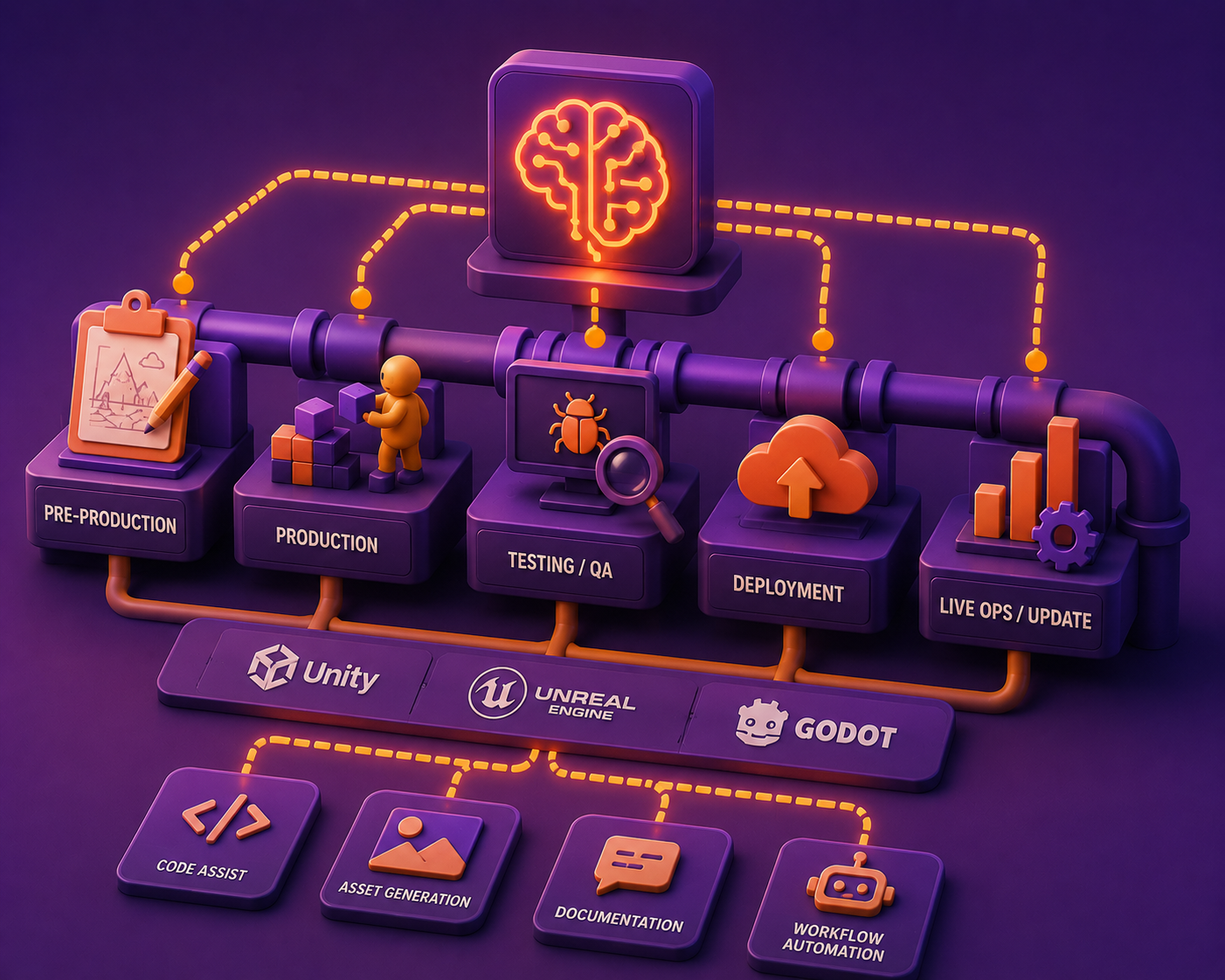
One persistent misconception about game development AI tools is that they’re most powerful when used independently — dropped into a project as a shortcut around traditional infrastructure. The opposite tends to be true. AI becomes significantly more useful inside mature pipelines that already have version control, QA review, structured production stages, and clear engineering standards in place.
Modern engines provide rendering systems, animation frameworks, deployment pipelines, asset management, networking support, and editor tooling. AI extends those ecosystems. Recent Unity AI initiatives, for example, focus on editor integration and workflow acceleration — not autonomous generation. The teams seeing the strongest results from AI-assisted game development are those combining structured pipelines with human oversight, not those trying to replace the pipeline with prompts.
Without that foundation, AI-generated workflows tend to become unstable quickly. The scaffolding goes up fast and then falls over somewhere around milestone two.
What AI Still Cannot Replace in Game Development
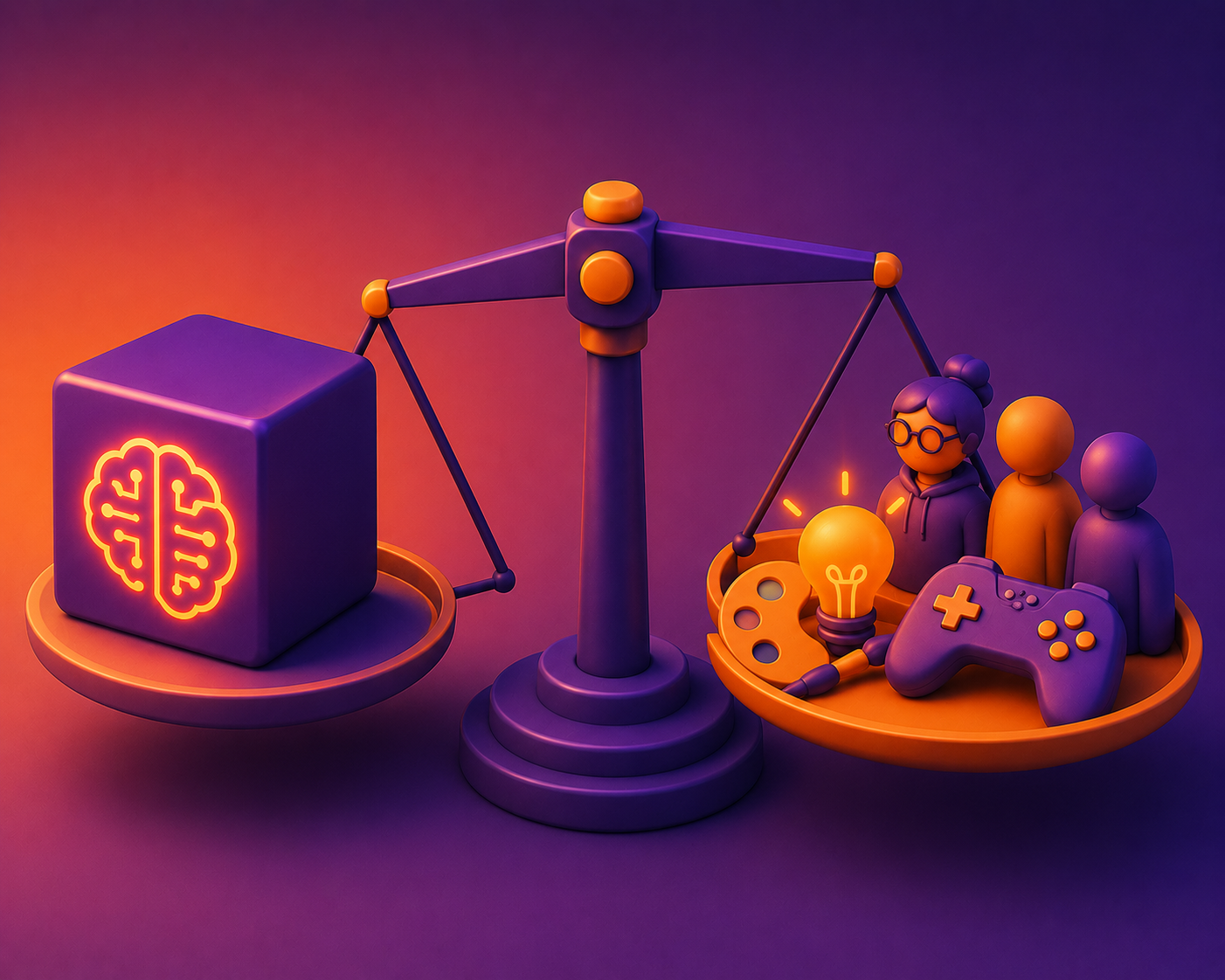
The honest limitations section of any AI article is usually where the argument earns its credibility — or loses it by hedging too carefully. Here’s the direct version: in 2026, AI still struggles with long-term production coherence, systemic balancing, creative consistency, multiplayer scalability, optimization, emotional storytelling, and player psychology.
A generated gameplay feature can be technically functional while quietly damaging onboarding, pacing, monetization balance, or overall feel. Commercial AI game development isn’t simply about generating content — it’s about coordinating thousands of interconnected creative and technical decisions into a cohesive experience, and that requires judgment that doesn’t yet live in a language model.
Even developers who are genuinely enthusiastic about AI adoption draw this line. Industry conversations around generative AI increasingly separate workflow acceleration from creative ownership — and that distinction is worth taking seriously. The Mass Effect director putting it bluntly as “creatively soulless” represents one end of the spectrum, but even the optimists aren’t claiming AI can own a creative vision. It can serve one. That’s different.
The strongest AI-assisted workflows in 2026 still rely heavily on experienced developers, artists, designers, QA specialists, and producers. The tools are better than they were. The need for the people hasn’t changed.
Final word
In 2026, the practical answer to how to make a game with AI is less dramatic than the headlines suggest and more valuable than the skeptics admit. AI is already helping teams prototype mechanics faster, generate useful placeholder assets, reduce repetitive scripting overhead, and bring structure to QA pipelines that used to depend entirely on manual effort.
It is not, however, a substitute for engineering discipline, creative direction, or production experience — and projects that treat it as one tend to discover that quickly. The studios getting the most out of these tools are the ones integrating them into mature development practices rather than using them to skip steps.
For studios building ambitious projects, the most effective approach is usually combining modern AI-assisted workflows with experienced development support — and knowing which parts of production actually benefit from which. That’s the balance Stepico is built around. As an outsourced game development studio, we help teams scale production, accelerate iteration, and integrate evolving technologies into sustainable pipelines — from rapid prototyping all the way through full-cycle co-development. Get in touch with our team tot alk about your project: [email protected]