
The games industry has never offered a bigger or more diverse range of experiences. Modern players jump between shooters with RPG progression, survival games with sandbox systems, cozy simulators, roguelites, and genre hybrids that would have been hard to classify even a decade ago. Throughout the 2020s, rigid genre boundaries matter less to players — but understanding game genres still matters a lot to studios.
Genre choice affects far more than gameplay. It influences audience expectations, production scope, monetization strategy, retention systems, and even how a game positions itself in an overcrowded market. Choosing the right mix of mechanics and genre identity can directly impact both discoverability and long-term commercial performance.
In this guide, we break down the most popular video game genres, explain how modern video game classifications evolved, and explore why genre blending became one of the defining characteristics of contemporary game development.
Action Games

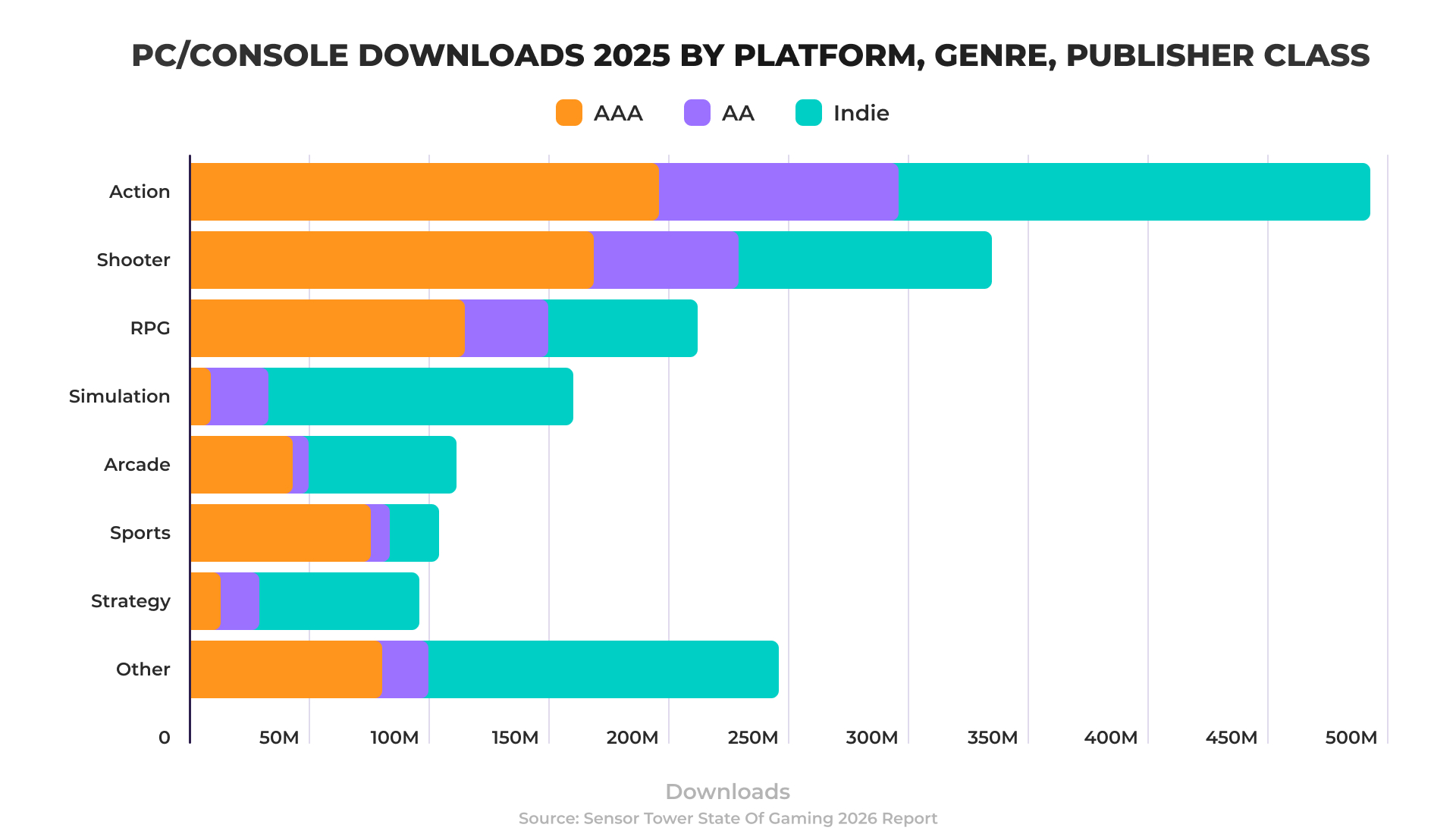
Action games remain one of the top game genres across both PC and console markets, and their commercial dominance is not accidental. These games prioritize fast-paced gameplay, reflexes, combat, and mechanical skill — qualities that translate directly into competitive multiplayer, streaming appeal, esports ecosystems, and live-service longevity.
The category spans a wide range of experiences, from shooters and fighting games to survival action titles and arcade-influenced experiences. Franchises like Call of Duty, DOOM, and Fortnite sit at the top of engagement charts not just because they’re well-made, but because action gameplay naturally sustains the kind of session-to-session retention that supports recurring monetization.
Arcade games
Arcade-style design still heavily influences modern action games. While arcade titles are rarely treated as a standalone genre today, their core philosophy — fast sessions, high replayability, skill-driven loops — remains central to how action games are built. Street Fighter and Helldivers 2 both carry strong arcade DNA despite belonging to broader action categories. From a business perspective, action is one of the most commercially important entries on any popular video game genres list precisely because it combines broad audience appeal with high retention potential.
Action-Adventure Games
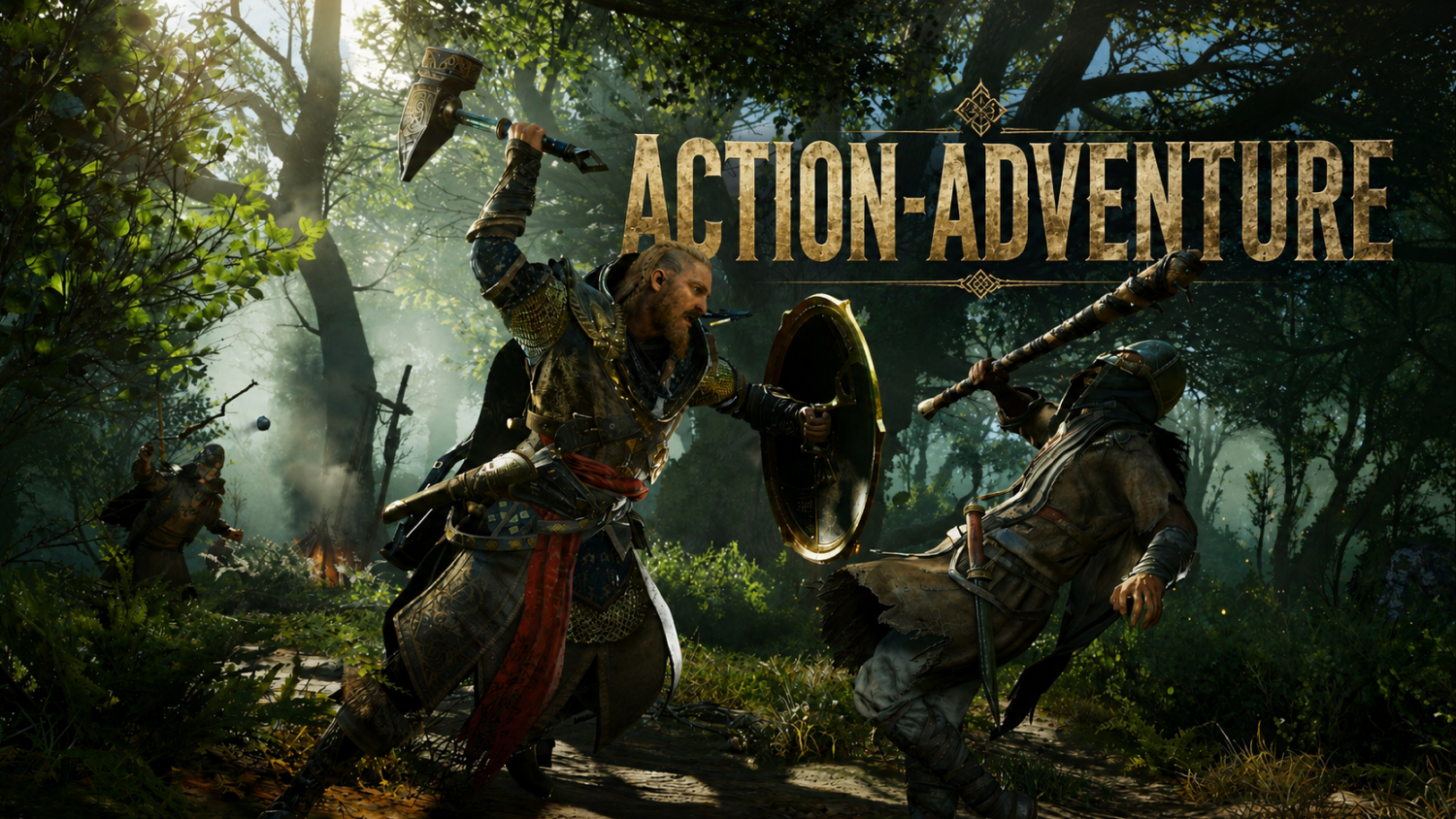
Action-adventure games became the dominant structural model in AAA development for a simple reason: they appeal to a wide range of players at the same time. The combination of real-time combat and narrative progression, exploration, and traversal mechanics lets the genre be both accessible and deep — a hard balance to strike in large-scale production.
The genre adapted especially well to cinematic storytelling and open-world design during the 2020s. Titles like The Legend of Zelda, God of War, Uncharted, Ghost of Tsushima, and Horizon Forbidden West each found commercial success by supporting long playtimes, encouraging exploration, and building naturally into progression systems that work for both premium and live-service models.
For many studios, action-adventure became the safest middle ground between accessibility and depth. Finding a structure that serves casual players, dedicated fans, and narrative audiences simultaneously is a genuine design achievement, and it’s one reason the genre continues to anchor major publisher release slates.
Survival and Horror Games

Survival and horror games represent one of the fastest-growing categories of the past several years, driven by three converging forces: streaming culture, cooperative multiplayer demand, and rising appetite for tension-driven experiences.
Although the genres often overlap, they focus on slightly different player motivations:
- Survival games emphasize resource management, crafting, exploration, and staying alive in hostile environments.
- Horror games focus on fear, tension, atmosphere, and psychological pressure.
- Survival horror combines both approaches by limiting player power and forcing careful resource management under constant threat.
Popular examples include Resident Evil, Until Dawn, Silent Hill, Dead by Daylight, Sons of the Forest, and Lethal Company.
Part of what made survival horror so commercially visible in the 2020s is that fear-based gameplay generates unpredictable, shareable moments — exactly what performs well on Twitch and YouTube. The genre earns attention well beyond its core player base, which makes it disproportionately valuable for community-building and organic marketing.
Cooperative survival titles also benefited from the growing demand for social multiplayer. Games that combine crafting, exploration, and emergent storytelling — where players create their own narratives rather than following scripted ones — encourage the kind of long-term engagement that sustains a game well beyond its launch window.
From a production perspective, survival and horror games are particularly dependent on environmental storytelling, sound design, pacing, lighting, and atmosphere. Strong art direction isn’t decorative in this genre — it’s structural.
Platformers

Platformers are among the oldest and most recognizable types of video game genres, and they remain commercially relevant precisely because they’re so adaptable. The genre grew out of arcade gaming but evolved across both console and indie markets into something that now spans classic 2D side-scrollers, cinematic 3D adventures, and highly technical precision platformers with very little in common except a shared emphasis on movement and level design.
The core appeal is straightforward: good platformers create satisfying momentum, responsive controls, and carefully structured traversal challenges. Super Mario Bros., Celeste, Crash Bandicoot, and LittleBigPlanet each show that the fundamentals of the genre — accessible entry, deep mastery ceiling — translate across almost any visual style or tone.
Platformers are sometimes treated as a legacy genre, but they remain one of the most practical foundations for indie development. The genre scales well to smaller production budgets, supports creative level design, and fits both premium and family-friendly markets without requiring the extensive content pipelines of RPGs or the network infrastructure of competitive multiplayer titles.
Metroidvania Games
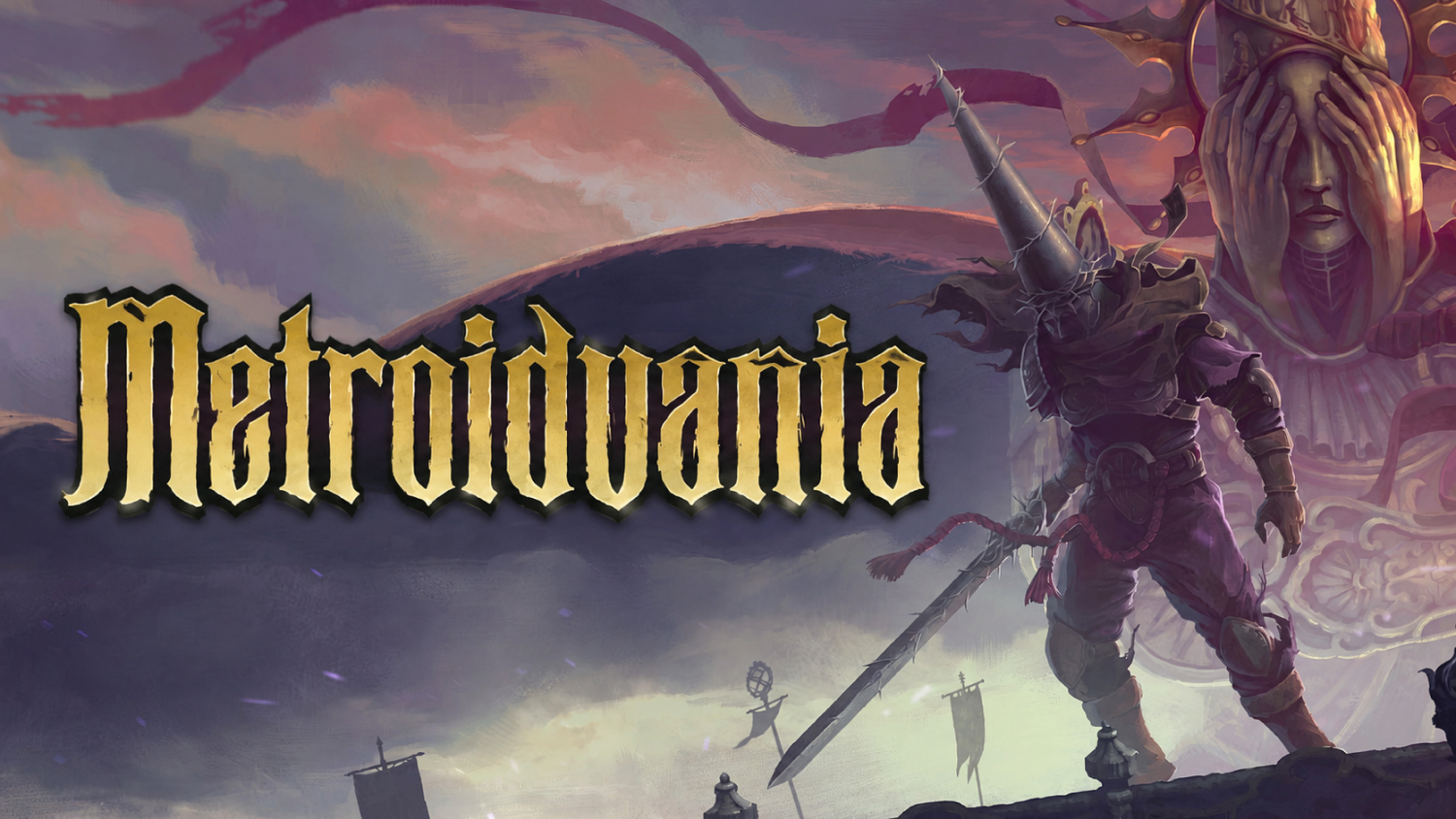
Metroidvania games are built around exploration, interconnected environments, and ability-gated progression, where players gradually unlock new traversal tools that open up previously unreachable areas of the world. The genre takes its name from Metroid and Castlevania — the two franchises that established its core conventions — and today includes titles like Hollow Knight, Ori and the Blind Forest, and Metroid Dread.
What made Metroidvania development particularly attractive in the indie scene is that it offers strong replayability and exploration depth without requiring open-world AAA budgets. The genre also illustrates something worth noting about modern game genres more broadly: clean classifications rarely survive contact with actual design. Hollow Knight is simultaneously a Metroidvania and a platformer, combining exploration systems with movement-heavy gameplay in ways that make either label feel incomplete on its own.
Role-Playing Games (RPGs)
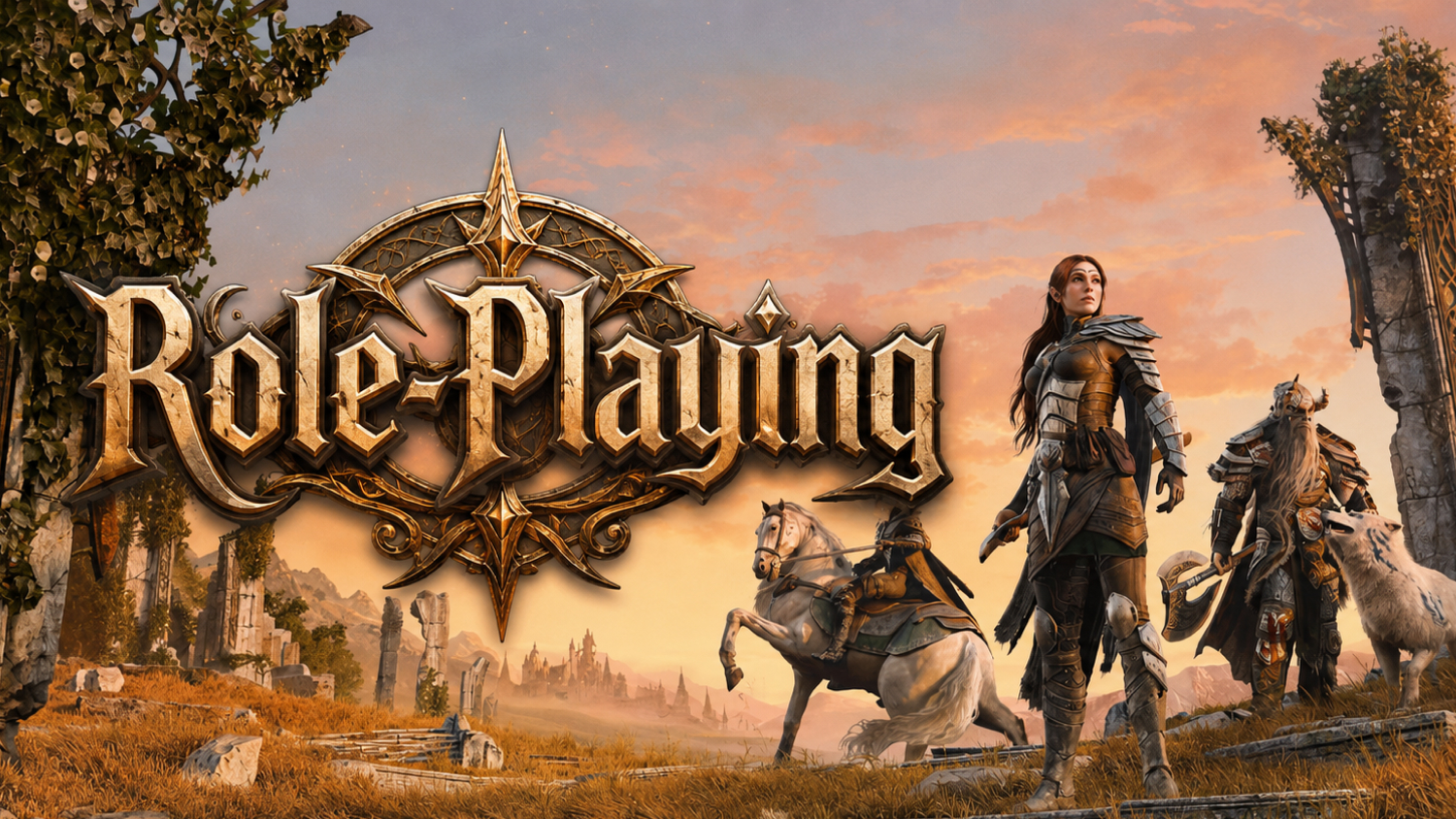
Role-playing games are one of the broadest and most commercially successful top game genres in the industry. They focus on character progression, builds, equipment systems, narrative choices, and long-term player investment — and that combination has proven remarkably durable across changing platforms and shifting player expectations.
Modern RPGs evolved into distinct subgenres: action RPGs, JRPGs, MMORPGs, tactical RPGs, and open-world hybrids, each with different production requirements and different audience expectations. Baldur’s Gate 3, Elden Ring, Final Fantasy XIV, and Genshin Impact represent very different interpretations of what an RPG can be, but all of them use progression systems to create the same outcome: players who feel invested enough to keep coming back.
That retention quality is why RPG mechanics spread far beyond traditional RPG structures. Unlock trees, loot systems, stat customization, and build experimentation now appear across shooters, survival games, and even casual mobile titles because progression systems make almost any game stickier. From a development perspective, RPGs remain among the most production-intensive types of games on the market, requiring large narrative scope, extensive balancing work, and ongoing content support — but the long-term engagement they generate tends to justify the investment.
Roguelikes and Roguelites
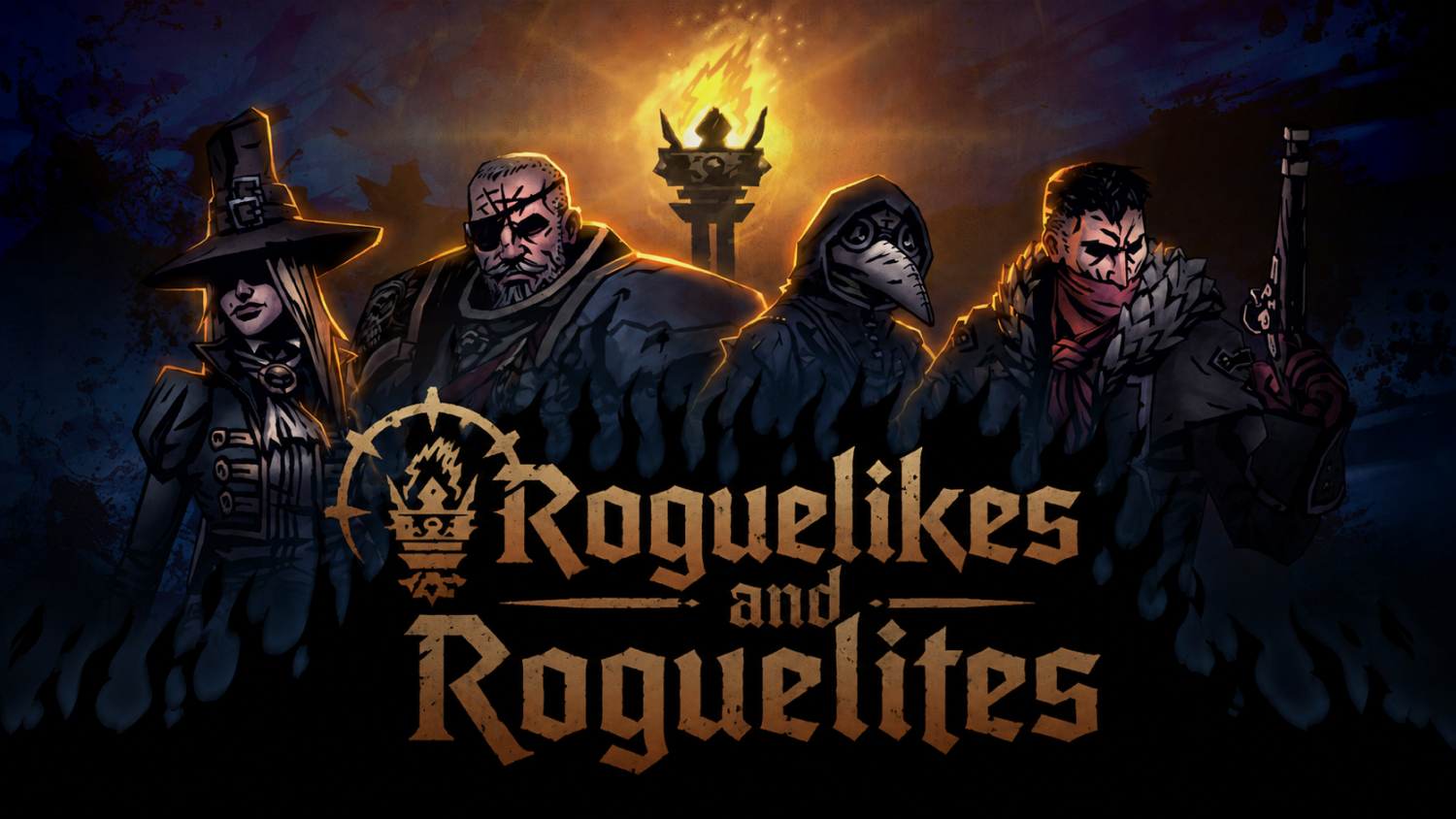
Roguelikes and roguelites became one of the fastest-growing categories of the 2020s, and their rise reflects a design insight as much as a trend. These games revolve around procedural generation, randomized encounters, repeated runs, and some form of death-reset structure. Traditional roguelikes typically involve full resets after failure; roguelites usually preserve some permanent progression between runs, giving players a sense of advancement even through repeated failure.
Popular examples — Hades, The Binding of Isaac, Dead Cells, Slay the Spire — all demonstrate the same underlying logic: roguelite structures increase replayability while reducing reliance on handcrafted content. That combination solves both a gameplay problem and a production problem simultaneously, which is why the mechanics spread far beyond their original niche and now appear in shooters, RPGs, platformers, card games, and survival titles. Few developments in recent game design history show the variety of games that can emerge from a single mechanical framework as clearly as the roguelite’s expansion across genres.
Strategy Games
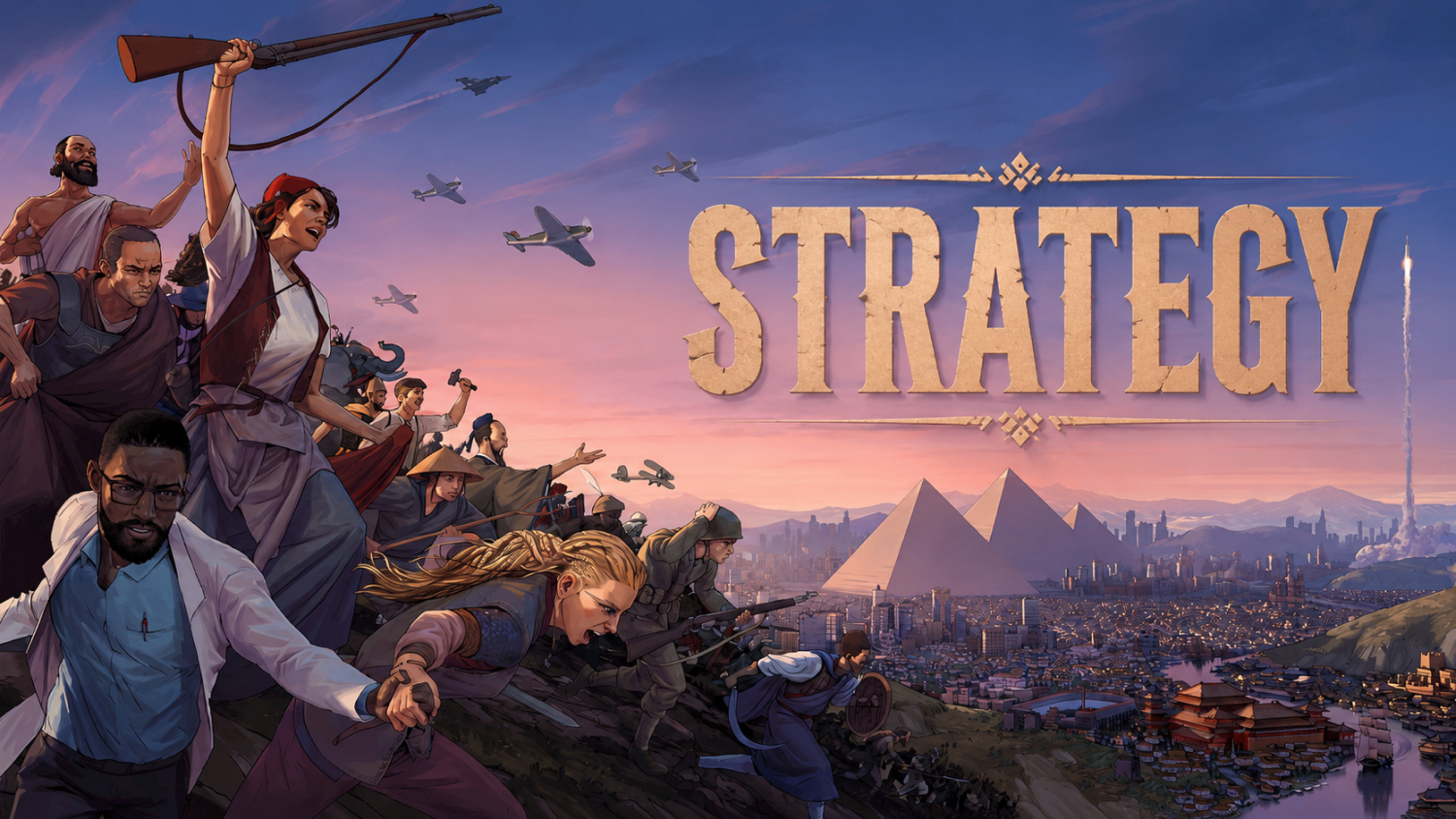
Strategy games focus on planning, resource management, tactical execution, and decision-making rather than mechanical reflexes — a distinction that shapes their audience as much as their design. The category spans real-time strategy, turn-based strategy, 4X games, MOBAs, and auto battlers, with well-known examples including StarCraft, Civilization, Dota 2, and League of Legends.
While strategy titles don’t dominate mainstream console gaming the way shooters or RPGs do, they remain among the most important popular PC game genres by virtually every long-term engagement metric. Strategy audiences tend to show high retention, long play sessions, strong community formation, and competitive loyalty that sustains games for years after launch. The genre also played a foundational role in esports growth, particularly through MOBAs and RTS titles, and that competitive infrastructure continues to generate both viewership and player acquisition.
Simulation Games
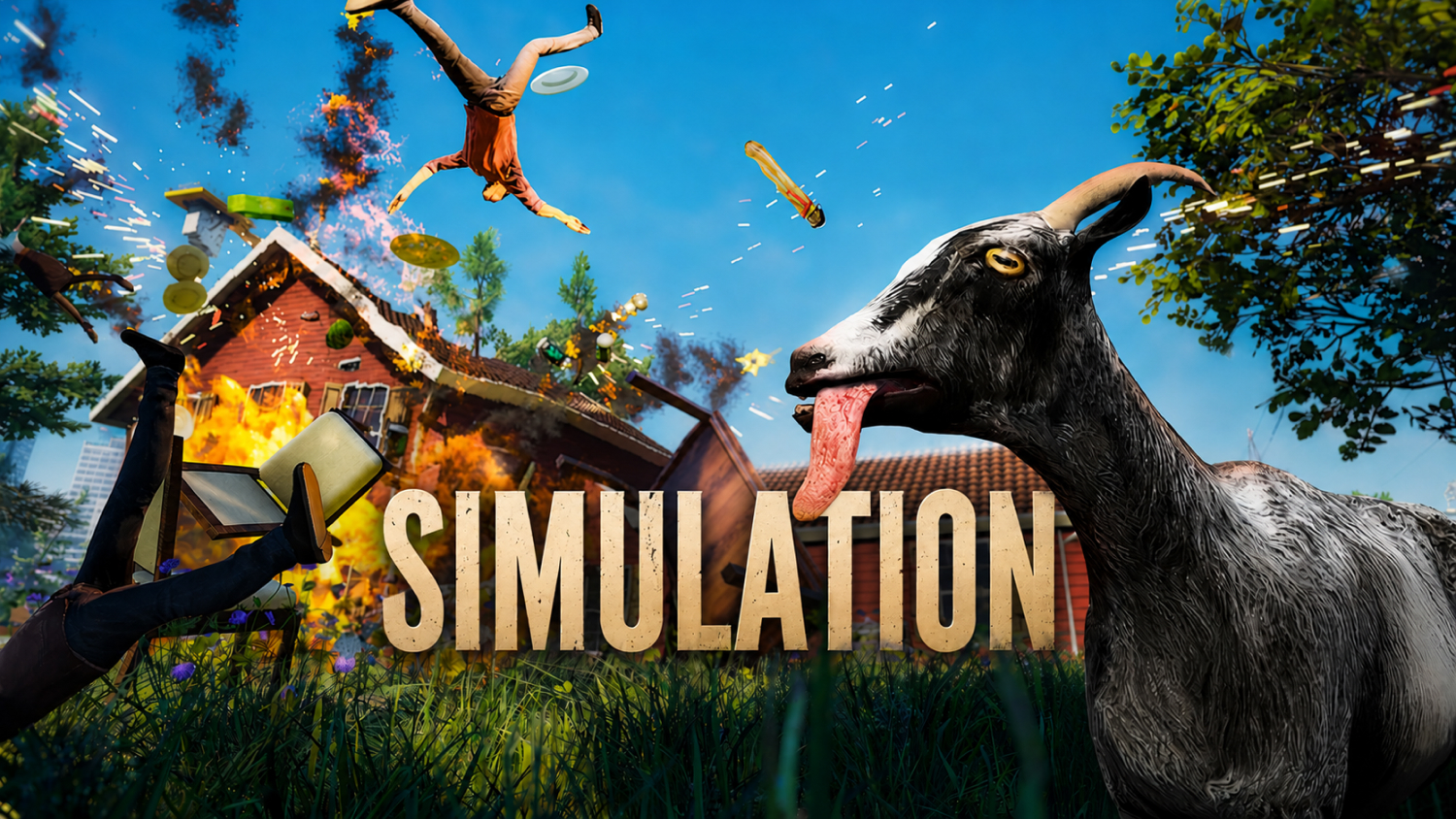
Simulation games recreate real or fictional systems in ways that encourage management, optimization, creativity, or immersion. The category covers city builders, life simulations, management games, and vehicle simulators — a range wide enough that The Sims, Cities: Skylines, and Microsoft Flight Simulator all fall under the same broad label despite having almost nothing in common tonally.
The genre experienced sustained growth during the 2020s because it appeals to both casual and dedicated audiences at the same time, and because simulation gameplay generates highly shareable moments. Player choices in systems-heavy games produce unpredictable outcomes that create personal stories — exactly the kind of content that performs well on streaming platforms and social media. That visibility outside the core player base became one of the more underappreciated drivers of the genre’s commercial expansion.
Adventure Games
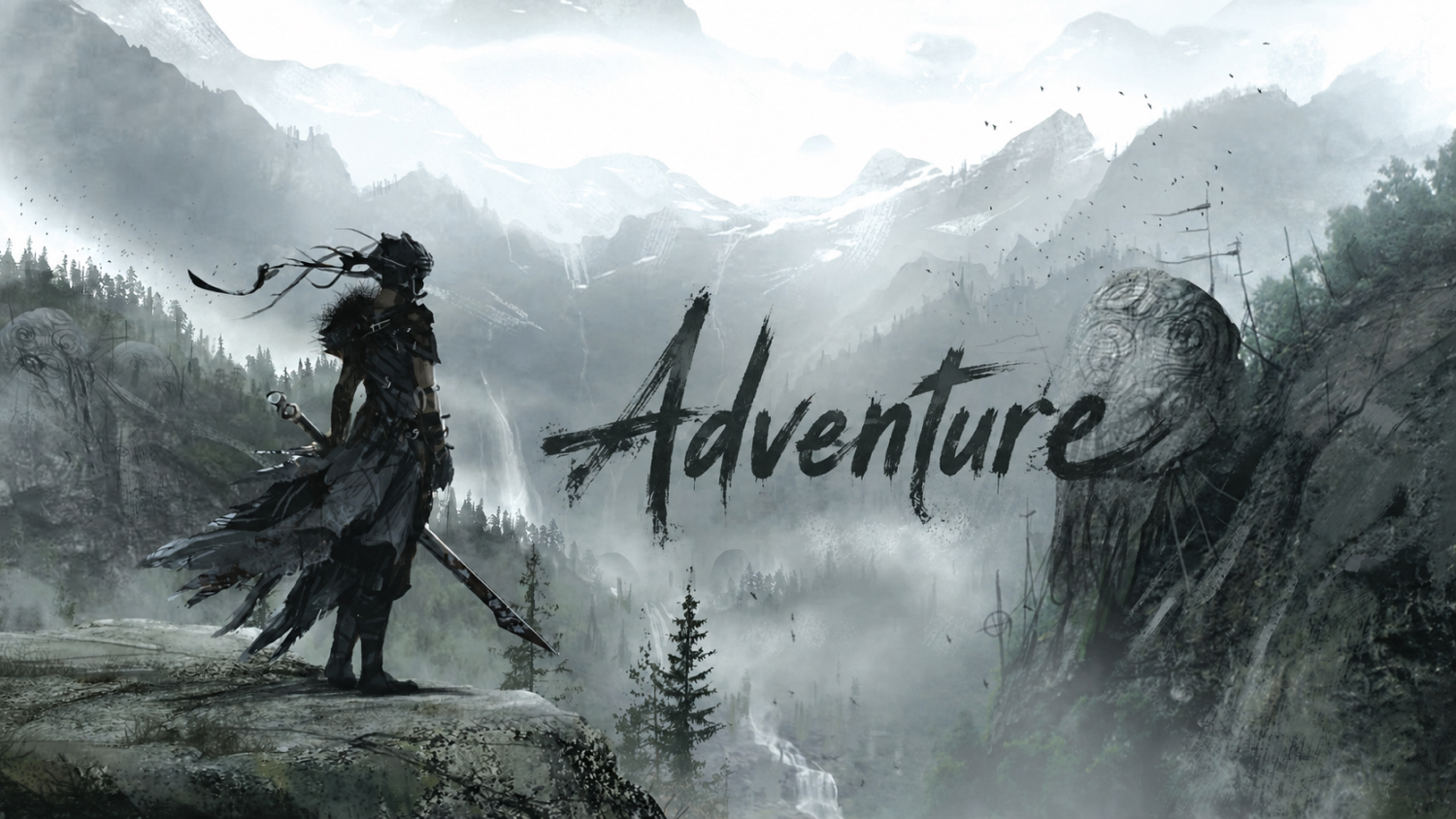
Adventure games focus primarily on narrative, exploration, dialogue, and puzzle-solving, and unlike action-adventure titles, they typically prioritize storytelling over reflex-based gameplay. The category includes visual novels, point-and-click adventures, interactive narrative games, and walking simulators — experiences where the journey and its emotional texture are the product.
Notable examples include Life is Strange, Disco Elysium, and The Stanley Parable. These games continue thriving within indie development because strong writing and atmosphere can compensate for smaller production scope in ways that action or technical precision cannot. The genre serves audiences seeking emotionally driven or narrative-heavy experiences — a segment that has grown significantly as gaming expanded beyond its traditional demographics.
Puzzle and Casual Games
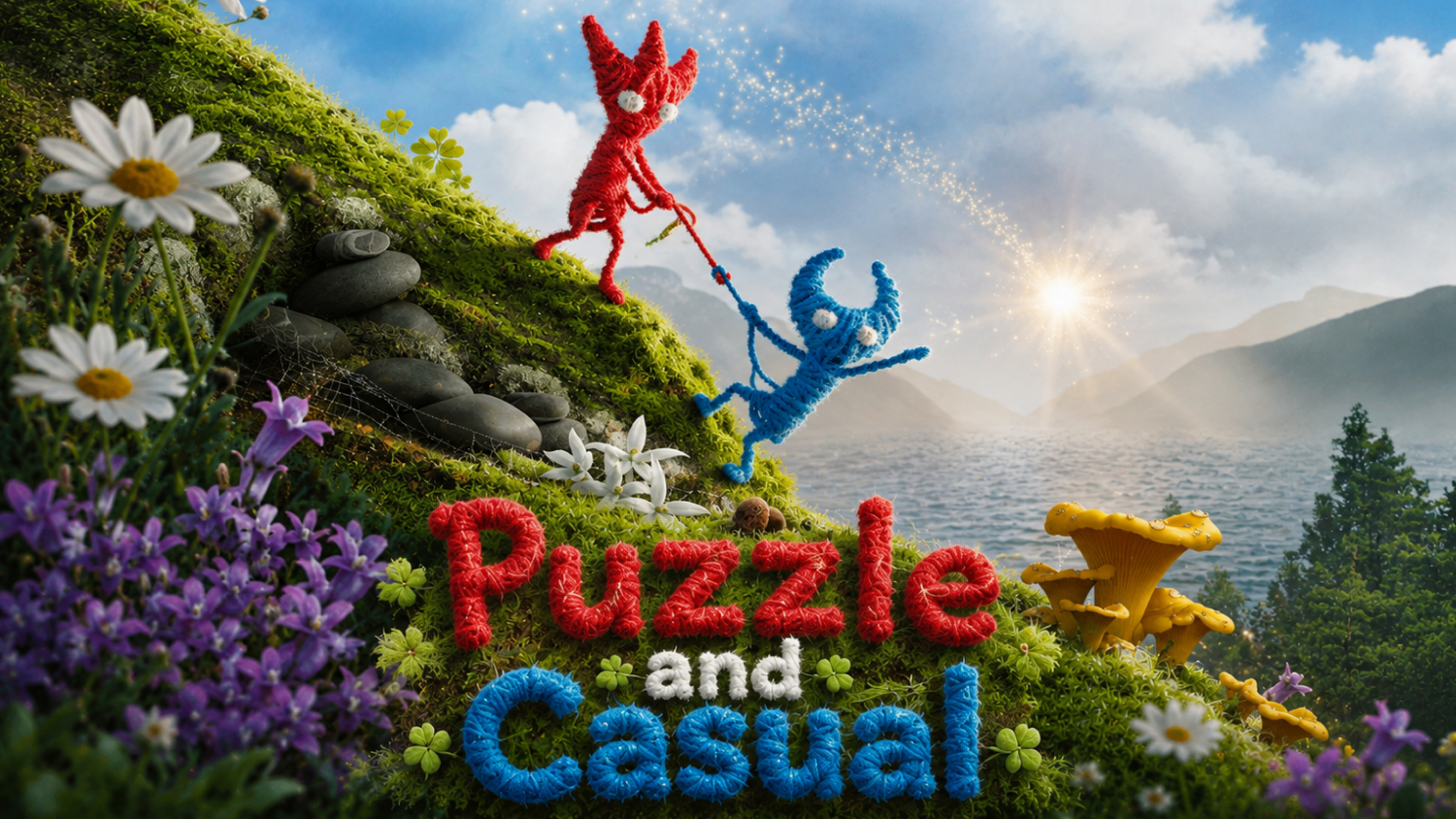
Puzzle and casual titles dominate mobile gaming and represent some of the most financially successful mobile game types in the industry. These games emphasize accessibility, short gameplay loops, and intuitive mechanics, making them effective on mobile platforms where sessions are shorter and hardware requirements are lower. Popular examples range from Candy Crush and Tetris to Monument Valley and Portal — titles that share almost nothing visually or tonally but all rely on the same core design principle: a mechanic that’s easy to learn and hard to put down.
From a business perspective, casual gaming remains one of the largest segments of the global market. Free-to-play monetization models work particularly well here because the accessibility that makes these games attractive to broad audiences also lowers the barrier to in-app spending, resulting in a segment with massive reach and proven revenue mechanics.
Sports and Racing Games
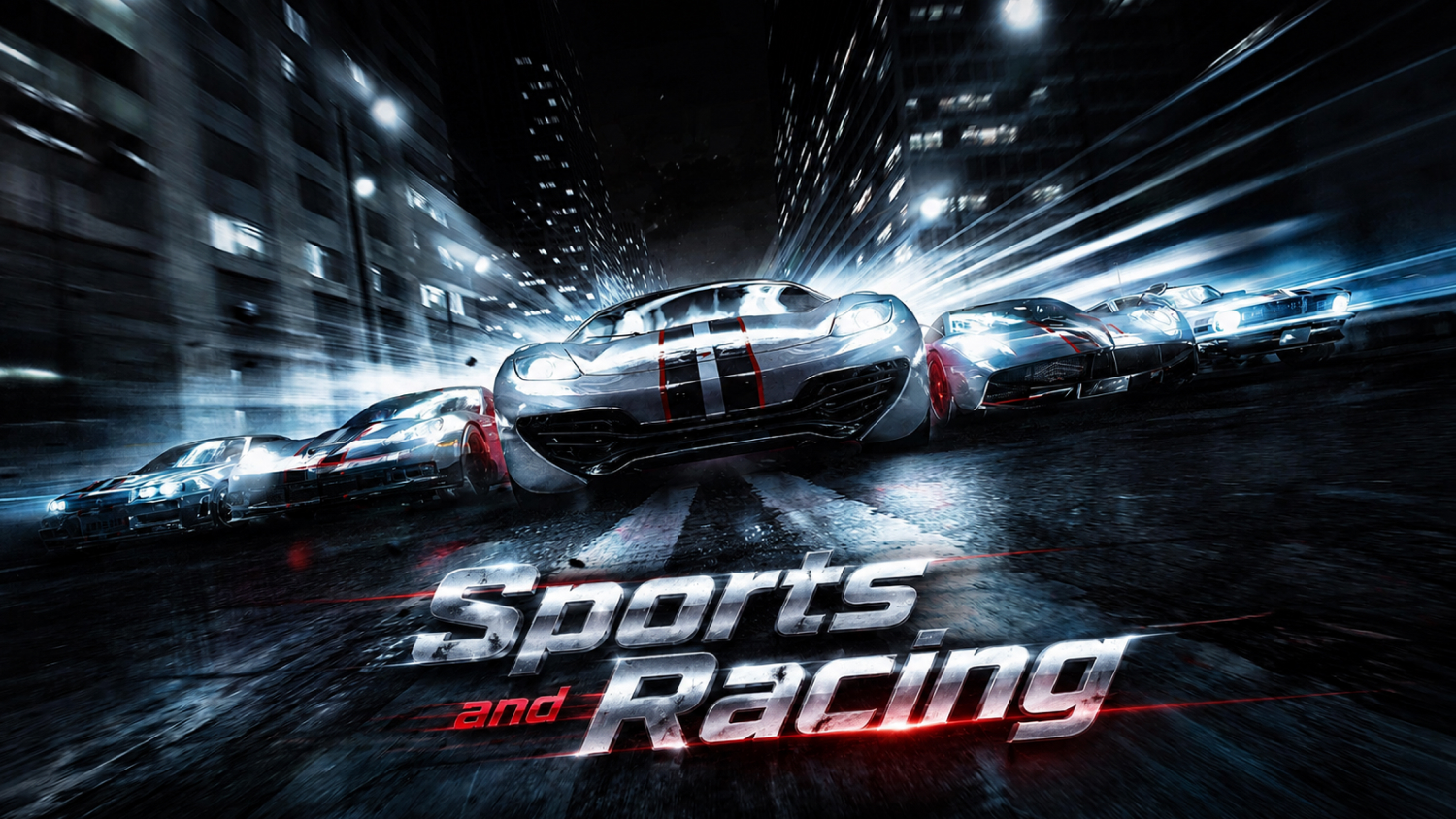
Sports and racing games continue performing exceptionally well across console ecosystems, largely because they benefit from structural advantages other genres don’t have: real-world licensing, built-in audiences, and annual release cycles that maintain commercial momentum year over year. Franchises like EA Sports FC, NBA 2K, Gran Turismo, and Forza Horizon are among the most reliable commercial performers in the industry for exactly these reasons.
Racing titles typically split between arcade and simulation approaches, catering to players who want accessible competition and those who want technically demanding realism. Sports titles remain one of the strongest console game categories not just because of production quality, but because their connection to real sporting seasons, leagues, and cultural moments gives them a relevance cycle that purely fictional games have to work hard to replicate.
Sandbox and Creative Games
Sandbox games prioritize freedom, creativity, and emergent player behavior over rigid objectives. Players build, experiment, explore, and define their own goals rather than following a designed critical path. Major examples — Minecraft, Roblox, GTA Online — have evolved so far beyond traditional genre boundaries that calling them games in the conventional sense understates what they are: platforms with their own economies, creator ecosystems, and social structures.
User-generated content and creator economies became major growth drivers for sandbox titles during the 2020s, reflecting broader video game market trends where player participation and community-generated content became commercially valuable assets in their own right. The genre’s defining characteristic is that it scales with its community — the more players build and share, the more valuable the platform becomes.
Why Pure Game Genres Barely Exist Anymore
Modern games rarely fit neatly into one category. Unless a title intentionally acts as a classic representative of a genre, most contemporary games combine systems from several genres simultaneously.
That overlap is now normal.
A modern shooter may contain RPG progression systems. A platformer may include roguelite mechanics. A survival game may function as a social sandbox. Genre blending became one of the defining characteristics of modern game development because players increasingly expect layered experiences rather than narrowly focused gameplay loops.
Genres describe gameplay — but they rarely describe the full experience anymore.
For example:
- Hades combines action combat, RPG progression, and roguelite structure.
- Dead Cells mixes platforming, roguelite systems, and Metroidvania exploration.
- Fortnite evolved into a hybrid of shooter, sandbox, social platform, and live-service ecosystem.
- Minecraft combines survival, crafting, exploration, and creative simulation.
This blending is intentional. Studios combine genres to improve replayability, broaden audience appeal, increase retention, and create stronger differentiation in crowded markets. Each layer of mechanics serves a purpose — roguelite systems extend session variety, RPG progression deepens investment, sandbox elements encourage community and sharing.
Genre positioning also became more flexible as markets got more competitive. Papers, Please combines puzzle mechanics, simulation systems, and narrative tension, but positions itself as a “document thriller.” Hideo Kojima described Death Stranding as a “strand game” to communicate its connection-focused systems rather than align with any traditional classification. These aren’t marketing gimmicks: they reflect a genuine shift in how studios communicate player experience when genre labels have become too broad to be useful on their own.
Why Game Genres Matter for Developers and Studios
Understanding why game genres matter goes well beyond labeling products for storefronts. Genre selection shapes audience expectations, technical scope, monetization model, LiveOps requirements, art direction, and long-term support strategy — and getting that choice wrong affects retention regardless of production quality.
Genres Shape Player Expectations
Every genre creates a contract with its audience. Players expect responsiveness from action games, progression depth from RPGs, tactical clarity from strategy titles, and immersion from simulations. A beautifully produced RPG that fails to deliver meaningful character progression, or a survival game with inconsistent atmospheric tension, will underperform against its production investment because it broke the expectations the genre set before a single player booted it up. This is why choosing game genres carefully matters as much during pre-production as any technical decision.
Genre Choice Impacts Production Complexity
Different genres require radically different development pipelines. MMORPGs need extensive backend infrastructure. Competitive shooters demand networking precision. Simulation games rely on systemic balancing that only reveals its weaknesses at scale. Platformers require polished movement systems that feel different to build than they look from the outside. As hybrid genres become more common — combining the live-service requirements of an RPG with the social systems of a sandbox or the procedural demands of a roguelite — that complexity multiplies. Studios increasingly rely on partners experienced in full cycle game development to manage the growing technical and creative scope of modern hybrid projects.
Art Direction Changes With Genre
Genre strongly influences visual identity and presentation. Competitive games prioritize readability so players can parse information quickly. Horror games build atmosphere through restraint, lighting, and sound. Cozy simulations rely on warmth and emotional comfort. Strong game art design doesn’t just make a game look good — it makes it feel like what it’s supposed to be. As hybrid genres become more common, visual direction increasingly needs to communicate multiple gameplay identities at once without confusing either audience.
Genres Influence Monetization and Retention
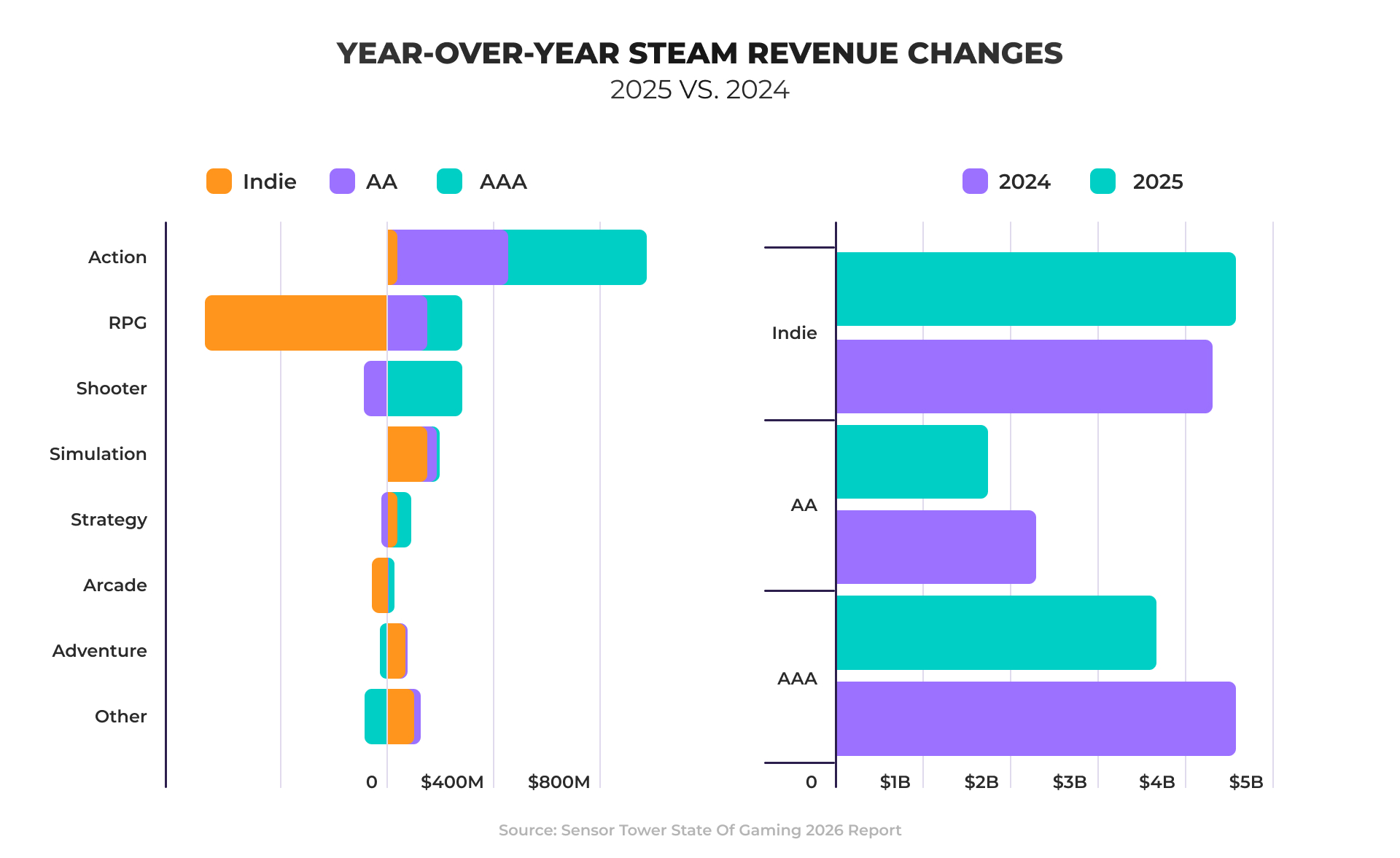
Monetization follows genre logic more closely than many studios anticipate. Live-service systems work well in RPGs, competitive multiplayer titles, sandbox games, and survival experiences because those genres naturally support long engagement cycles and recurring reasons to return. Narrative adventures and puzzle games typically align better with premium models because their value is delivered in a complete experience rather than through ongoing content. Understanding these relationships early — and building the production pipeline to match — is one of the more consequential decisions in modern game development.
Conclusion
The most popular game genres are no longer just creative categories. They’re strategic frameworks that influence retention, monetization, discoverability, and long-term product positioning — and the boundaries between them are more permeable than they’ve ever been.
Whether you’re building a competitive multiplayer shooter, a stylized indie roguelite, or a large-scale live-service RPG, Stepico has the production experience to help you get the genre strategy right from day one. From concept and art direction to full cycle game development and beyond, we work with studios and publishers to turn genre decisions into games that actually ship — and retain players after they do. Get in touch to talk through your project.