
We know how it goes: you’ve allocated mobile game promotion budgets early and approved them, but you didn’t even notice how they became irrelevant mid-launch. You’ve missed your scale windows and now overspend on ads to compensate for weak conversion; not to mention your stakeholders or co-decision makers treated marketing as post-alpha and now it’s the creative department that has to pay for it.
If you’re reading this article, you either don’t want to make the same mistake in your upcoming project, or — worse — you’re stuck in the loop of iteration Samsara right prior to your mobile game’s launch. This article breaks down the best ways of how to promote your mobile game in 2026, treating it not as a launch activity but as a production system that reduces risk, aligns teams, and makes scaling predictable. Even when you’re already deep into development or approaching launch under pressure, you’ll still gather some valuable tactics that will help you regain control and elevate your team’s efforts in the moment.
Why Mobile Game Marketing Fails Without Early Planning
Mobile game marketing rarely fails because teams choose the wrong channels. It fails because marketing decisions are made too late — after production priorities, budgets, and timelines are already locked.
In many studios, marketing is still treated as a post-alpha activity. Budgets for mobile game promotion get approved early, often based on rough benchmarks or past launches. Production moves forward. Then, close to alpha or beta, marketing finally enters the picture. At that point, the game already looks the way it looks, plays the way it plays, and explains itself the way it explains itself. Generally speaking, the final build is locked, which is exactly when changes in the gameplay are no longer possible to make.
When store page conversion or early user acquisition test results come in lower than expected, the only lever left is increasing paid user acquisition spend. More budget goes into ads to compensate for weak conversion, but installs become more expensive and overall performance rarely improves at the same rate.
Late planning also shifts pressure inside the team. Creative departments are asked to produce ad assets fast, without a clear positioning or long-term plan. User Acquisition teams test aggressively, but each campaign pulls the message in a slightly different direction. Stakeholders expect scale, while the system behind the launch was never designed to handle it. Missed scale windows, rising CPIs, and creative fatigue aren’t edge cases — they’re a direct result of this setup.
The problem isn’t a lack of effort or expertise but timing. Mobile game promotion depends heavily on decisions made much earlier, when the target audience, core promise, and visual language are still flexible. If those choices are postponed, marketing becomes reactive by default — and reactive marketing is expensive.
When promotion is aligned early with production, teams keep decision-making flexibility around messaging, creatives, and release strategy. When it isn’t, they spend the launch phase trying to fix problems that should have never reached that stage.

What Mobile Game Marketing Actually Includes in 2026
When producers ask how to promote a mobile game, the conversation often jumps straight to ads, channels, or budgets. In 2026, that view is too narrow — and it’s one of the reasons marketing plans fall apart under pressure.
Mobile game marketing today is not a single function and not a late-stage activity. It’s a system that connects product decisions, creative direction, distribution, and measurement across the entire lifecycle of the game. Promotion is only the visible part of that system.
In practice, this includes defining who the game is for and why it should matter to that audience, long before ads are running. It means shaping the game’s visual language so it reads clearly in a store listing, an ad, or a short video clip. It also involves planning how creatives will be produced and refreshed, how store pages will evolve, and how early signals from testing will influence launch decisions.
Just as importantly, marketing in 2026 includes analytics and feedback loops. Teams need clear rules for what data informs decisions, when to act on it, and when not to overreact. Without that structure, promotion turns into constant firefighting.
You won’t promote a mobile game successfully by only choosing the right tools. You will, however, by building a process that supports planning, launch, and scale AND keeps working when conditions change.
Defining Success Before Production Is Locked
One of the most expensive mistakes in mobile game app promotion is defining “success” too late. By the time a build is close to feature-complete, most teams are already emotionally and financially committed. At that stage, it’s easy to measure success only in terms of installs or CPI — even though the real risks were introduced much earlier.
For producers, defining success before production is locked is less about setting perfect KPIs and more about agreeing on clear boundaries. Who is the game really for? What problem does it solve for that audience? And just as important, who is not the game for? These answers directly affect how the game will be promoted, what creatives will resonate, and whether store page messaging will feel obvious or confusing.
This is also the moment to reality-check assumptions. A feature that looks strong in a design document may be hard to communicate in a short ad. A visual style that works in long sessions may not read well on a crowded app store page. If these gaps aren’t identified early, mobile game app promotion later becomes an exercise in compromise rather than execution.
Producers who define success early usually frame it in practical terms: acceptable acquisition costs, realistic scale expectations, and clear signals for when to push forward or slow down. That clarity doesn’t limit creativity but protects it. It gives teams a shared reference point long before budgets, timelines, and launch pressure start narrowing the available options.
App Store Optimization (ASO) as a Conversion System
ASO should be perceived as a conversion system that ties discovery to performance — and it’s one of the first places where early planning pays measurable dividends.
ASO is far above placing keywords: it’s about aligning the store page narrative with everything your paid and organic marketing communicates. When you invest in ASO early and iteratively, you reduce the amount of paid spend needed to hit your targets because players who discover the game convert to install more reliably.
Games like Gardenscapes and Homescapes are strong examples of ASO used as a system. Playrix continuously aligns store visuals with live creatives and feature updates, so players see the same promise in ads, screenshots, and gameplay. This consistency improves conversion without constantly increasing spend.
Another example is Clash Royale, which regularly updates store assets around new seasons and features, keeping the store page relevant long after launch. This turns ASO into an ongoing feedback loop rather than a static page.
Simply put, if you plan ASO across mobile game development and launch (not just in a late checklist sprint), every dollar spent on acquisition contributes to actual visibility and conversion much, much more.

Creative Strategy & Mobile Ad Production
Many teams still underestimate mobile ad creatives, perceiving them as a support asset for user acquisition and treating ad production as something that can be “handled along the way.” But what if we tell you that in the modern reality of 2026, they are often the main factor that decides whether scaling is even possible?
A clear example is Royal Match. The game’s ads became a case study not because they accurately represented gameplay, but because the team built a high-volume creative production system. New mobile ad creatives were constantly tested, retired, and replaced. This allowed the UA team to scale spend without hitting creative fatigue too early — something many competitors struggled with despite similar budgets. The takeaway for producers isn’t about copying the style, but about planning for creative throughput from the start.
Another example comes from Merge Mansion. Its long-running success wasn’t driven by a single viral ad, but by consistent storytelling across creatives. The game used recognizable characters and narrative hooks that translated well into short-form ads, store pages, and social clips. This only worked because creative strategy was aligned early with product direction, not added later as an afterthought.
This is why creative strategy belongs in production planning, whether it’s Android or IOS game development services: without early decisions around volume, iteration speed, and ownership, mobile ad creatives become a scaling bottleneck no matter how strong early results look.
User Acquisition Strategy — Testing, Scaling, and Control
Mobile user acquisition is rarely about finding the “right” channel. It’s about maintaining control as spend increases and conditions change. Most UA problems don’t appear during testing — they appear during scaling.
A common pattern looks like this: early tests show promising CPIs, stakeholders greenlight higher budgets, and spend ramps up quickly. Then performance drops. CPIs rise, retention doesn’t follow, and teams scramble to adjust creatives or targeting under pressure. The issue isn’t bad execution — it’s that scaling was treated as a continuation of testing, rather than a different phase with different risks.
Games like Coin Master illustrate a more disciplined approach. Its long-term success came from separating UA into clear stages: controlled testing, gradual scaling, and constant performance monitoring. Spend only increased when creatives, store pages, and early retention signals moved together. This made scaling slower at first — but far more stable over time.
Mobile user acquisition should be planned as a sequence of decisions, not a single launch moment. Teams need clear rules for when to scale, when to pause, and when to accept that a result won’t improve without upstream changes. Without those rules, UA turns reactive, and budgets start compensating for problems they can’t fix.
When UA is treated as a controlled system, producers gain predictability. When it isn’t, acquisition becomes one of the biggest sources of launch stress and post-launch burnout.
Paid Advertising & Budget Forecasting
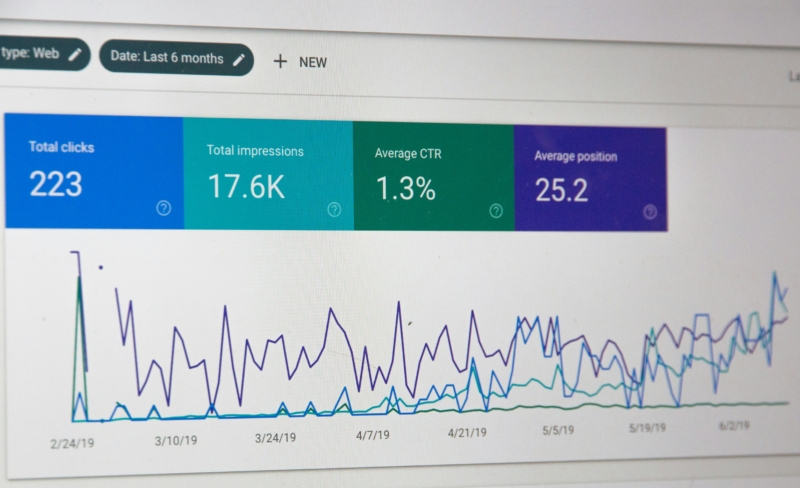
Mobile game advertising becomes risky when budgets are treated as static. Many producers approve spend early, only to discover during launch that CPIs behave very differently at scale. What worked in testing no longer holds once volume increases.
A common lesson from large-scale F2P publishers is simple: forecasting matters more than precision. Teams that plan ranges instead of fixed numbers — and tie budget increases to clear performance signals — avoid panic spending. Games like Gardenscapes scaled steadily not because CPIs stayed low, but because spend pacing matched creative refresh cycles and retention capacity.
Paid advertising starts to work when it isn’t thought of as simply buying traffic. It’s about protecting the launch from sudden cost spikes and ensuring spend grows only when the system behind it can handle scale.
Influencer & Creator Distribution
Influencer marketing rarely replaces UA, but it often amplifies it when used correctly. The mistake is expecting creators to drive performance metrics instead of visibility and validation.
Games like Stumble Guys benefited from creator-led exposure long after launch. Short-form content on platforms like TikTok didn’t just generate installs — it refreshed interest and extended the game’s lifecycle. This worked because creators were given freedom to present the game naturally, not scripted ad reads.
For producers, viral game marketing works best when expectations are clear. Creators support discovery, social proof, and momentum. When aligned with paid campaigns and store messaging, they strengthen the overall system rather than acting as a separate channel.
Community & Social Signals
Social community building is often undervalued because it’s hard to forecast. Yet for many mobile games, early community signals strongly correlate with long-term retention and brand strength.
Studios running live-service titles increasingly treat Discord, Reddit, or social platforms as listening tools rather than growth engines. The already mentioned Clash Royale used community feedback loops to align updates, marketing beats, and player expectations — reducing friction during major releases.
The most valuable thing stakeholders receive from community is a feedback channel. You’ll know what marketing decisions are supported, improve messaging clarity, and reinforce trust when changes or monetization updates go live.
Cross-Promotion & Portfolio Leverage
Cross promotions become relevant once a studio has more than one live product — and they’re often underestimated. Internal traffic is cheaper, more predictable, and easier to align with live ops than external acquisition.
Publishers with portfolios, such as Supercell, consistently reuse audiences to test new titles, validate early interest, and soften launch risks. Even small studios benefit by reusing learnings, creatives, and messaging patterns across projects.
Cross-promotions allow producers to reuse audience and momentum from earlier launches instead of rebuilding distribution from scratch.
Mobile Game Marketing Strategy Checklist for Producers
This checklist isn’t about tools or channels. It’s a set of decision checkpoints producers can use to sanity-check whether their mobile games promotion platforms are supported by a real system — or whether the launch is heading toward reactive mode.

Before committing serious budget, producers should be able to answer “yes” to most of the following:
- Audience & positioning
- Is the target audience clearly defined — and agreed on across product, art, and marketing?
- Can the core promise of the game be explained in one short sentence without qualifiers?
- Is the target audience clearly defined — and agreed on across product, art, and marketing?
- Creative readiness
- Is there a plan for ongoing creative production, not just launch assets?
- Are ownership and iteration speed clearly assigned?
- Is there a plan for ongoing creative production, not just launch assets?
- Store page & visibility
- Do store visuals and descriptions match what ads and creators communicate?
- Is there a plan to iterate store pages post-launch, not freeze them?
- Do store visuals and descriptions match what ads and creators communicate?
- User acquisition & spend control
- Are there clear rules for testing, scaling, and pausing spend?
- Is budget pacing tied to creative refresh and retention capacity?
- Are there clear rules for testing, scaling, and pausing spend?
- Launch staging
- Is soft launch used to validate assumptions, not to “prove success”?
- Are global launch expectations aligned with soft launch learnings?
- Is soft launch used to validate assumptions, not to “prove success”?
- Analytics & decisions
- Are KPIs defined in terms of decisions, not dashboards?
- Does the team know which signals trigger action — and which don’t?
- Are KPIs defined in terms of decisions, not dashboards?
- Cross-team alignment
- Are marketing beats aligned with content updates and live ops?
- Do all stakeholders share the same definition of launch success?
- Are marketing beats aligned with content updates and live ops?
If this checklist exposes gaps, that’s not a failure — it’s a warning. For producers, catching misalignment early is often the difference between a controlled launch and months of expensive course correction.
Conclusion
In 2026, mobile game marketing works best when it’s treated as part of production, not as a launch task. Early alignment around positioning, creatives, and scale readiness reduces risk, protects budgets, and prevents the kind of last-minute fixes that exhaust teams and limit growth.
The earlier marketing decisions are made, the more control teams retain when pressure increases. Most launch issues aren’t caused by weak execution, but by late planning.
If any part of what you’ve read today resonates with your recent development experience, it may be a sign an external perspective can help return alignment to your processes. Turn to Stepico to close this gap: we support producers in aligning production, art, and marketing early so promotion scales with the game instead of fighting it.