
In 1938, Johan Huizinga, Dutch historian and cultural theorist, publishes Homo Ludens — his philosophical magnum opus built around a provocative idea: play is not entertainment layered on top of culture, but one of its original building blocks. Long before institutions, rules, or economies took shape, Huizinga argued, humans learned to interact, compete, cooperate, and create meaning through play.
While Johan Huizinga didn’t live to see the Internet, virtual realities and digital marketing, he was right about one thing: play invites action. If you’re reading this piece, it means that Huizinga’s anthropological presumption works, and you probably want to know how can gamification work for your product. Reading this article, you will also understand how to design and implement it properly, making sure it suits your offering and multiplies your ROI.
Why even gamify your product?
Isn’t it… childish? Adding, say, a 3-in-a-row puzzle to your retail app or made-up rewards to a SaaS dashboard? For a long time, gamification was treated exactly like that: a cosmetic layer. Points slapped onto dashboards. Badges handed out for no real reason. A playful interface, detached from the actual value of the product.
And yet, despite this skepticism, gamification trends show steady adoption across industries that are anything but playful: finance, enterprise software, corporate training, healthcare, logistics. Not because these companies suddenly decided to be “fun”, but because they ran into the same structural problem.
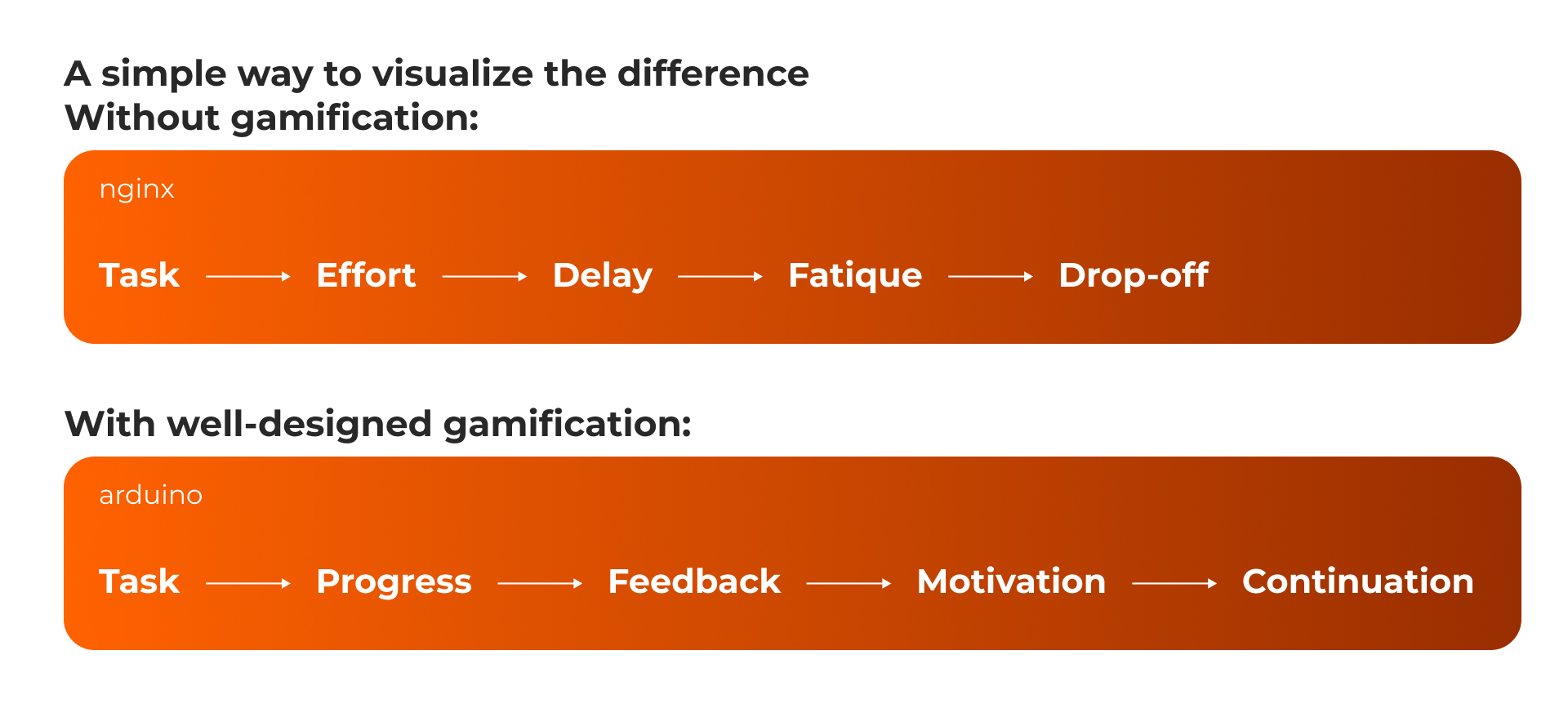
People don’t disengage because products are boring. They disengage because products demand effort without giving a sense of progress.
Statistics (market growth)
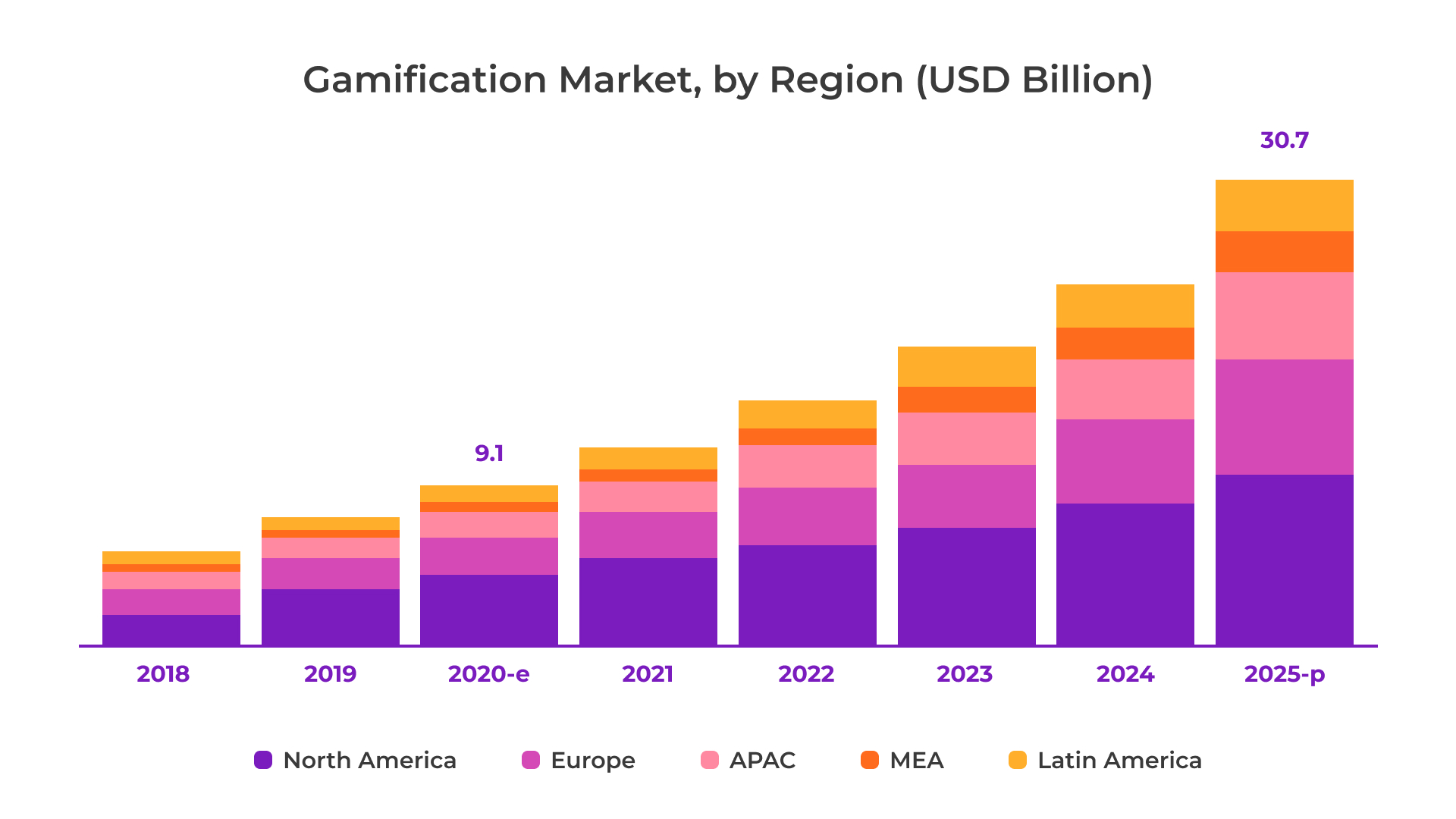
Gamification stats pretty much speak for themselves. The global gamification market now sits at roughly $19–20 billion, with projections pushing it beyond $90 billion by 2030 (find sources below in the table). That’s a 25–27% annual increase, sustained over multiple years. Markets don’t do that unless something consistently works.
Adoption tells the same story. Around 70% of large enterprises now use gamification in at least one area of their business — most often in customer engagement, learning, or internal performance systems. This isn’t experimental anymore. It’s operational.
What’s more interesting is where gamification shows up. More than half of customer-facing applications now include some form of game mechanic, and mobile-first implementations dominate new rollouts. Translation: if a product lives on a screen people check daily, gamification is increasingly part of the default design toolkit.
And the results aren’t subtle. Across case studies and industry reports, gamified systems regularly show engagement lifts of up to 150%, with training completion rates improving by 40–60% and loyalty programs driving noticeably higher repeat behavior. Not everywhere. Not automatically. But often enough that companies keep funding it.
| Metric | What it tells us |
| Global gamification market size (2025) | ~$19–20B |
| Projected size by 2030 (Research & Markets) | ~$90-95B+ |
| Average CAGR (Markets and Markets) | ~25–27% |
| Large enterprises using gamification in some form | ~70% |
| Customer-facing applications using game mechanics | ~57% |
| Mobile-first gamification share of implementations | ~55%+ |
| Engagement uplift reported in gamified systems (case-level) | Up to 150% |
| Training completion improvement with gamification | 40–60%+ |
Business psychology
The easiest mistake to make when talking about gamification is to treat it as a design trick. Add points, add rewards, add a sense of “fun”, and engagement will follow.
In reality, gamification works for a much quieter reason: it reorganizes effort.
One of the most cited frameworks in motivation research — Self-Determination Theory, developed by psychologists Edward Deci and Richard Ryan — argues that people stay engaged not when they are pushed, but when three basic needs are satisfied:
- competence,
- autonomy,
- relatedness.
“Human beings have an inherent tendency to seek out novelty and challenges, to extend and exercise their capacities.”
— Deci & Ryan, Intrinsic Motivation and Self-Determination in Human Behavior
Gamification works when it supports these needs. Of course, it fails when it ignores them.
Most digital products, whether customer-facing or internal, ask users to do things that are objectively useful but subjectively unrewarding. Fill in data. Learn a workflow. Repeat the same action daily. Improve gradually, without visible milestones. From a psychological standpoint, this is a perfect recipe for disengagement.
Gamification doesn’t remove effort. It reframes it: by introducing clear progress, immediate feedback, and a sense of voluntary challenge, game mechanics reduce what psychologists call perceived effort. The task remains the same, but the experience of doing it changes.
This is why game mechanics in non-game contexts keep reappearing in products where motivation matters more than novelty: learning platforms, habit-forming apps, onboarding flows, internal tools.
Top-10 gamification mechanics to implement
1. Points & Scoring Systems
Example: Starbucks Rewards (Coffee/Retail)
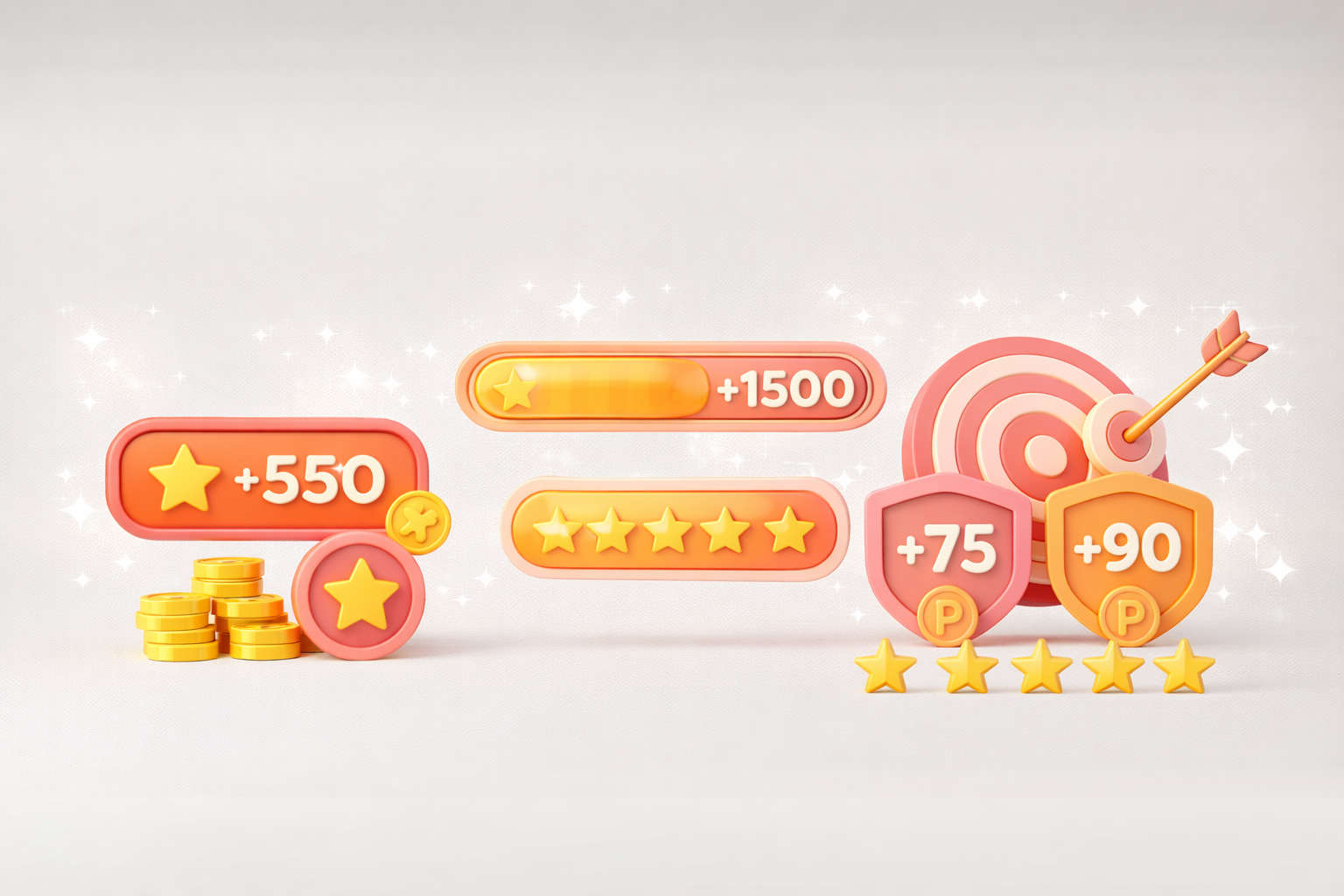
Points are the most familiar gamification mechanic — and the easiest to get wrong. When treated as decoration, they feel hollow. When designed properly, they serve a much more practical role: they make progress visible.
Most products already require effort. Users buy, learn, return, and repeat actions long before they feel any real payoff. A scoring system doesn’t add value on its own; it translates effort into a clear signal. Points answer a basic question users constantly ask, often subconsciously: “Am I getting anywhere?”
This is why points remain one of the most durable game mechanics in non-game contexts, especially in loyalty programs and habit-driven products. They reduce ambiguity. They give structure to otherwise invisible progress. And they create momentum without forcing excitement.
Starbucks Rewards is a clean example of gamification for retail. Customers earn “Stars” for purchases they would likely make anyway. Progress toward rewards is always visible, thresholds are clear, and rewards are predictable. There’s no surprise, no gimmick — just a steady feedback loop that turns routine transactions into intentional behavior. The impact is measurable: Starbucks reported 34.6 million active Rewards members in the U.S. alone in 2024, accounting for over 57% of U.S. company-operated sales
Points don’t motivate by excitement; they motivate by clarity. When users can see how today’s action moves them forward, they’re far more likely to come back — and keep going.
2. Badges & Achievements
Example: GitHub (Developer Community/Tech)

Badges are often dismissed as superficial — decorative icons that look impressive and do very little. In practice, they work for a different reason than points: they recognize identity, not progress.
Where points answer “How far have I gone?”, badges answer “What kind of user am I?”
They turn abstract effort into status, visibility, and reputation. This is why badges are especially effective in communities, professional platforms, and learning environments, where recognition matters as much as rewards.
GitHub is a strong example. Its achievements system highlights contributions, milestones, and community participation — not with discounts or perks, but with visible markers attached to a developer’s profile. These signals travel with the user, reinforcing credibility and peer recognition inside the ecosystem.
The scale matters. GitHub reported over 100 million developers using the platform in 2023, with profiles functioning as professional portfolios. Academic analysis of GitHub badges shows that achievements are widely adopted and influence visibility and social interaction within the community, even when they don’t directly affect productivity
Badges don’t motivate by reward. They motivate by recognition. In environments where identity and reputation matter, that can be more powerful — and more durable — than points ever are.
3. Levels & Progression
Example: Duolingo (Education/EdTech)

Levels and progression systems work because they turn long, ambiguous journeys into structured paths. Instead of asking users to “keep going,” they show where they are, what comes next, and why the next step matters.
This matters in products where value accumulates slowly — learning, onboarding, skill development, or habit formation. Without visible progression, users struggle to judge whether continued effort is worth it. Levels solve that by breaking complexity into milestones that feel achievable.
Duolingo is the canonical example. Its learning path is built around structured levels, crowns, and leagues that make progress tangible even when mastery takes time. Users rarely feel like they are “just practicing” — they are advancing through a system. This sense of movement is central to retention.
The business impact is not theoretical. Duolingo reported 10.9 million paying subscribers in 2024 and $531 million in annual revenue, driven largely by its ability to keep users engaged over long learning cycles.
Levels don’t motivate by difficulty; they motivate by direction. When users can see a path forward, they’re far more willing to stay on it.
4. Leaderboards
Example: Nike Run Club (Fitness/Well-being)
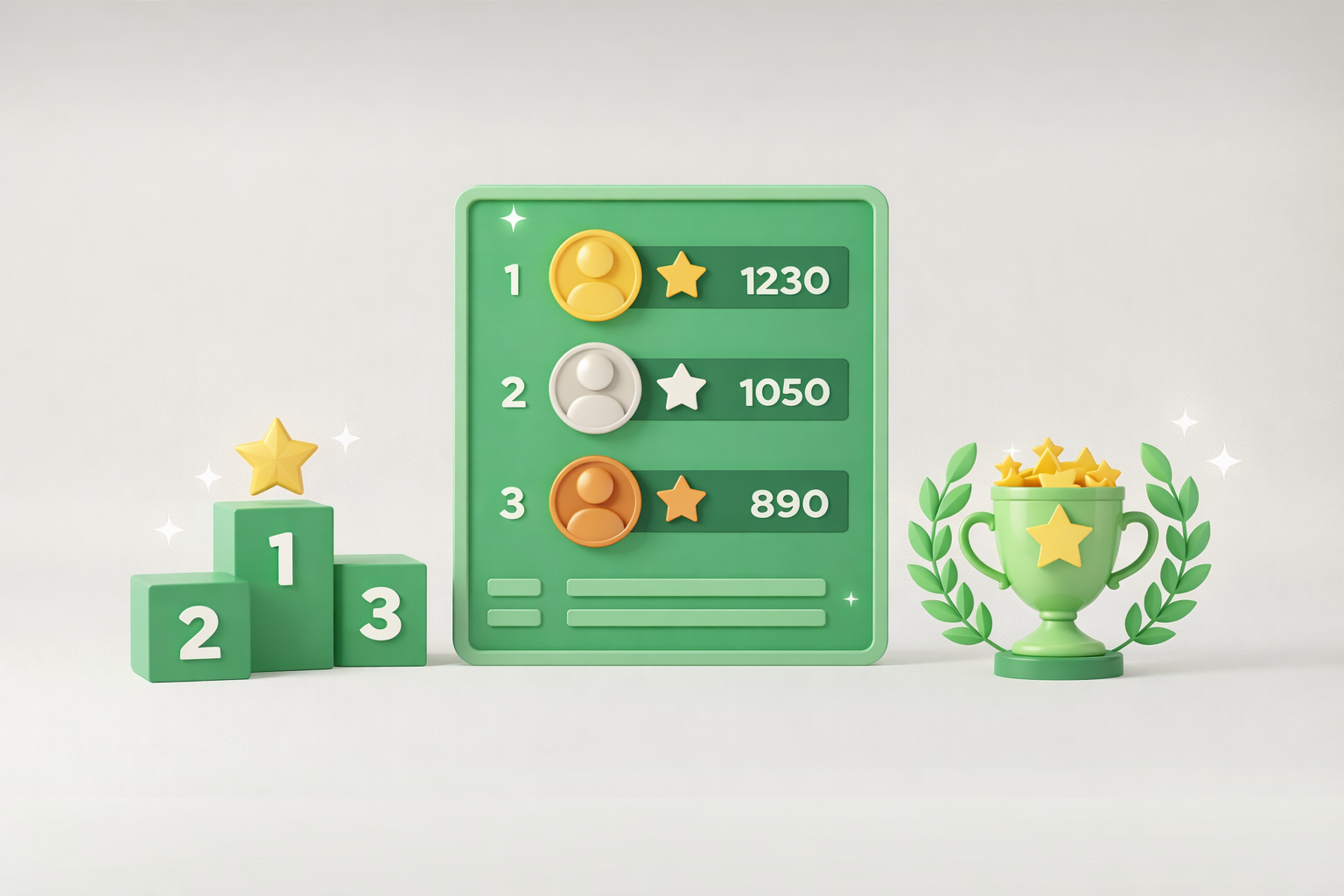
Leaderboards are the most polarizing gamification mechanic — and for good reason. Used carelessly, they demotivate the majority of users. Used intentionally, they amplify effort among the most engaged segment, often with outsized impact.
What leaderboards do better than any other mechanic is introduce social comparison. They don’t motivate everyone equally, and they’re not meant to. Their role is to surface performance, create aspiration, and reward relative achievement — not absolute progress.
This is why leaderboards tend to work best in opt-in environments: fitness, sales, referrals, challenges, and communities where comparison feels earned rather than imposed.
Nike Run Club is a strong example. Its leaderboards and challenge rankings allow users to compare mileage, pace, and consistency within defined timeframes and peer groups. Importantly, competition is contextual — weekly, monthly, or challenge-based — which prevents permanent domination by top performers.
Nike Run Club surpassed 40 million active users globally, and research into NRC’s gamified features shows that competitive elements significantly increase user engagement and intention to continue using the app.
Leaderboards don’t motivate by fairness. They motivate by visibility. When designed with boundaries, they push high-intent users further — without dragging everyone else down.
5. Challenges & Missions
Example: Nike Run Club Challenges (Fitness)
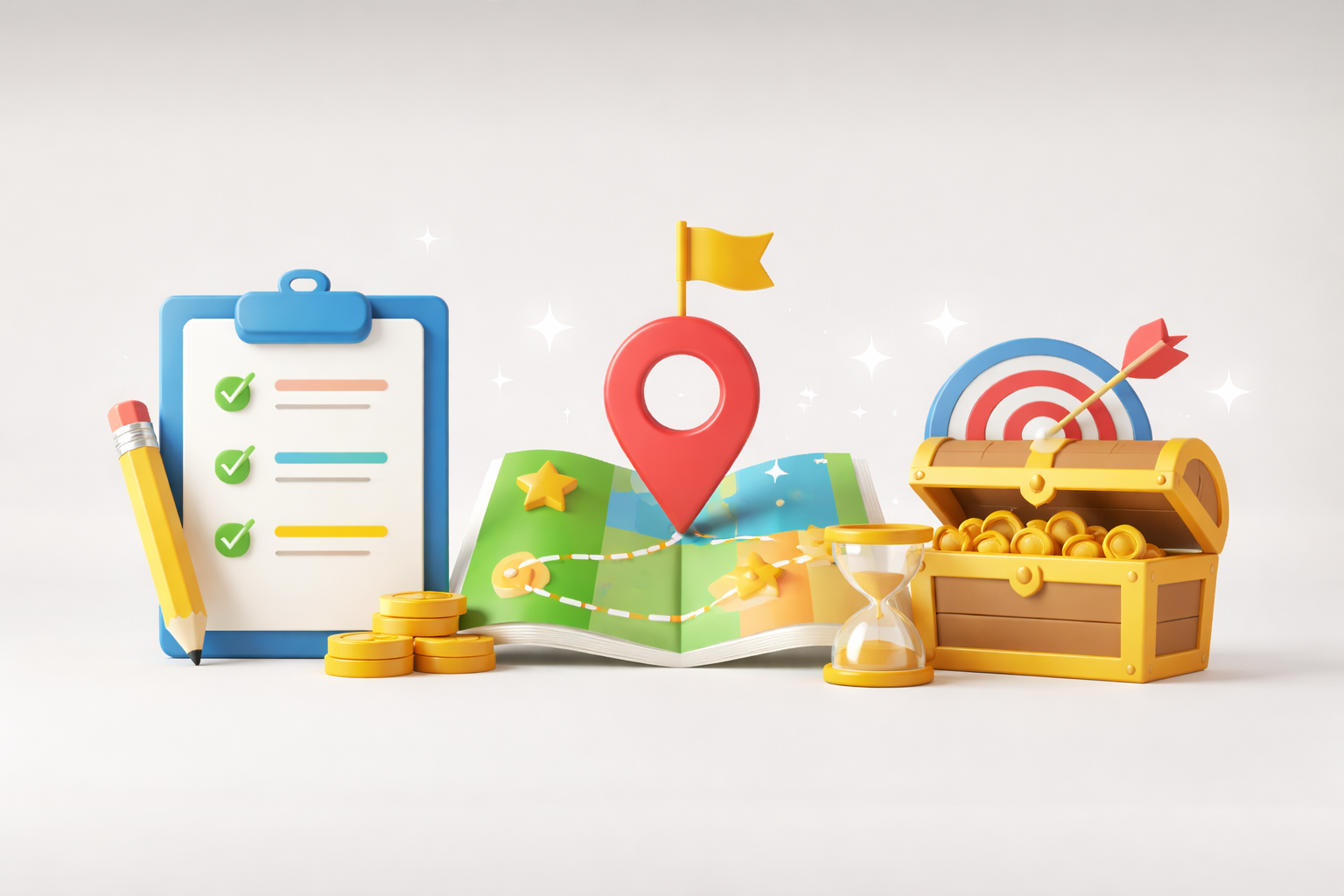
Challenges and missions work because they give users a reason to act now, not “sometime later.” Where progression systems support long-term commitment, challenges create short-term focus. They turn abstract goals into concrete, time-bound tasks with a clear finish line.
This mechanic is especially effective when motivation fades over time — fitness, learning, onboarding, and internal performance systems. A mission reframes effort as something temporary and achievable: complete this, hit that target, finish within this window.
Nike Run Club’s challenges illustrate this well. Monthly distance goals, limited-time events, and community-wide missions give runners a reason to return even when routine motivation drops. Importantly, these challenges are optional and varied, allowing users to opt in without pressure.
The scale speaks for itself. Nike Run Club has grown to 40+ million users globally, and Nike has repeatedly credited digital engagement — driven by app-based challenges and community features — as a key contributor to its direct-to-consumer growth strategy
Challenges don’t motivate by pressure. They motivate by closure. When effort has a clear end, users are far more willing to begin.
6. Rewards & Incentives
Example: McDonald’s Monopoly (Fast Food)

Rewards are the most obvious gamification mechanic — and the most dangerous. Used incorrectly, they replace motivation instead of supporting it. Used well, they act as a conversion accelerator, especially at moments where hesitation is highest.
The role of rewards in non-gaming contexts is not to entertain, but to reduce friction. Discounts, free items, exclusive access, or tangible perks lower the psychological cost of action — purchasing, signing up, returning, or trying something new.
McDonald’s Monopoly is a textbook example. The campaign doesn’t gamify the product itself; it gamifies repeat behavior. Every purchase becomes a chance to win, combining tangible rewards with a simple collection mechanic. Crucially, rewards are immediate enough to feel attainable, but varied enough to sustain interest over time.
The business impact is well documented. According to McDonald’s promotional case analyses in Forbes, the brand has run Monopoly for over 30 years because it consistently drives increased visit frequency and sales during campaign periods, often becoming one of the brand’s strongest annual promotional levers.
Rewards don’t build habits on their own. But when used strategically, they nudge behavior at critical decision points where motivation alone isn’t enough.
7. Streaks & Daily Bonuses
Example: Duolingo Streaks (Education/EdTech)
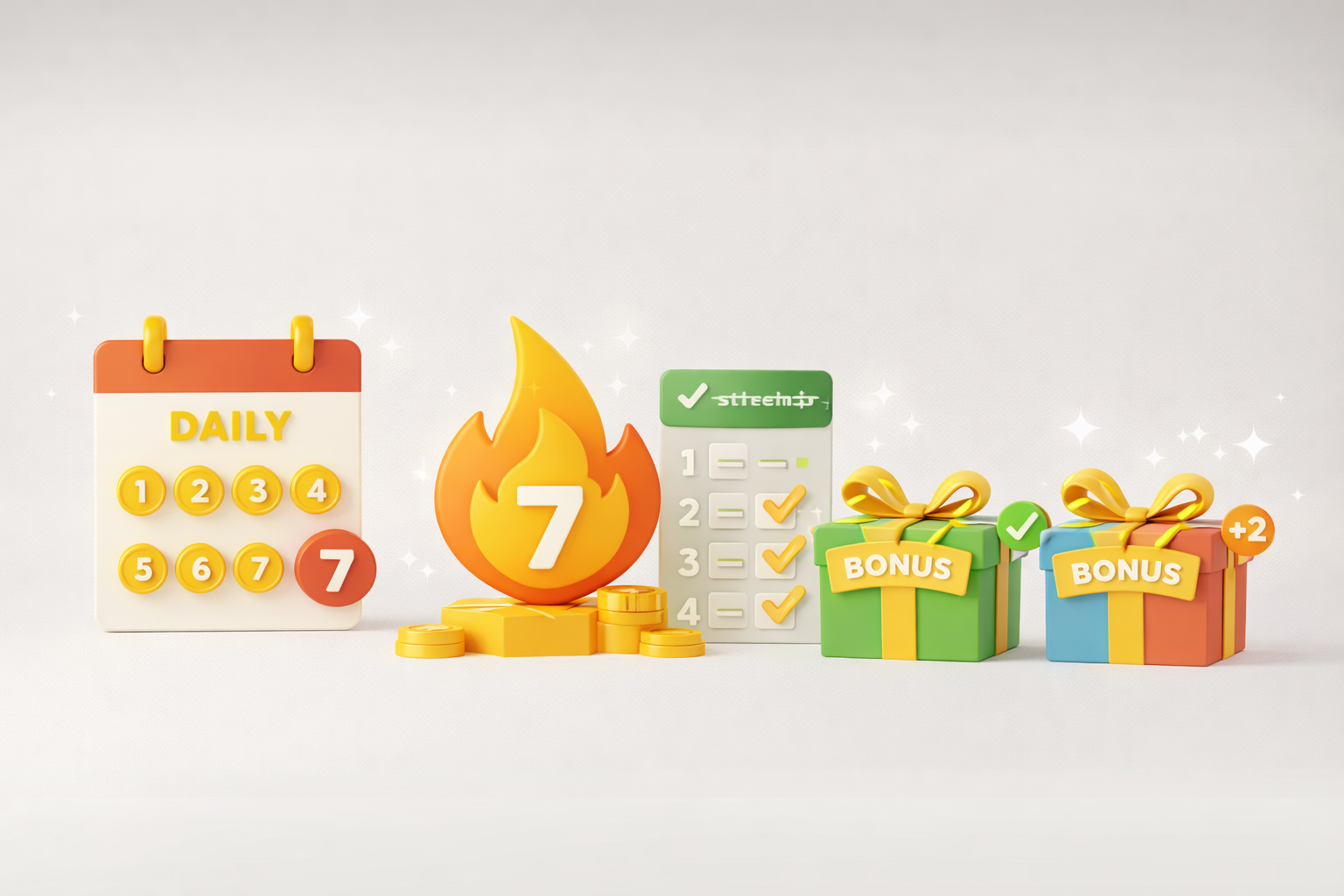
Streaks work for one uncomfortable reason: people hate breaking commitments they can see. Once a streak exists, it turns inaction into loss — and loss is psychologically heavier than reward.
This mechanic is especially effective in products that depend on habit formation: learning, wellness, productivity, and daily-use apps. A streak doesn’t promise a prize; it creates continuity. Each day skipped doesn’t just pause progress — it visibly erases it.
Duolingo’s streak system is one of the most cited examples. Users maintain a visible count of consecutive active days, reinforced by reminders and optional “streak freezes.” The system is deliberately simple, but emotionally sticky. Users don’t log in to gain something new — they log in to avoid losing what they already built.
The scale of the effect is visible at the business level. Duolingo reported over 10.9 million paying subscribers in 2024, with daily active usage cited as a core driver of retention and subscription conversion.
Streaks motivate by preserving identity. Once users see themselves as “someone who doesn’t break the chain,” showing up becomes the default.
8. Random Rewards (Luck Mechanics)
Example: eBay Bidding Experience (E-commerce)

Random rewards work because certainty is boring. When outcomes are predictable, motivation fades quickly. Introduce uncertainty — even small — and attention spikes. This isn’t about addiction rhetoric; it’s about how the brain responds to variable reinforcement.
In non-gaming domains, luck mechanics are rarely about “winning big.” They’re about adding a layer of anticipation to otherwise routine actions: making a purchase, opening an email, completing a task. The reward doesn’t have to be valuable — it has to be unpredictable.
eBay’s auction system is a classic example. While not branded as gamification, bidding dynamics mirror luck-based mechanics closely. Users return repeatedly not just to buy, but to see what happens next. The possibility of winning — even at a marginal advantage — sustains engagement far beyond rational price comparison.
Behavioral psychology explains this well. Variable reward schedules are known to produce higher engagement and repeat behavior than fixed rewards, particularly in systems with frequent interaction (Skinner, reinforcement theory; summarized in Harvard Business Review)
Randomness should enhance, not replace, value. When chance becomes the product, trust erodes. When it complements real utility, it keeps users coming back.
9. Social Proof & Sharing Mechanics
Example: Nike Run Club Social Sharing (Fitness/Brand)

Social proof works because people don’t evaluate effort in isolation. They evaluate it in context, being relative to others. When progress, achievements, or activity become visible, behavior shifts. Not because users are told to perform, but because performance becomes public.
In non-gaming domains, social proof is one of the most effective ways to turn individual action into collective momentum. Sharing a run, a milestone, or a completed challenge reframes effort as something worth showing — and, crucially, worth repeating.
Nike Run Club’s social features illustrate this dynamic well. Users can share workouts, compare progress, and react to others’ achievements. The mechanism doesn’t rely on explicit competition; it relies on visibility. Activity becomes a signal of commitment, identity, and consistency.
Research supports the impact. Studies on social fitness platforms show that users who engage with social features demonstrate significantly higher retention and activity levels than those who train alone (Journal of Medical Internet Research).
10. Narrative & Story-Driven Progress
Example: You Need a Budget (YNAB) (Banking/Budget tracking)

Story-driven gamification works when progress doesn’t just accumulate but unfolds. Actions move the user through a sequence with stakes, consequences, and a clear before-and-after. The motivation isn’t points or comparison; it’s the desire to finish the story.
YNAB (You Need A Budget) is a strong non-gaming example. Its product is built around a clear narrative arc: financial chaos → awareness → control → confidence. Onboarding explicitly frames the user’s situation as a starting point in a journey, not a failure state. Every action — assigning money, covering overspending, aging dollars — advances that narrative.
What makes YNAB story-driven rather than just progressive is causality. Decisions have consequences. Overspending creates tension. Corrective actions resolve it. Over time, users don’t just “track a budget” — they experience a transformation in how they relate to money.
YNAB backs this with measurable outcomes. According to company-reported user surveys, new users save an average of $600 within their first two months, and over $6,000 in their first year.
Story-driven progress motivates through meaning and continuity. Users return not to maintain a metric, but to see what happens next — and to complete a narrative they’re personally invested in.
What to consider before implementing gamification in your product
By the time companies seriously look into gamification, the question is rarely “does it work?”. The data around gamification statistics and trends already answers that. The real question is whether it will work for this product, this audience, and this business model.
See where motivation breaks
Gamification is not a universal upgrade. It is most effective when users face delayed value, repeated effort, or gradual mastery — onboarding flows, learning curves, habit formation, loyalty, or long-term engagement. If your product already delivers instant value with minimal friction, adding game mechanics may add noise rather than lift user engagement through gamification.
Audience maturity matters
Different users respond to different mechanics. Competitive elements like leaderboards can energize high-intent users while alienating others. Streaks and challenges work well in daily-use products but feel intrusive in low-frequency ones. This is where understanding game mechanics in non-game contexts becomes critical — mechanics must match user psychology, not marketing trends.
Consider data and measurement upfront
Gamification without clear success metrics quickly turns into decoration. Retention, completion rates, frequency, or conversion should be defined before implementation. Without this, evaluating gamification ROI and performance metrics becomes guesswork, and iteration stalls.
Measure mechanics’ longevity
Gamification systems are not campaigns — they are systems that evolve. Rewards inflate, users optimize mechanics, and novelty fades. Planning for balance, progression pacing, and long-term content is essential, especially as AI-driven gamification and personalized gamification experiences raise user expectations.
Internal ownership
Gamification touches product design, UX, data, and behavior. Whether applied to marketing, gamification in corporate training, or gamified employee engagement, it requires cross-functional alignment. Without clear ownership, even well-designed mechanics decay over time.
In short, the future of gamification belongs to companies that treat it as infrastructure — not ornament. The next section explains why this is where game development expertise becomes a strategic advantage.
Why game development expertise matters in non-gaming gamification
Gamification often looks simple from the outside. Points, badges, challenges — familiar elements that feel easy to replicate. In practice, most failures happen for exactly this reason: teams copy the surface, not the system.
Game development treats engagement as a dynamic system, not a feature. Every mechanic affects balance, pacing, and motivation over time. When these systems aren’t designed carefully, common problems appear quickly: reward inflation, stalled progression, or disengagement once novelty fades. These are not UX issuesbut full-scale system design failures.
Game designers are trained to anticipate behavior, test incentives, and design for long-term engagement — skills that become critical as gamification trends move toward more complex setups, including AI-driven gamification and personalized gamification experiences.
The difference shows in longevity. Campaign-driven gamification may create short-term spikes. System-driven gamification supports retention, learning, and sustained behavior change — the outcomes tied to real gamification ROI and performance metrics.
Conclusion
“Play creates order, is order.” We’ve seen every angle of gamification in business today, yet another take from Huizinga’s work neatly summarizes the essence: play — the essential product of gamification — structures the user’s behavior as a standalone instrument, serving the very rule of their interaction with the product. But let’s put it simply: well-designed gamification doesn’t distract users from the product — it teaches them how to use it.
If you want to implement strong gamification mechanisms into your solution that will both retain users and serve your value, turn to Stepico’s specialists. As one of the best game development companies, we put our game design expertise in tandem with business development experience — all to help your product unleash its value and financial potential.