
Imagine stepping into a game world that feels so real, so layered with stories and details, that you forget you’re holding a controller. That’s exactly what Naughty Dog achieved with The Last of Us Part I, the remake of their 2013 classic. In this title, every abandoned street, every overgrown building, every crumbling city corner feels intentional – not just pretty scenery but a narrative tool that pulls players deeper into the experience. Critics praised the remake’s environmental visuals and enhancements, calling them a major step forward in graphical fidelity and immersive worldbuilding compared to the original – so much so that it won Outstanding Visual Effects in a Real-Time Project at the Visual Effects Society Awards.
While both parts of The Last of Us are longed-for AAA projects, it teaches any game developer a lesson about how environment design makes or breaks an atmosphere. Environments aren’t just backgrounds; they narrate emotionally, guide players without words, and solve gameplay challenges visually. In this article, we’ll cover the impact 3D environment modeling has on a player and how this impact can help you grow your game ROI if used wisely.
What is 3D Environment Design And Why It’s More Than Just Backgrounds
At its core, 3D environment design is the process of creating the world players move through – cities, rooms, landscapes, interiors, and everything in between. A strong 3D game environment doesn’t just look good: it supports gameplay, guides player movement, and quietly tells a story without using words.
In modern game production, environments are designed with artistic intention. A narrow corridor can create tension. An open space can encourage exploration. Lighting, scale, and layout help players understand where to go and what matters, even if they never notice it consciously. That’s why environment design is closely connected to level design, game mechanics, and performance – especially in mobile games, where every asset has to work hard without overloading the device.
From a production standpoint, environment design combines creativity and structure. It starts with visual ideas, then moves into technical execution using specialized tools and engines. Artists create reusable assets, assemble them into locations, and adjust details so everything feels cohesive. Whether it’s a realistic post-apocalyptic city or a stylized fantasy world, the goal is the same – to build a believable space that feels alive and functional.
Understanding what goes into 3D environment design helps set realistic expectations for timelines, budgets, and team composition – and makes outsourcing or outstaffing far more effective.

Types of 3D Environments: From Small Mobile Levels to Living Worlds
Not all 3D environments are built the same. The exact type directly affects production time, asset complexity, performance requirements, and cost. To help you avoid overspending or overbuilding, let’s dive right into:
Natural environments
Forests, mountains, deserts, caves, or oceans. These worlds rely heavily on terrain sculpting, vegetation systems, and atmospheric effects. While they may look organic and “free,” they still require a strict, under-the-hood structure to maintain stable performance, especially on mobile devices. Reusable assets like rocks, trees, and ground materials are key to designing natural environments faster, easier, and better.
Urban and architectural environments
These include cities, streets, interiors, industrial zones, and sci-fi facilities. Here, precision is the main bet: scale, proportions, and navigation clarity are critical, because players interact closely with buildings, props, and interior spaces. This is where game environment modeling plays a big role – modular assets allow teams to assemble large locations quickly while maintaining visual consistency.
Stylized and fantasy environments
These prioritize artistic expression over realism. This is where artists exaggerate shapes, colors, or lighting to match a specific art direction. While these environments can be lighter on technical realism, they still demand careful balance – too much detail hurts performance, too little breaks immersion. For many mobile games, stylized environments are the smartest choice because they offer a strong visual identity at controlled production costs.
Who Works on 3D Environment Design? Roles Behind the Scenes
Building high-quality 3D environment art is never a one-person job, even on smaller projects. It’s a collaborative effort where each role focuses on a specific part of the environment pipeline.
At the center of the process is the 3D environment artist. This specialist creates the core assets – terrain, buildings, props, and set pieces – and assembles them into playable locations. They combine artistic vision with technical discipline, making sure assets look good while staying within performance limits. Strong environment artists know how to balance detail, reuse assets smartly, and work efficiently inside a game engine.
Concept artists often support the process at earlier stages. They define the visual direction through sketches, mood boards, and environment concept art that guides production. While they don’t usually build 3D assets themselves, their work ensures visual consistency across all locations. In some pipelines, level designers also play a role, shaping the layout and flow before detailed production begins.
On larger or more complex projects, technical artists may step in to support environment modeling for games. They help with shaders, lighting setups, and optimization rules, ensuring environments perform well across platforms.
In outsourcing or outstaffing scenarios, these roles may be combined, but the responsibilities stay the same. Clear role distribution will make it easier to co-create, elevate revisions, and achieve better results for the business side of game development.
Why Good 3D Environment Design Makes Money for Your Game (and Players Stay)
High-quality 3D environment design does far more than make a game look attractive. It directly shapes how players feel, how long they stay, and whether they come back. Environments influence first impressions, onboarding, and emotional engagement – all of which affect retention and monetization, especially in competitive mobile markets. There are 3 components to that, including the monetary one – so let’s dive into each.
Narrative aspect
From a gameplay perspective, a well-built 3D game environment communicates without words. Players instinctively know where to go, what’s dangerous, and what’s important. Good environments make mechanics feel intuitive – a clear win for both players and publishers. Even simple gameplay feels more premium when wrapped in a cohesive, believable world that invites players to explore it. The longer they do, the better your retention results and the word-of-mouth effect.
Resource allocation aspect
Visually strong environments elevate perceived production value at least with their looks. Think about all the store page screenshots, trailers, ads, and publisher pitches you can do with less allocated budget: to begin with, environments often become the core of user acquisition creatives at the marketing stage. The materials marketing requires generally rely heavily on recognizable, believable locations, so when visuals closely match the real in-game experience, not only do you save up significantly but you also set user expectations correctly.
Game environment design quality also plays a role in monetization strategy. Well-designed spaces make progression feel meaningful and reward-driven. Players are more likely to stay engaged – and spend – when new locations feel distinct, visually rich, and emotionally different from previous ones. In this sense, environments support monetization indirectly, by increasing session length, return rates, and long-term engagement rather than pushing direct purchase prompts.
Investors’ persuasion aspect (if you’re a game developer)
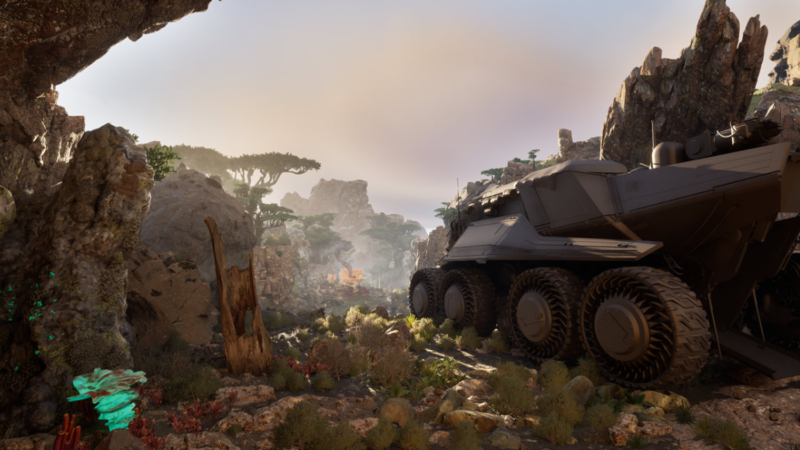
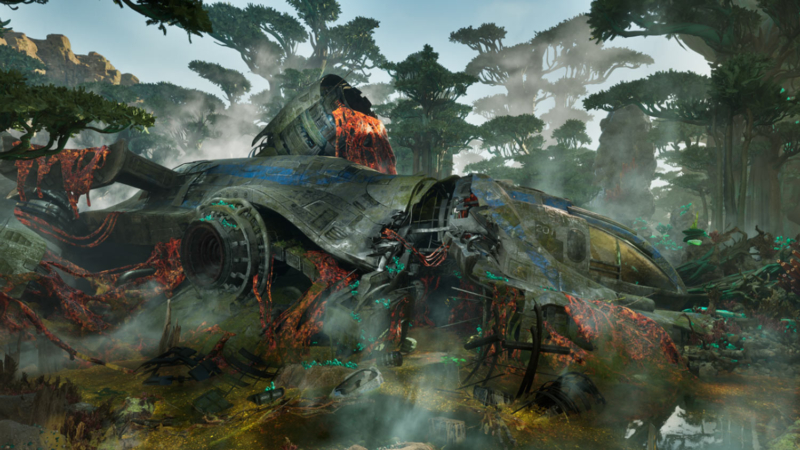
In many cases, environment quality is what convinces a user to download – or an investor to fund – a project. The latest is actually what happened to Scorn, a 2022 survival horror was an environment-led investment. Having failed to raise enough on Kickstarter, the development team doubled down on atmospheric art and trailers that showcased the game’s unsettling atmosphere, which eventually won over investors and publishers.
Final Word
Environment design is a strong pillar of your game’s worldbuilding, as well as a part of narrative design – one of those enabling the luxury of telling the story without using words. Doing it right is less artistic indulgence and more a strategic business decision that directly impacts a game’s commercial success.
If you require an external 3D environment expertise, turn to Stepico for help. Let us give you a hand with worldbuilding and environment consistency while keeping your artistic intention at the forefront. We will estimate a realistic scope that will both unveil your game’s USP and help deliver results in time.