
Spider-Man first appeared in 1962 as flat ink on cheap newsprint — bold outlines, exaggerated anatomy, limited color. It worked. Decades later, Sam Raimi’s films pushed the character toward photorealism because studio budgets could now deliver it and audiences expected it. Then Spider-Man: Into the Spider-Verse rejected that realism almost entirely, going further into stylization than even the original comics — and won the Academy Award, critically outperformed most of the live-action films, and shows no signs of aging.
Spider-Man didn’t accidentally exist in every visual register. Each shift was a deliberate creative and commercial decision, driven by audience expectations, production constraints, storytelling goals, and the specific medium being used. The character stayed the same, but the visual language changed every time the context demanded it.
Game development faces this same decision constantly, and gets it wrong for the same reasons filmmakers and comic publishers have always gotten it wrong: by treating it as an aesthetic preference rather than a strategic one. The choice between stylization and realism is not about which looks better. It’s a business decision — one that directly shapes production cost, team size, timeline, audience reach, and long-term product viability.
This article breaks down what stylization and realism actually mean in production terms, what drives their respective costs, when each approach makes stronger business sense, and how to avoid the common misconceptions that push projects in the wrong direction before a single asset is built.
Defining the Terms in Production Language
Before any cost comparison is meaningful, the two approaches need to be defined in production terms — not just aesthetic ones.
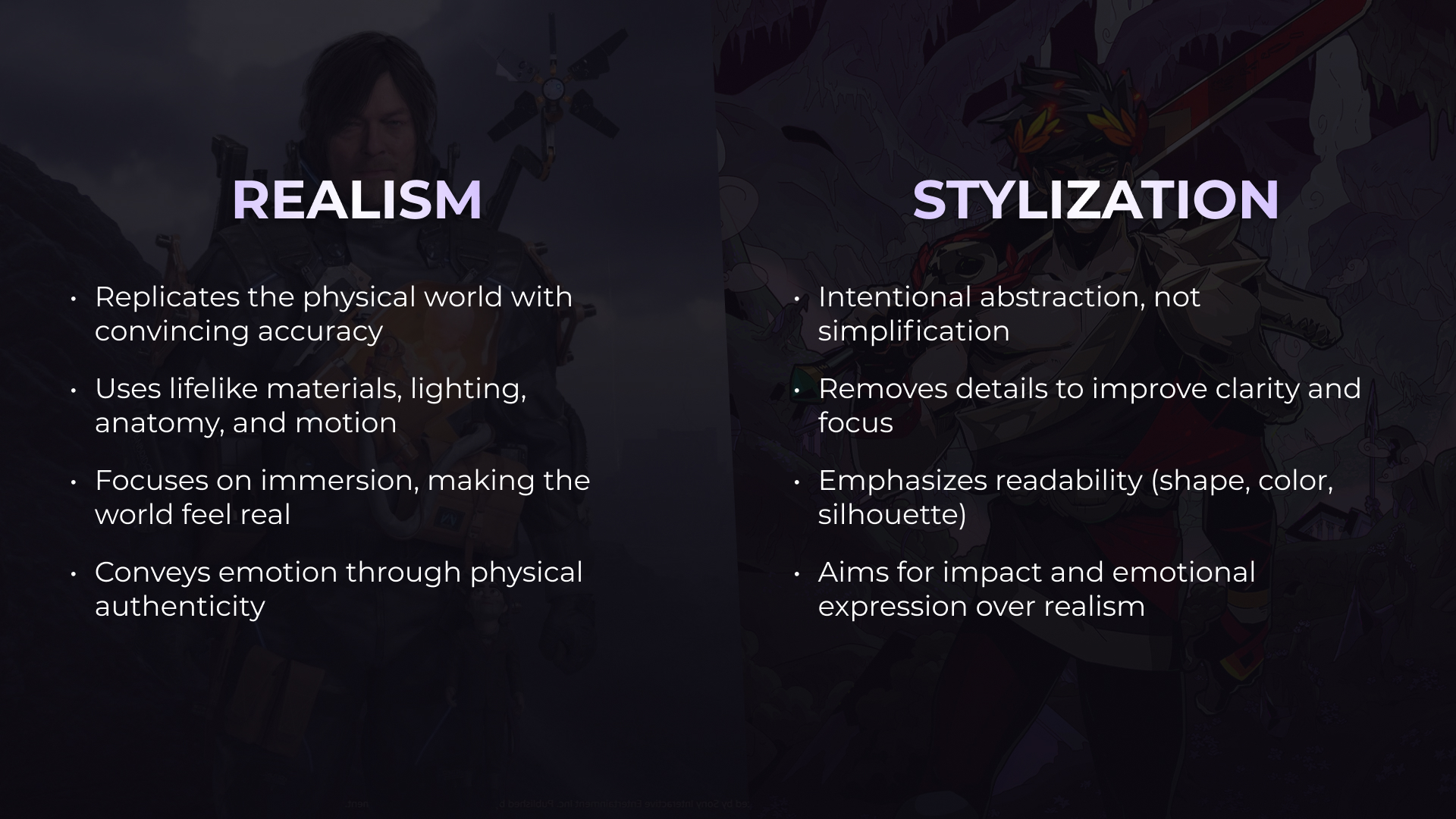
Realism in game art aims to simulate the physical world with enough fidelity that players accept it as plausible. That means lifelike materials and textures, physically based lighting, believable anatomy, and animation grounded in real movement. The goal is immersion — the feeling of being inside a tangible world rather than a designed one. Think of the lighting in Red Dead Redemption 2, where a sunset over a prairie isn’t just pretty; it’s engineered to feel indistinguishable from memory. Or the motion-captured faces in The Last of Us, where a slight tremor in a character’s jaw can carry more narrative weight than a page of dialogue. This is what a realistic art style delivers at its best: emotional truth through physical accuracy.
Stylization, on the other hand, is not simplification. It is intentional abstraction — the result of studying reality deeply, then choosing what to remove. Artists working in a stylized art style don’t skip detail because they lack the skill to render it. They omit it because the detail would dilute the signal. Fortnite‘s characters are instantly readable at a distance in a firefight. Hades uses exaggerated silhouettes and saturated color to communicate character personality before a player reads a single line of dialogue. Celeste conveys emotional vulnerability through pixel-art restraint that a photorealistic renderer could never achieve. The goal isn’t accuracy — it’s impact.
Does Realism Always Cost More?
Short answer: it depends on your goals. Realism often demands higher and continuously rising production investment, while stylization can be more cost-efficient — but only when it’s executed with clear intent.
The assumption that realism vs stylization is a simple cost equation — realism expensive, stylization cheap — is pervasive and wrong. Or rather, it’s correct in one direction and misleading in the other.
Realism does genuinely cost more in direct production terms. High-fidelity assets require detailed textures, high-polygon models, and complex physically based shaders. Lighting systems — global illumination, ray tracing, dynamic reflections — demand both technical art talent and hardware headroom. Avoiding the uncanny valley in character faces requires extensive iteration; a slightly wrong eye movement in an otherwise photorealistic face is more disturbing than a cartoon with no eyes at all. And perhaps most significantly, realism is a moving target. What read as cutting-edge in Crysis in 2007 became the baseline expectation within a few years. Each console generation resets the bar.
But stylization carries its own costs — and they are frequently underestimated. A poorly defined stylized realism art style, or any stylized direction that hasn’t been fully resolved before production begins, produces inconsistent asset pipelines, unclear visual rules, and rework that compounds across departments. Studios that choose stylization to save money, without investing in the upfront art direction that makes it coherent, often spend more on iteration than they would have on a well-managed realistic pipeline. The cost of stylization isn’t in the rendering, but rather in the decision-making: when this process is deferred or vague, the savings evaporate.
Real Cost Driver: Direction, Not Style
This is the point that most cost discussions about stylized vs realistic game art miss entirely.
The single biggest cost factor is not whether a project is stylized or realistic. It’s whether the project has clear artistic direction, defined visual rules, and genuine alignment between art and gameplay goals. A poorly directed realistic project spirals. A poorly directed stylized project spirals in exactly the same way — just with different-looking assets piling up on the cutting room floor.
Team Fortress 2 is a useful case study. Valve famously pivoted the game’s visual direction from a gritty graphic realism aesthetic toward its now-iconic illustrative style — not for artistic reasons, but because the realistic version made it impossible to read the battlefield clearly. The stylized direction wasn’t cheaper by accident. It was cheaper because it was resolved. Every visual decision served a defined purpose: readability first, personality second, fidelity never.
The discipline that unlocks stylization’s cost efficiency is the same discipline that prevents realistic projects from ballooning: knowing what you’re making before you start making it.
Why Realism Becomes More Expensive Over Time
Even well-managed realistic projects face a structural challenge that stylized ones largely avoid: escalation.
Player expectations for realistic vs. stylized art have been steadily rising since the late 1990s. Each console generation doesn’t just raise the bar — it moves the floor. Textures that looked convincing in 2015 now read as muddy. Lighting that earned praise in 2018 now signals a mid-budget production. Studios working in the realist mode are, in effect, running against a conveyor belt. New technologies — ray tracing, advanced subsurface scattering, nanite-level geometry — shift from impressive to expected faster than development cycles can absorb them. They increase production complexity, raise hardware requirements, and add cost without necessarily improving the experience of playing the game.
The longevity problem compounds this. A stylized game ages on its own terms. The Legend of Zelda: Wind Waker, released in 2002, still looks deliberate and beautiful today because its cel-shaded visual language was a design choice, not a hardware limitation.
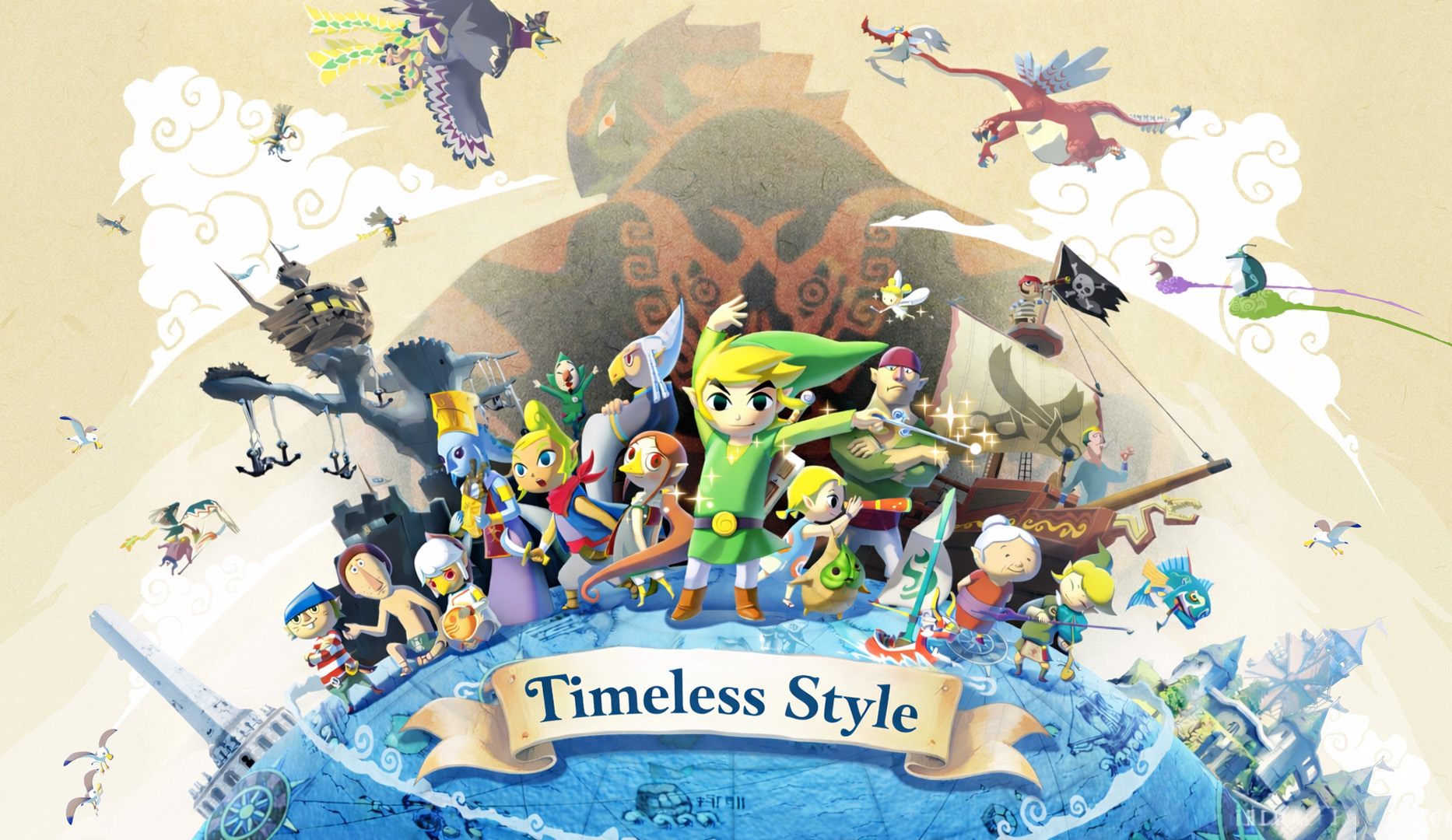
Halo: Combat Evolved, released the same year with far more realistic ambitions, required a full remaster to remain commercially presentable. The stylized realism of something like Journey — which sits in a fascinating middle ground between fidelity and abstraction — has aged almost not at all. Realistic games are products of their technical moment. Strongly stylized games transcend it.
The Hidden Truth: Realism Has Always Been Stylized
Here is the insight that rarely appears in these discussions: truly accurate realism has never existed in games, and it probably shouldn’t.
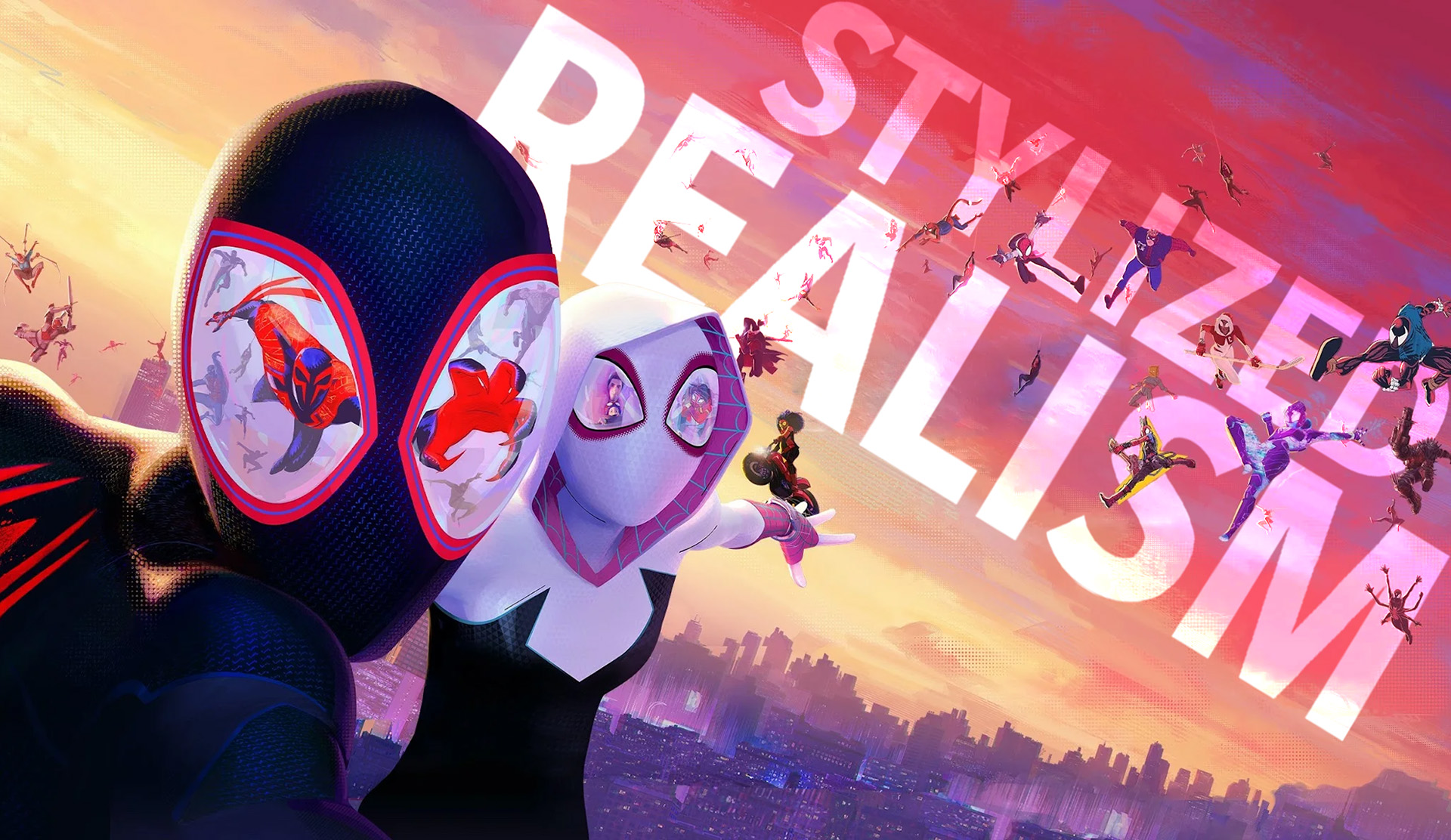
What we call a realistic game is, in production terms, a highly controlled illusion. The Witcher 3 uses exaggerated rim lighting to make characters pop against backgrounds. God of War applies cinematic color grading that no natural environment could produce. Even the most technically ambitious titles manipulate contrast, saturation, depth of field, and material response in ways that serve drama over accuracy. These aren’t failures of realism — they’re the craft of it. Stylized realism, as a production concept, describes this honestly: it’s the art of using realistic tools to create emotionally heightened, perceptually optimized images that feel real without being literal.
This same logic governs visual storytelling well beyond games. The MCU’s visual effects operate on a version of this principle — Iron Man’s suit is physically based and highly detailed, but lit and color-graded to read as mythic rather than mechanical. Spider-Man: Into the Spider-Verse weaponized the gap between the two approaches, using visible comic-book dots, misregistered color channels, and variable frame rates to create something that felt more emotionally true than photorealism ever could. That film’s stylized realism art — deliberate, rule-bound, and deeply researched — is one of the clearest arguments that the stylized realism art style can carry more emotional weight than any fidelity-first approach.
The takeaway for game development: the question is never really “realistic or stylized?” It’s always “which combination of the two best serves what we’re making?”
When Realism Makes Better Business Sense
Despite its costs, realism is frequently the right choice for reasons beyond aesthetics.
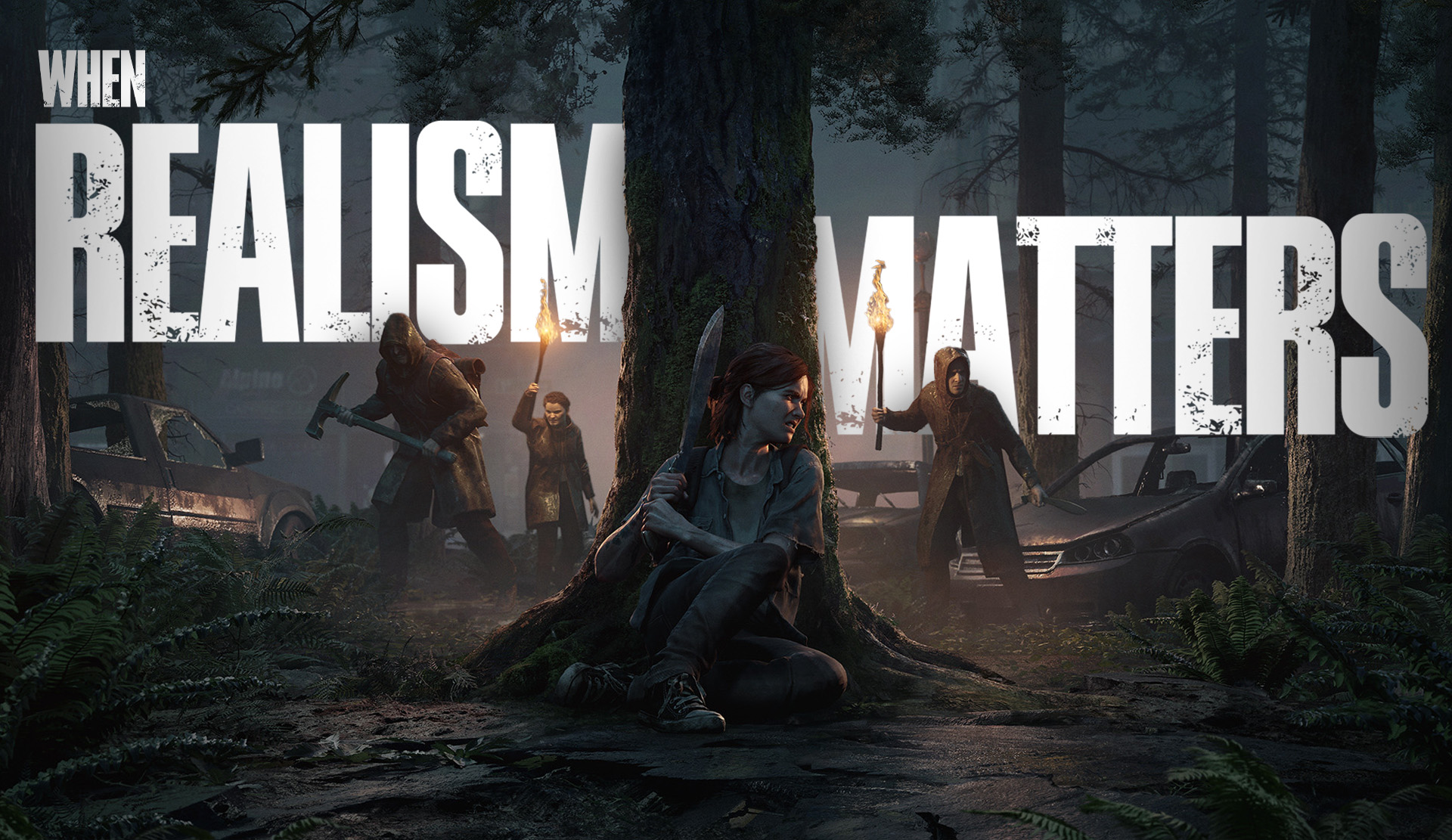
A realistic art style functions as a universal visual language. Players don’t need to acclimate to it. It mirrors the world they already inhabit, which means it can reach broader audiences without requiring the kind of “buy-in” that stylized games sometimes demand. This makes realism particularly effective for mass-market titles, AAA cinematic experiences, and games where the narrative is the primary product. The Last of Us Part II could not have achieved its emotional register in any other mode. The microexpressions, the weight of movement, the specific way light falls on a wet surface — these details aren’t decorative. They are the argument.
Realism also functions as a marketing instrument. A realistic trailer communicates production value immediately, requires no explanation of visual language, and tends to perform better in the broad-reach contexts — TV spots, pre-roll ads, convention trailers — where a studio’s investment needs to be legible at a glance.
When Stylization Makes More Sense
The business case for stylized vs realistic design is strongest in four situations.
When gameplay clarity is the primary concern, stylization almost always wins. Competitive games — from Overwatch to Valorant to League of Legends — use stylized design because it makes the game readable under pressure. Enemy silhouettes need to be distinct in a quarter-second. Ability effects need to communicate information without obscuring the field. A realistic vs stylized comparison in this context isn’t a matter of taste; it’s a matter of whether the game is functional.
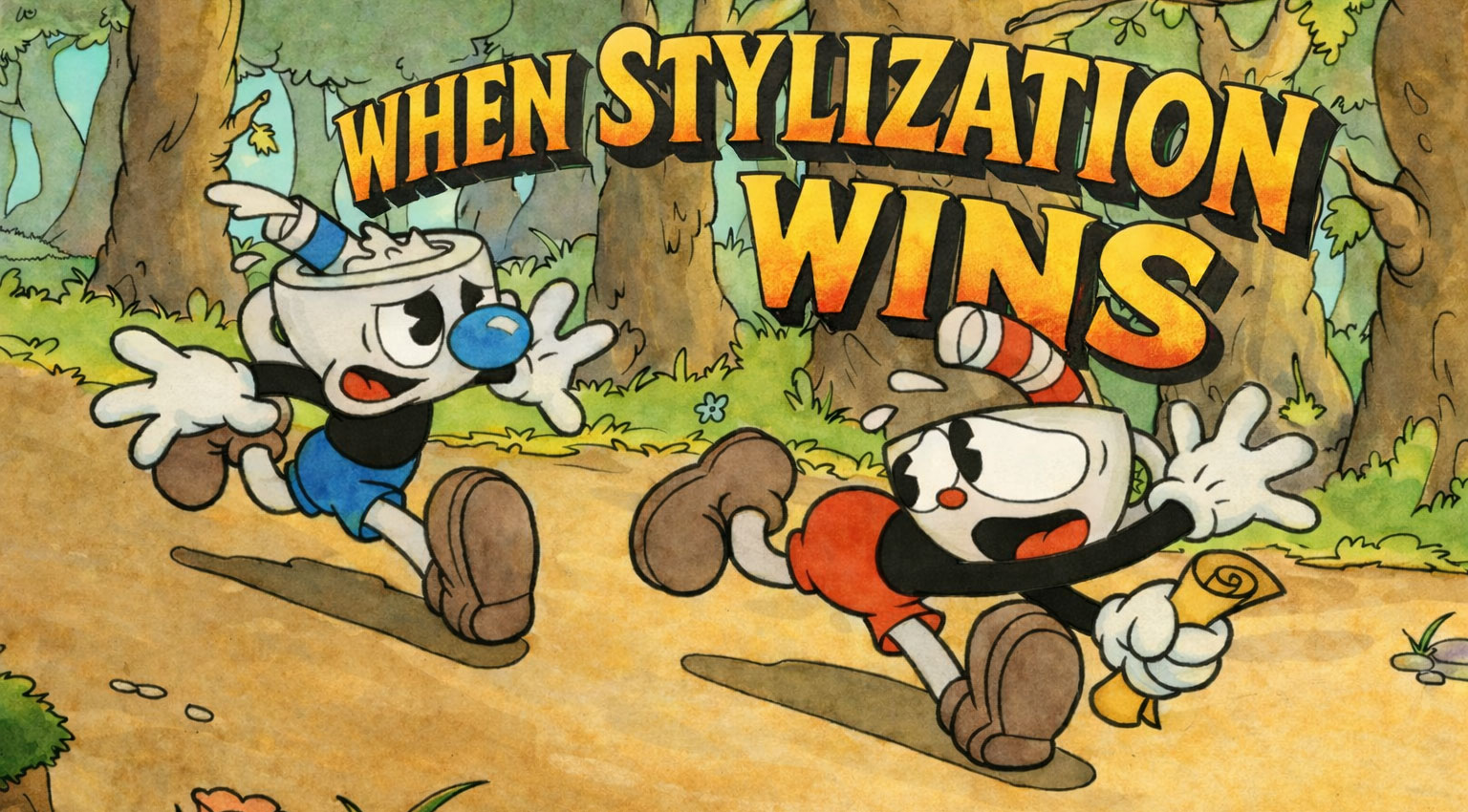
When differentiation matters, realism vs stylization becomes a brand question. Realistic games cluster together in market perception. A stylized game with a strong, coherent visual language — Cuphead, Hollow Knight, Sable — is recognizable from a thumbnail. In an environment where discoverability is increasingly difficult, visual distinctiveness has direct commercial value.
For mid-scale and mobile productions, the cost argument for stylization is real, but only when the style is fully designed before production begins. Studios that treat stylization as “realism minus the expensive parts” don’t save money — they create expensive ambiguity.
Finally, when the storytelling is conceptual rather than literal — when the game is exploring memory, grief, identity, or abstraction — stylization offers expressive range that realism forecloses. What Remains of Edith Finch uses deliberate stylistic shifts to signal different emotional registers. Disco Elysium‘s painterly aesthetic creates a world that feels like it’s being remembered rather than observed. These are effects that no graphic realism approach could replicate.
Practical Framework for Making Decisions
When the choice needs to be made, three questions cut through the noise.
The first is experiential: what should the player feel, and what should they be focused on at any given moment? Fast, reactive gameplay and strong visual feedback favor stylization. Deep narrative immersion and emotional specificity favor realism. Conceptual or symbolic storytelling can favor either, depending on execution.
The second is audience: who is this for, and what are their expectations? Broad, general audiences tend to trust realism as a signal of quality. Niche audiences — particularly those who’ve grown up with stylized games — will likely actively prefer the clarity and personality that stylization offers.
The third is constraint: what can the team actually sustain? Tight timelines and limited budgets can support stylization if — and only if — the visual direction is fully resolved before assets go into production. Large budgets and long production horizons can support realism if the studio has the technical art infrastructure to manage escalation.
Principle That Overrides Framework
One thing remains constant across all of these scenarios: define the goal first, then choose the style.
Art direction should answer three questions before production begins: What should the player feel? What should they pay attention to? What experience, specifically, are we delivering? Only after those questions have real answers should the team decide how realistic or stylized the game needs to be.
This sounds obvious. It isn’t practiced nearly as often as it should be.
Conclusion
The debate between stylized vs realistic game art is not, ultimately, about which looks better or costs less. It’s about whether the visual language of a game earns its place — whether it serves the experience, the audience, and the constraints the studio is actually working within.
Realism, used well, creates immersion that no other medium can match and communicates production ambition to a mass audience in an instant. Stylization, used well, creates identity, longevity, readability, and emotional range that fidelity-first approaches often sacrifice. Stylized realism — the deliberate use of realistic foundations with stylized intent — describes where the most interesting work is happening right now, in games and across visual media.
Both are mature, legitimate tools. The studios that use them most effectively aren’t the ones with the biggest budgets or the most technically ambitious pipelines. They’re the ones who knew, from the start, exactly what they were trying to make.
At Stepico, we work with game developers and publishers at exactly this stage — before production begins, when visual direction decisions still have room to move. If you’d like a second perspective on your art direction strategy, get in touch with us.