

PISHPIRIK
Overview
Pishpirik is a competitive multiplayer card game based on a classic matching mechanic where players capture cards by matching the value of the top card on the table. Built for mobile, the game focuses on fast rounds, strategic decisions, and engaging head-to-head matches.
A key moment occurs when a player captures the last card on the table — a move called Pishpirik — triggering bonus points and dynamic visual effects.
Stepico handled full development and gameplay implementation, including multiplayer systems, matchmaking, game logic, and backend integration.
Game Tech Stack
Gameplay Design
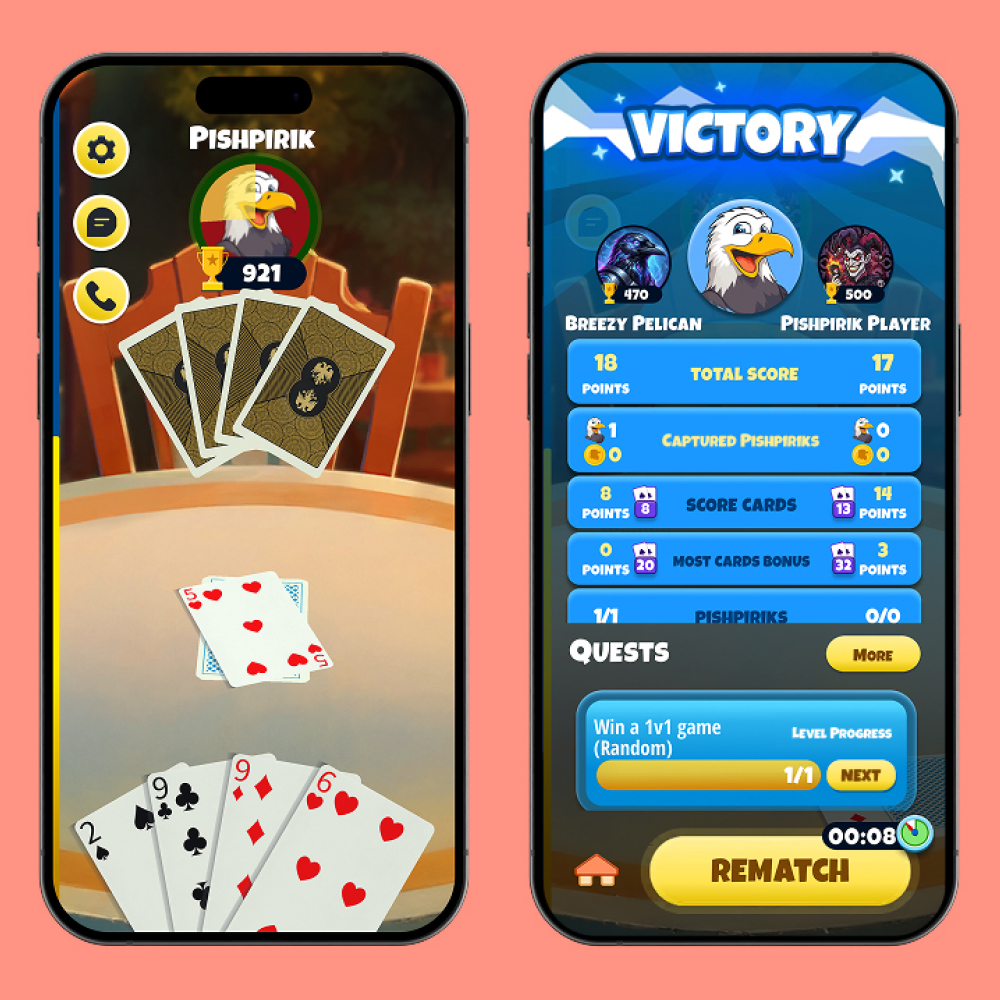
Pishpirik is built around a simple but engaging core mechanic. Players take turns placing cards on the table, aiming to match the value of the top card played by the opponent. When a match occurs, the player captures the pile and scores points.
The most important moment in each round happens when a player captures the last remaining card on the table. This move, called Pishpirik, grants bonus points and triggers a special animation effect, turning a simple mechanic into a memorable gameplay moment.
To reinforce this moment, the game includes a system of visual effects that play when a Pishpirik occurs. These effects serve as a reward and highlight the decisive move during the match.
Available effects include:
- Tornado
- Hammer
- Chainsaw
- Bird wing strike
- Bird leg strike
Players can equip several effects before the match and select which one to trigger when a Pishpirik happens.
Multiplayer Systems
Pishpirik was designed as a fully multiplayer experience, with no AI opponents in the core gameplay. Bots are used only in the tutorial to introduce players to the rules.
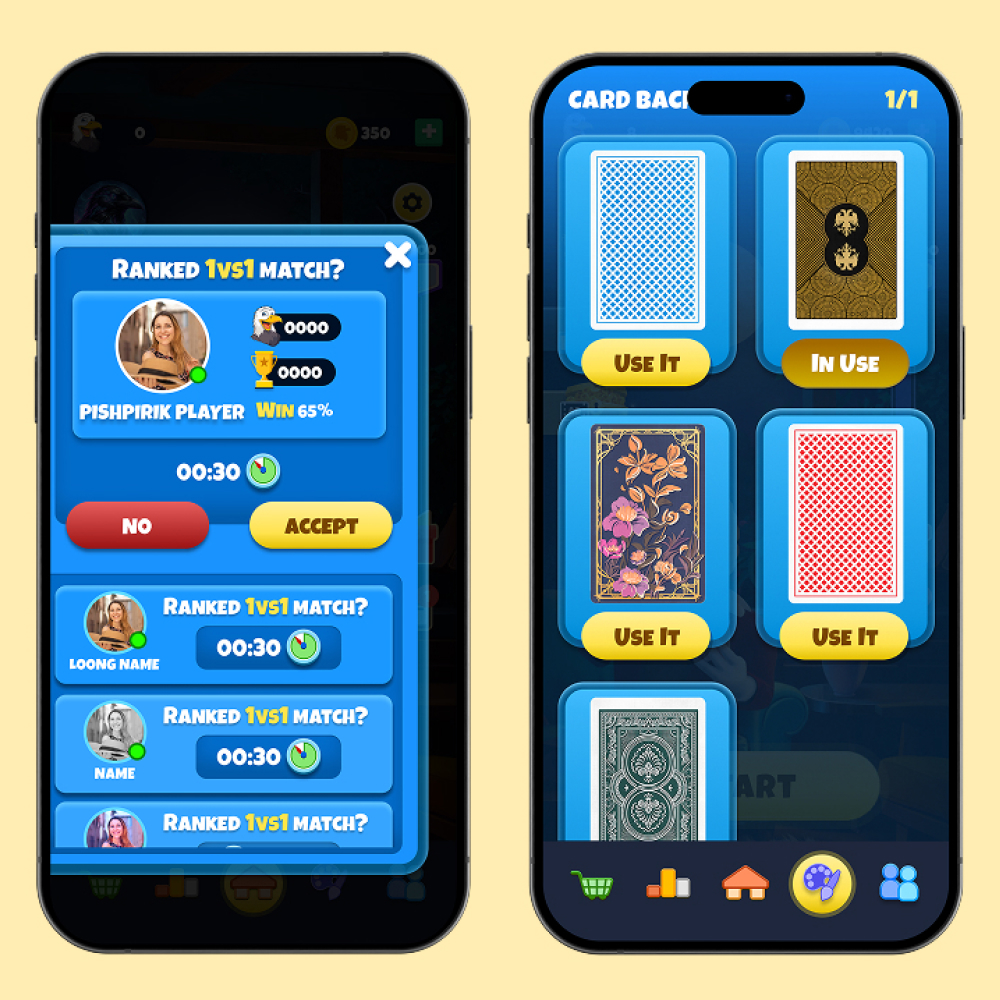
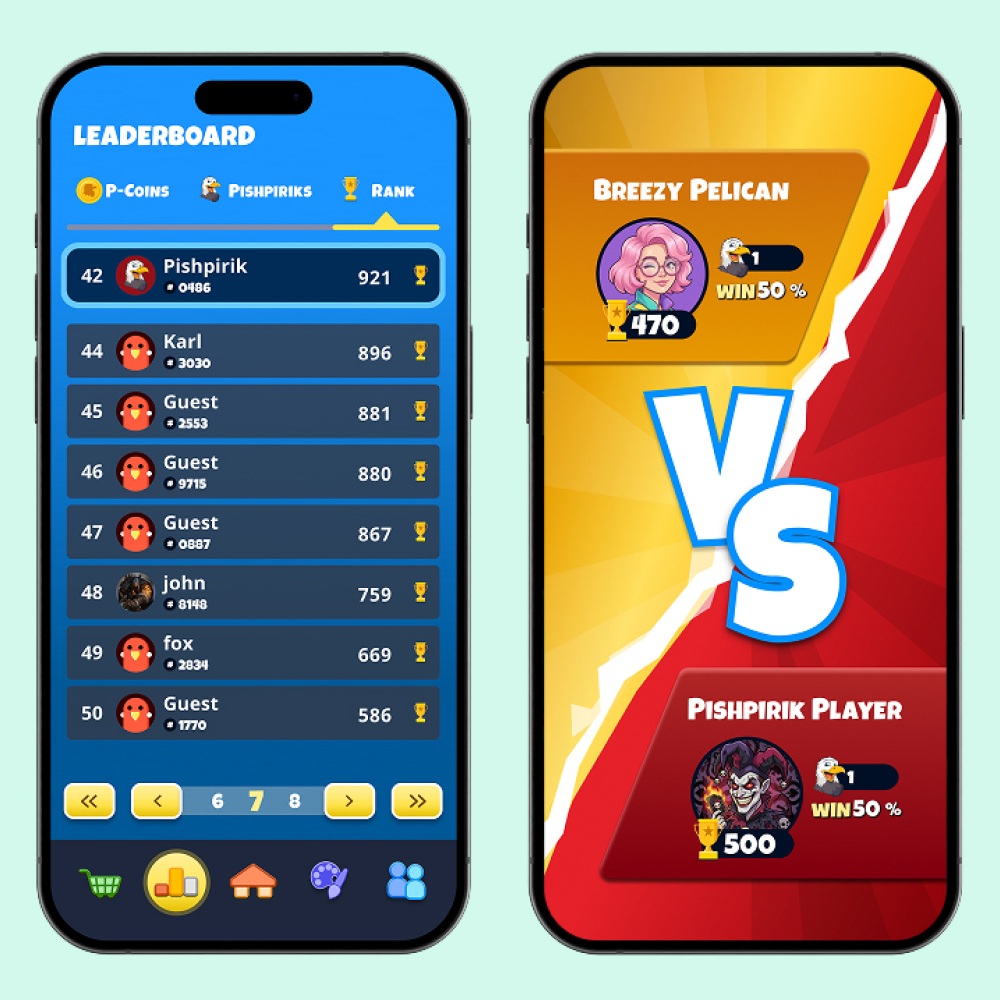
The game supports multiple match formats:
1v1 Matches
Classic head-to-head competitive games.
2v2 Team Matches
Players can team up and compete against another pair, coordinating strategies within the same match.
Random Matchmaking
Players can queue for quick matches against random opponents.
Friend Matches
Users can invite friends to play private games that can either affect rankings or remain casual.
Leaderboards track player performance and add an additional competitive layer to the experience.
Social Features
To keep communication lightweight and focused on gameplay, the game includes:
- In-game quick chat during matches
- Emotes for quick reactions
- Friend lists and private matches
- Team matchmaking for 2v2 games
These features allow players to interact during matches while keeping the experience streamlined for mobile sessions.
Economy & Progression
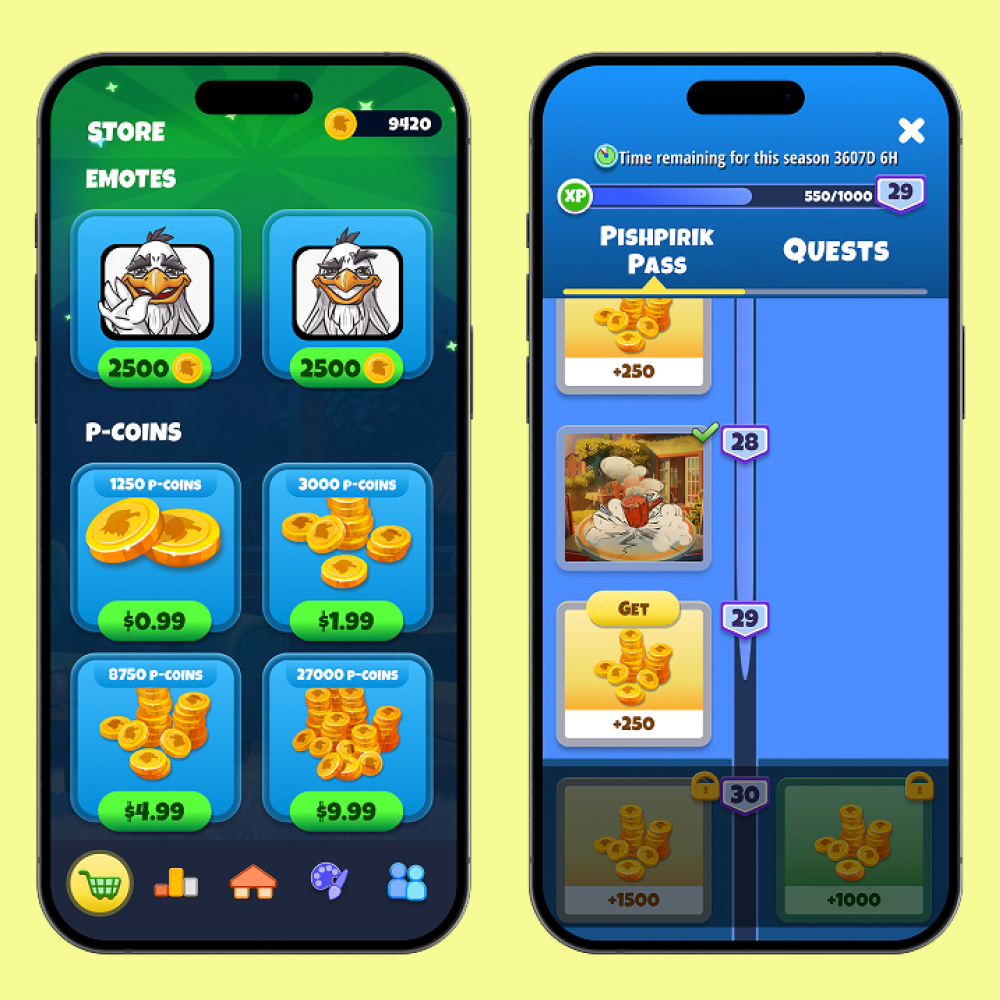
The game includes a lightweight economy centered around P-Coins, the main in-game currency.
Players can use P-Coins for:
- Match stakes in competitive games
- Purchasing emotes
- Activating special Pishpirik effects
Matches with friends can be played either with stakes or in casual mode, allowing players to compete without affecting rankings or currency balances.
Development Details
Multiplayer Technology
The multiplayer gameplay is powered by Photon Fusion, a networking solution designed for synchronized multiplayer games.
Photon Fusion was selected because it provides:
- Efficient state synchronization between clients
- Reliable connection management and reconnection handling
- Built-in systems for message exchange and session management
Its architecture works particularly well for step-based gameplay, where game state changes occur in clear turns or actions.
Photon’s fully cloud-based infrastructure also allowed the team to avoid maintaining dedicated servers.
Serverless Backend Architecture
The project uses a serverless backend built on Firebase services, enabling the game to run without managing traditional server infrastructure.
Key Firebase services include:
- Firebase Realtime Database and Cloud Firestore for player data and game information
- Cloud Functions for backend logic
- Firebase Authentication for player login
- Firebase Analytics and Crashlytics for monitoring and performance tracking
- Firebase Cloud Messaging for push notifications
This architecture provided several advantages:
- Reduced infrastructure maintenance
- Faster development without a dedicated backend team
- Scalable cloud services managed automatically
Combined with Photon’s cloud networking, this approach allowed the project to operate entirely without self-hosted servers.