
EU GOES SCHOOL: Virtual Museum of Europe
summary
EU Goes School is an immersive digital museum platform developed for Ludwig Maximilian University (LMU) in Munich and co-funded by the European Union. Designed as a cross-platform educational experience with a primary focus on Virtual Reality (VR), the platform enables university students and the broader public to explore European history, the EU’s global role, and its future trajectory through an interactive, museum-style environment.
The initiative forms part of the broader EGS-LAB (EU Goes School – Lehrkräfte als EU-Botschafter:innen) project and is funded under the European Commission’s Jean Monnet – Teacher Training funding line, supporting innovation in EU-related civic education and educator training across Europe.
Project Tech Stack
Engine & Core Development: Unity 6, C#, WebXR
Animation & Visual Systems: DoTween PRO, Shader graph
Version Control: GIT
Design & Prototyping: Figma
Development Environment: Rider + Junie AI
About the Client
Ludwig Maximilian University (LMU) in Munich is one of Europe’s leading academic institutions, known for research excellence and innovation in higher education.
The EU Goes School initiative was funded through a grant co-financed by the European Union and LMU, with the objective of enhancing civic education and engagement with European history and governance through modern digital learning tools.
As part of the multi-year Jean Monnet-funded framework (2022–2027), the project extends beyond digital content delivery to structured teacher education and multiplier programs aimed at strengthening EU literacy in schools and universities.
The platform is publicly accessible via the university website, extending its impact beyond enrolled students to educators and lifelong learners.
Challenge
The project began as a full system rebuild. The previous version of the platform had become technologically obsolete due to outdated hosting infrastructure and legacy frameworks that were no longer functional or maintainable.
Key challenges included:
- Reconstructing the entire platform architecture from scratch
- Preserving only selected assets (video references and photo files)
- Modernizing user experience expectations for digital-native learners
- Ensuring accessibility across devices while prioritizing immersive VR
- Delivering within grant-defined timelines and scope
Beyond technical modernization, the deeper challenge was pedagogical: how can European civic education become more immersive, engaging, and experiential — rather than purely text-based?
LMU’s vision was clear: students should not merely read about Europe, and, most importantly, they should experience it.
At the same time, the platform needed to align with the broader EGS-LAB objective of preparing future teachers as “EU ambassadors,” equipping them with innovative digital tools to bring European civic education into classrooms.
Solution
As the technology partner on the EU Goes School project, Stepico provided a complete technological rebuild of a previously obsolete system, transforming legacy educational content into a modern, immersive, and scalable digital experience. Delivered within a four-month design phase and three months of development, the platform now operates across VR, desktop, mobile, and tablet devices, ensuring both accessibility and immersive depth.
Concept: A Virtual Museum of Europe
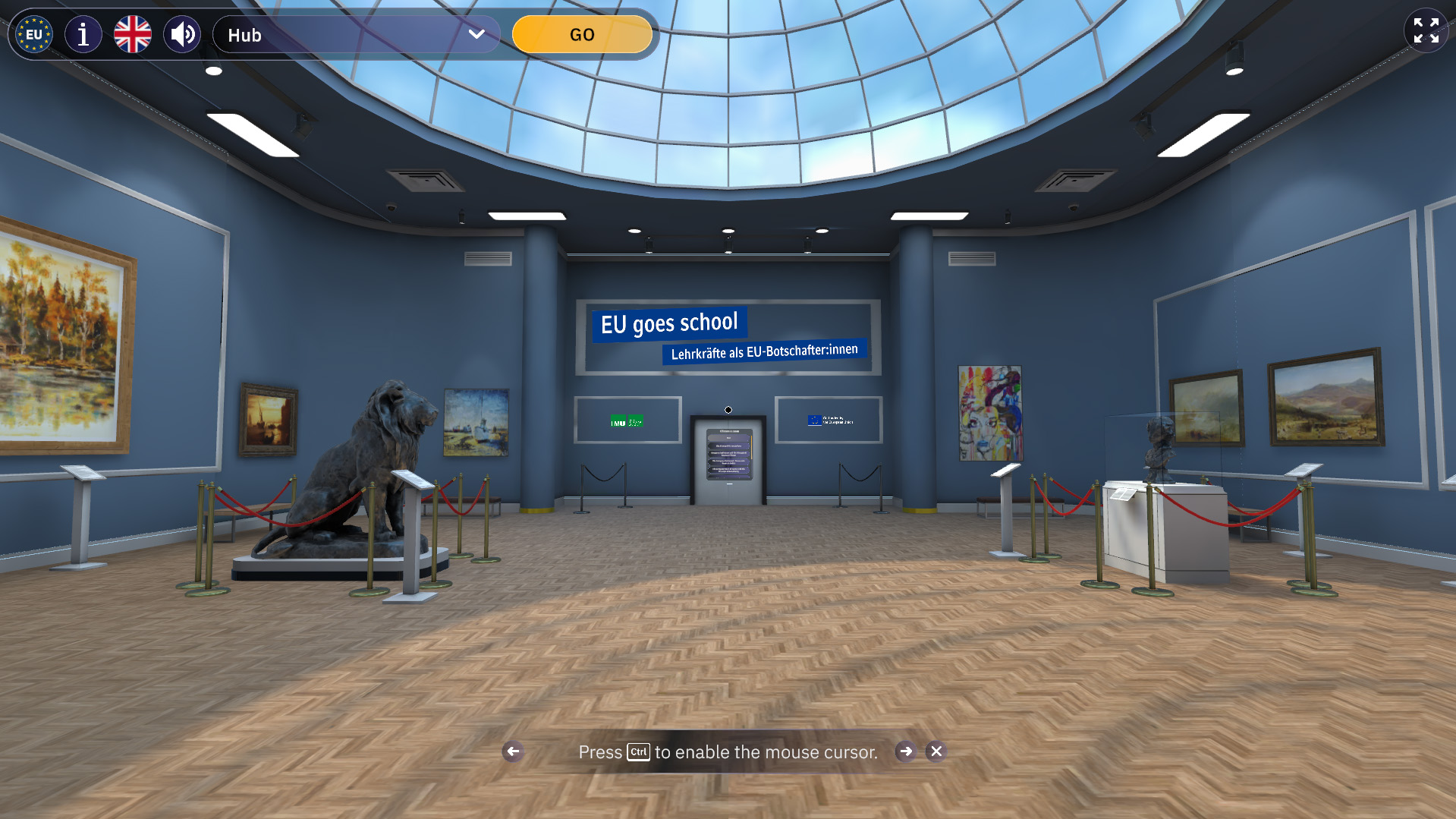
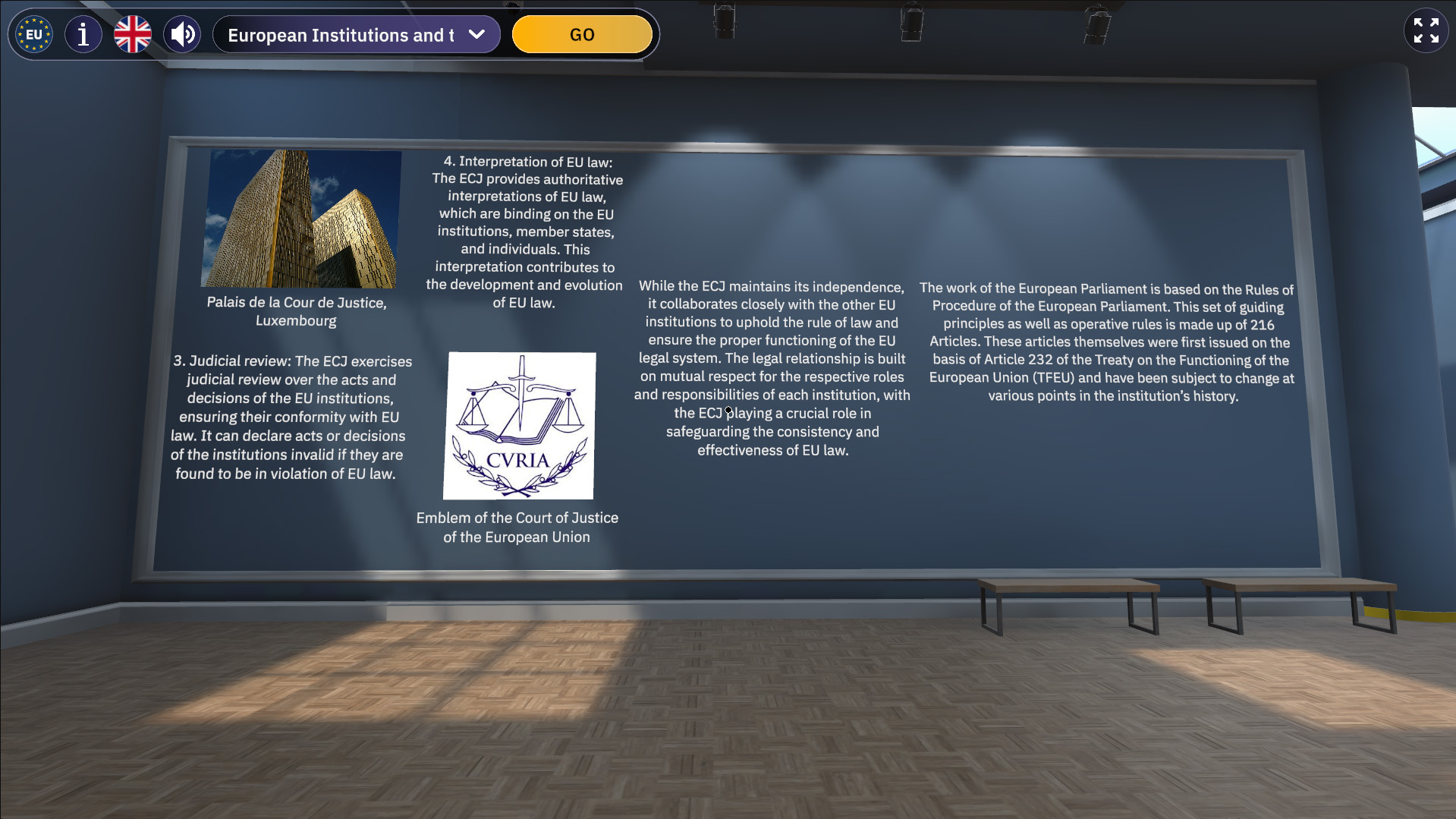
The core concept is a 3D digital museum that users can freely explore. The structure consists of:
- One central hub
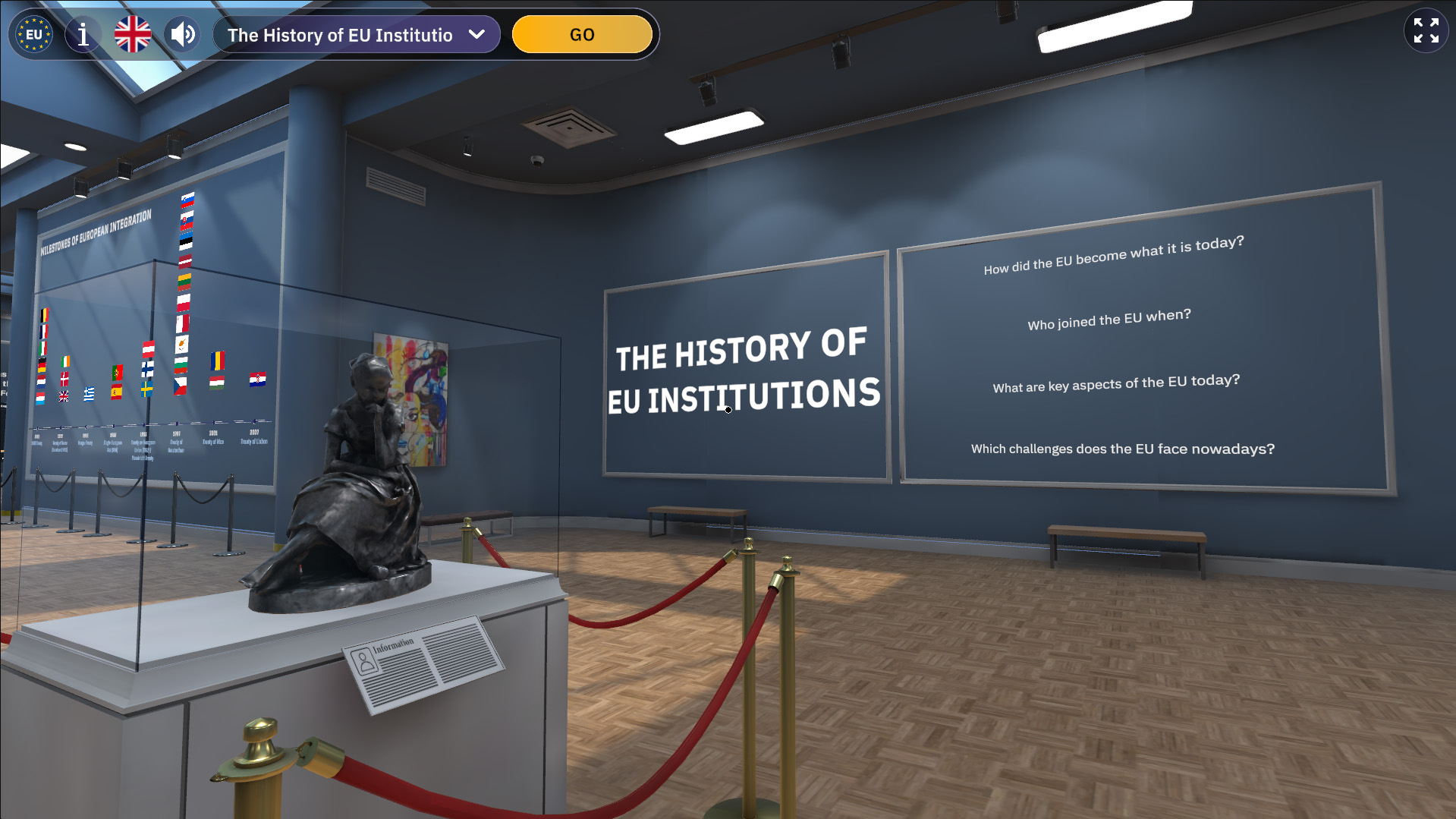
- Nine thematic levels, each dedicated to different aspects of European history and development
Each level maintains consistent interaction logic but differs in content focus. Topics cover:
- European historical milestones
- The EU’s role in the contemporary global landscape
- Forward-looking perspectives on Europe’s future
These themes complement the project’s structured learning modules developed within the Jean Monnet framework, reinforcing institutional knowledge about EU governance, decision-making, subsidiarity, rule of law, and Europe’s global engagement.
We used a modular structure to ensure clarity, scalability, and content expansion potential.
Immersion First: VR as the Primary Experience
Unlike many cross-platform projects where VR is an afterthought, EU Goes School was designed VR-first.
The intention was to create:
- A sense of presence
- Spatial learning
- Embodied exploration
- Museum-style discovery
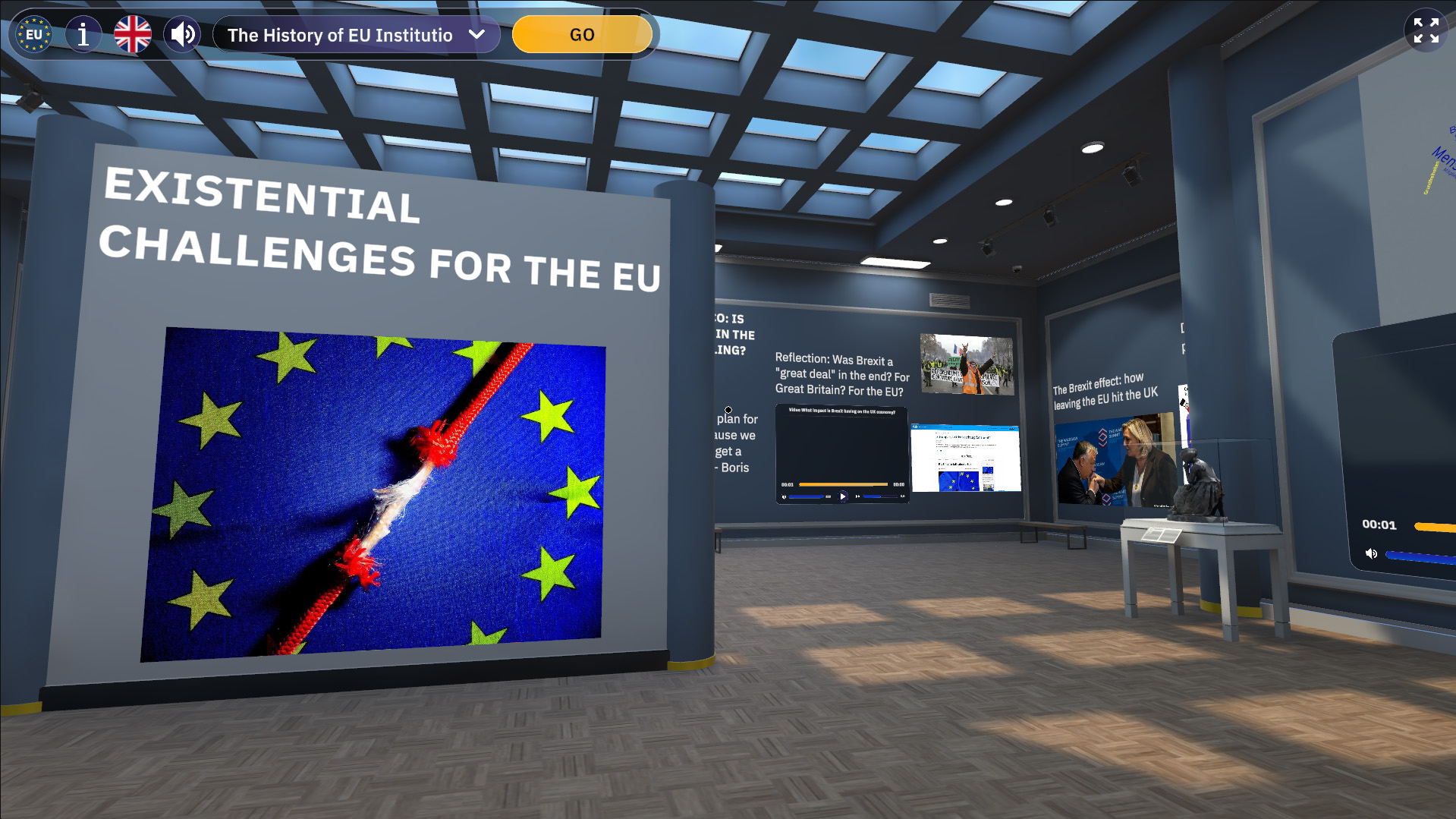
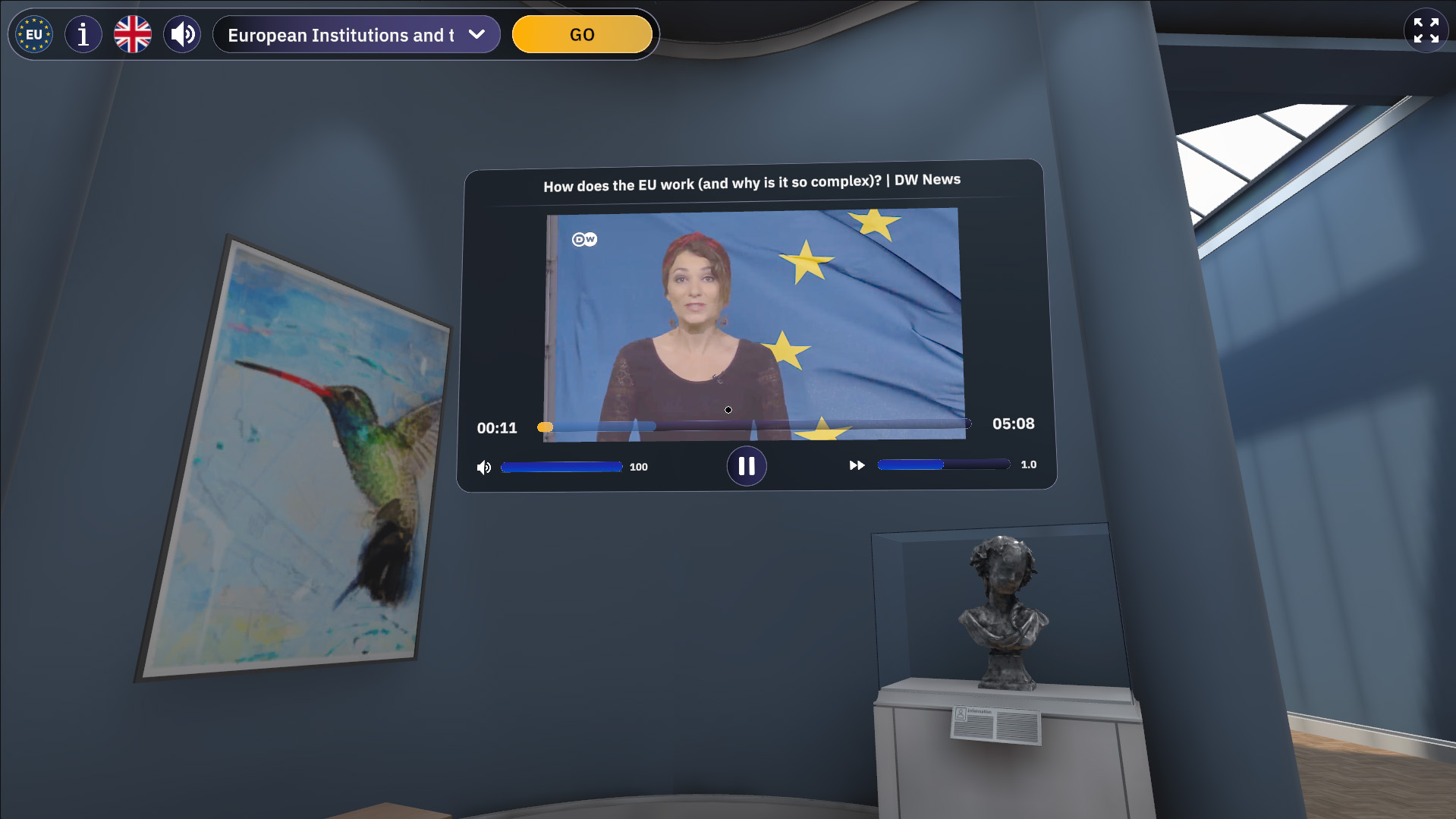
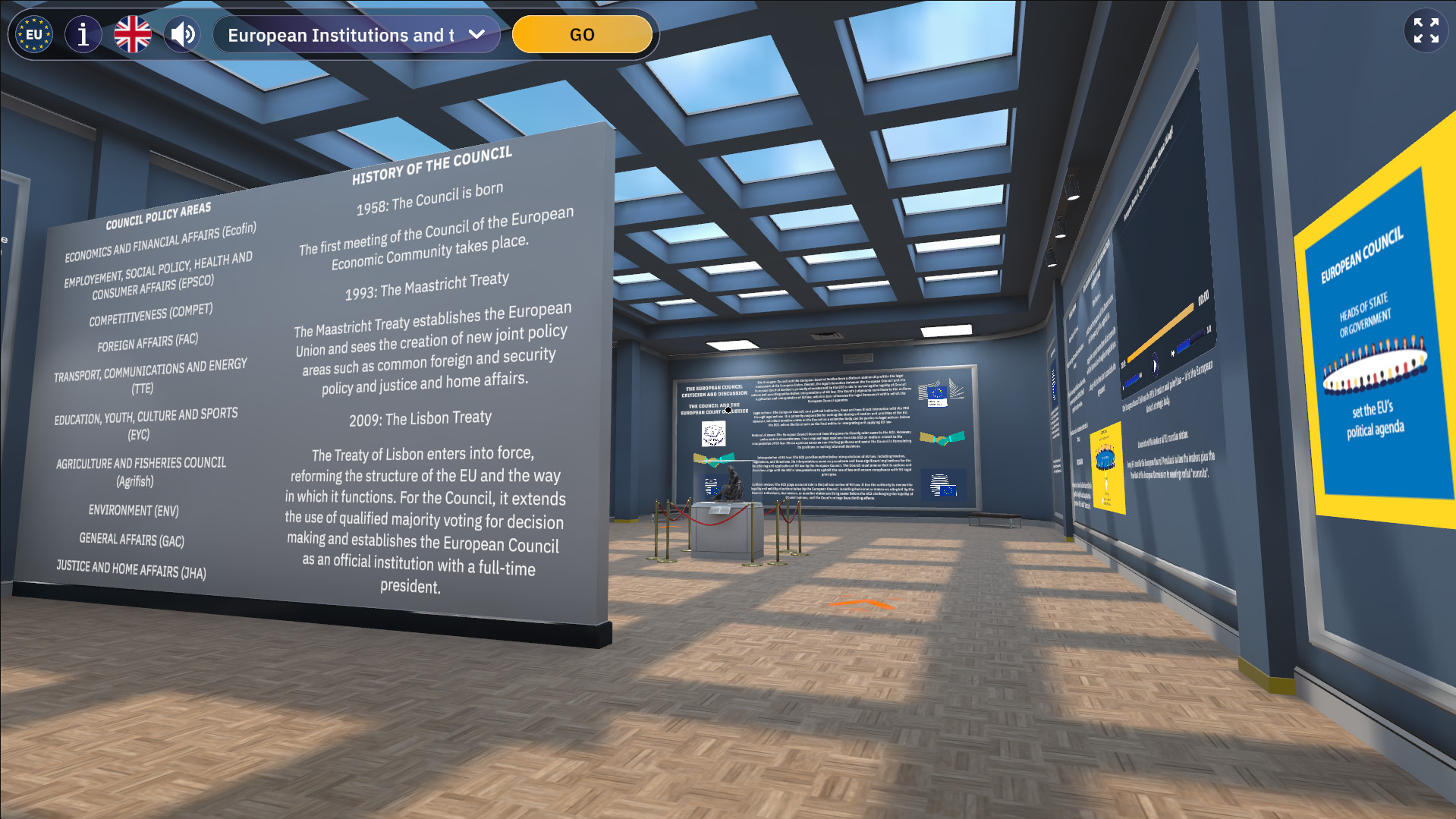
Users navigate through the environment as if physically walking through an exhibition space. Educational content is embedded directly within the 3D environment through:
- Interactive video players
- Photo galleries
- Text panels
- Knowledge quizzes
VR allows students to engage cognitively and spatially, increasing retention and emotional connection to the material. Desktop, mobile, and tablet versions serve as accessibility alternatives for users without VR hardware.
Importantly, the platform functions not only as a standalone digital experience but also as a foundational tool within broader university seminars and teacher training programs.
Technical Architecture
The platform operates across four device types:
- Virtual Reality (primary focus)
- Desktop
- Mobile
- Tablet
Key technical decisions included:
- Full rebuild from modern frameworks
- Reuse of only video and photo assets from the previous system
- Procurement and customization of 3D assets
- Bespoke environment modeling and lighting by a 3D artist
- Cross-platform UI/UX adaptation with VR-optimized controls
The museum environments were designed to reflect a cohesive exhibition aesthetic while remaining lightweight enough for web deployment. Each level functions under a unified navigation logic, simplifying maintenance and future content updates.
Development Approach
In the course of 3 months, the Stepico team managed to hit 4 key development milestones:
- UX prototyping and VR interaction validation
- Environment design and asset preparation
- Cross-platform interface refinement
- Iterative testing and deployment
Because this was not a migration but a complete rebuild, the team had the flexibility to rethink interaction paradigms and optimize for immersive learning from the ground up.
The digital platform supports the wider EGS-LAB educational ecosystem, which includes university-based seminars and experiential learning formats designed to connect digital knowledge with real-world institutional exposure.
Educational Impact
Immersive Civic Education
Increased Accessibility
Structured Knowledge Delivery
• Thematic segmentation
• Clear progression
• Modular content updates
• Potential integration into structured university curricula
Public outreach
As part of a multi-year European Commission initiative, EU Goes School demonstrates how immersive technology can operate within formal higher education, teacher training programs, and public civic engagement simultaneously, extending impact far beyond a single digital product.